- Daedo Sikdang (대도식당) — Korea’s most famous hanwoo sirloin restaurant, opened 1965 in Majang-dong (Seoul’s legendary meat market). This is the Mapo branch.
- Cast-iron skillet grilling · ₩88,000 ($60) for 200g hanwoo sirloin · the secret cabbage-with-gochujang move · kkakdugi fried rice + doenjang sool bap finale.
- I went in May 2026 and this is now my answer to “where do I take someone for the best Korean beef in Seoul?”
Ask a serious Seoul food person where to take a visitor for hanwoo (Korean wagyu) — they will say 대도식당 (Daedo Sikdang). Opened 1965 in Majang-dong, it’s the original Seoul beef-house. Cast-iron skillet, salt-lick-pure cuts, and one secret move involving a cabbage leaf. I went to the Mapo branch in May 2026.
| 📍 Where | Mapo-daero, Mapo-dong, Mapo-gu, Seoul (across from Mapo Stn) |
| 🚇 Subway | Mapo Stn (Line 5) Exit 4 — 2 min walk · Gongdeok Stn (Line 5/6/Airport) 8 min walk |
| 🕒 Hours | Daily 11:30–22:00 · break 15:00–17:00 · last order 21:00 |
| 💰 Price | ~₩88,000 ($60) per 200g hanwoo sirloin · expect ~₩120,000 ($82) total per person with sides |
| 📖 English menu | Partial — meat cuts in English, sides may not be. Staff has some English. |
| 💳 Cards | Visa / Mastercard / AMEX accepted |
| 📞 Reservation | Recommended on weekends and dinner peak (18:30–20:30) — call 02-715-7775 |
| 👔 Vibe | Smart casual · business dinners · tourists welcome |
Quick history note: Majang-dong (마장동) in eastern Seoul is Korea’s historic livestock market — the place where everyone in the country’s meat industry, from butchers to restaurants, sourced their beef for half a century. Daedo Sikdang opened there in 1965 as a workers’ lunch joint cooking the best off-cuts the butchers brought home. Sixty years later it’s the most respected Korean beef-house in the country. The Mapo branch is the modern, business-district sibling — same recipes, same cast iron, slightly easier to get into.
The Spot — Mapo Branch, Across From Mapo Station
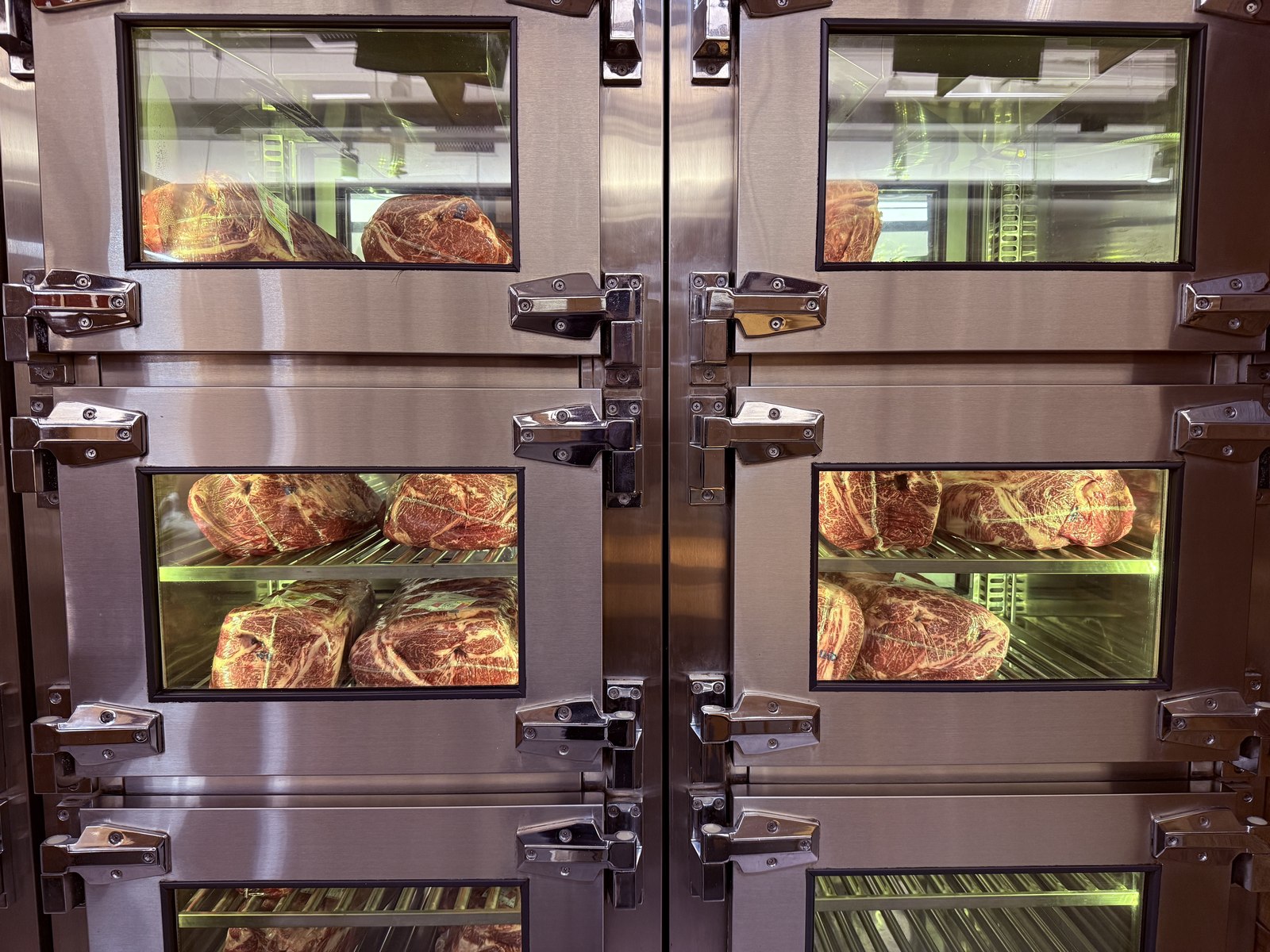
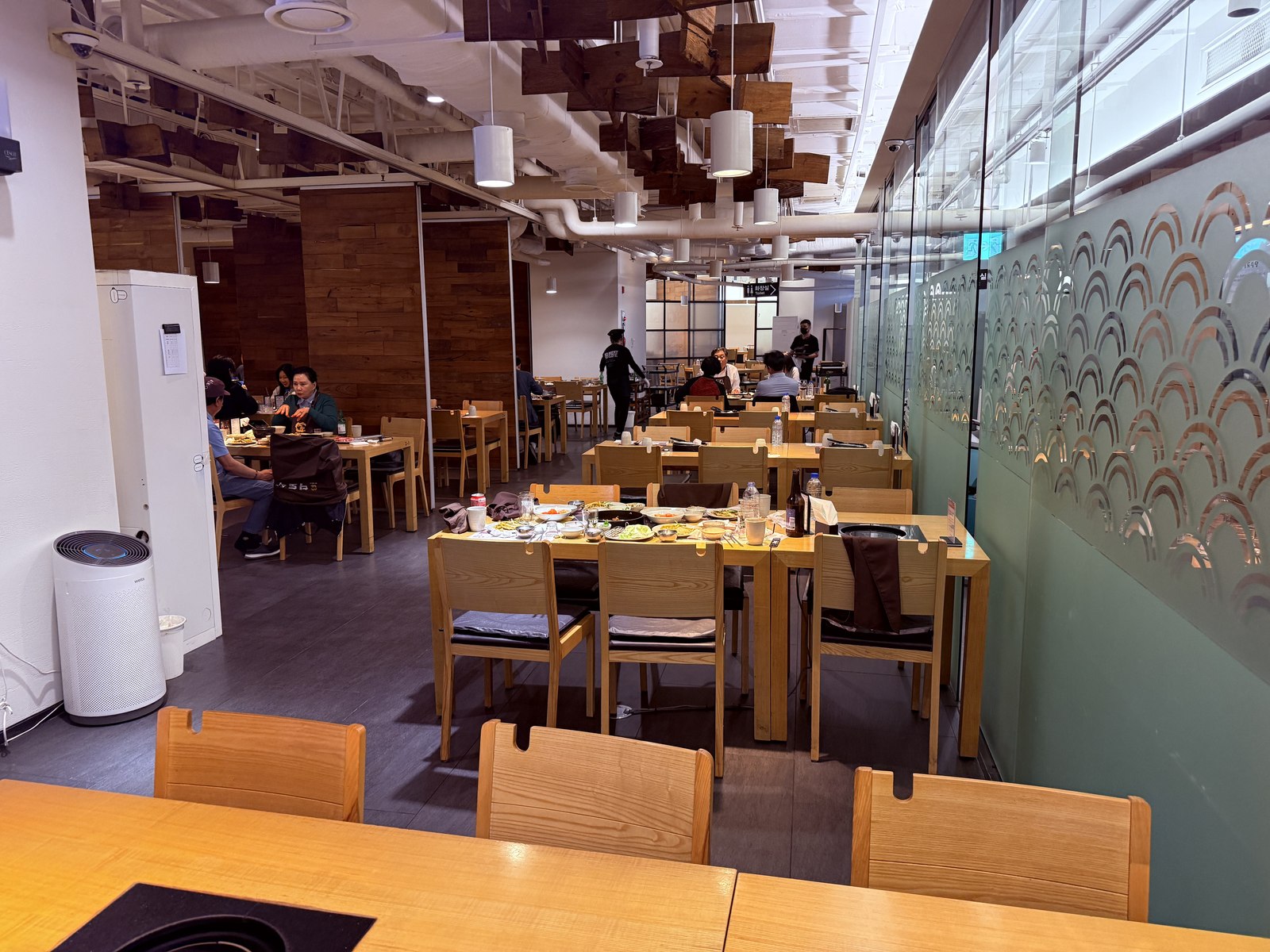
The Mapo location is on the second floor of a glass office tower, with a long open dining room, light-wood tables, partitioned booths, and — here’s the giveaway that this is a serious beef restaurant — a wall of dry-aging meat lockers visible to every guest. Through the window-doors you can see ribeyes and sirloins hanging at controlled temperature, aging on the bone. It’s a “we know what we’re doing” signal you don’t get at copycat Korean BBQ places.
📍 대도식당 (Daedo Sikdang) on Google Maps · Naver Map
The Hanwoo — ₩88,000 ($60) Per 200g Sirloin
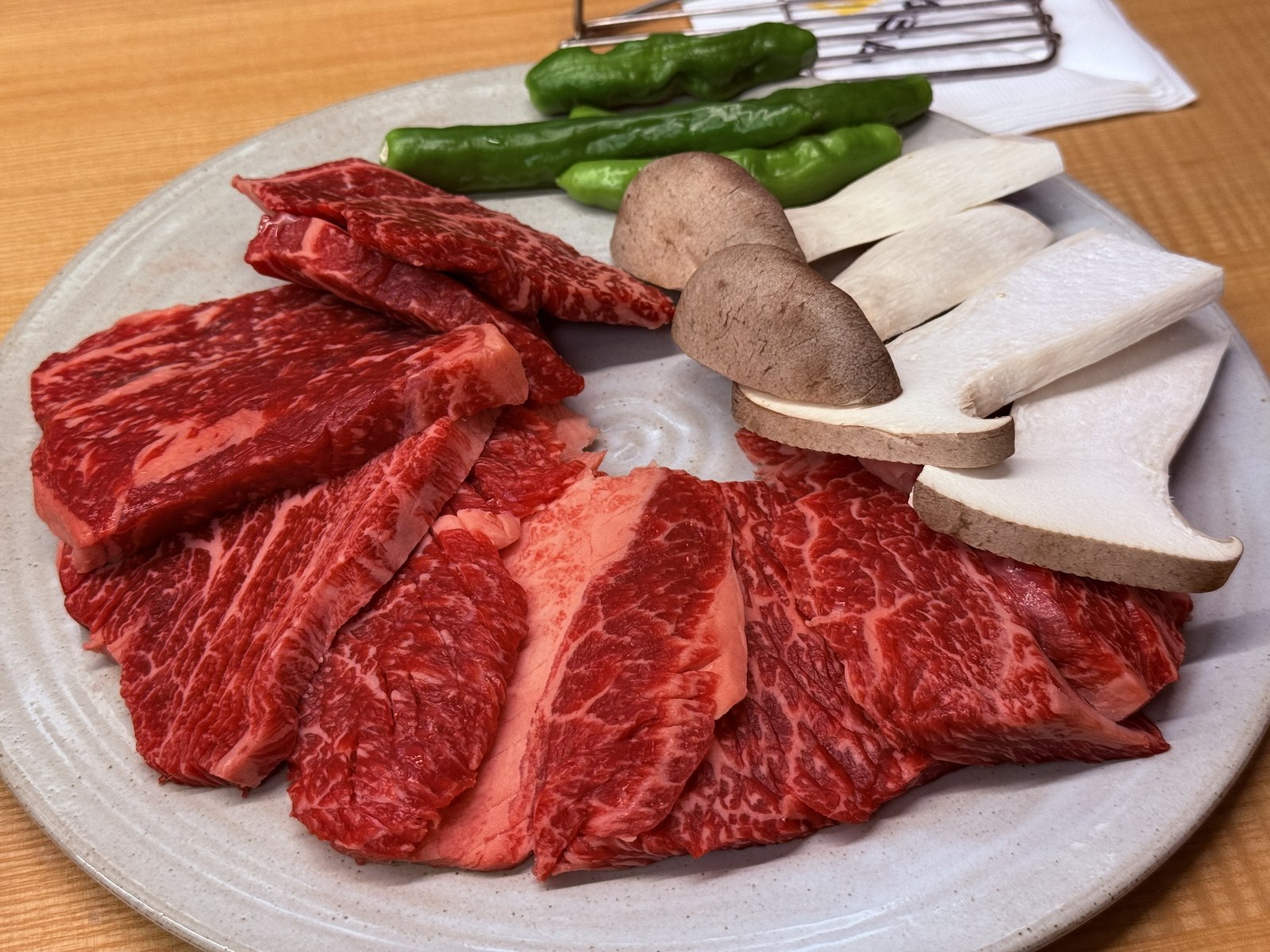
Order plan: 한우 등심 (hanwoo deungsim, sirloin), 200g per person, ₩88,000 ($60). Two people, two orders. Add 100g of 특수부위 (specialty cut — flatiron, hanger, or chuck flap) if you want to compare textures. The platter arrives raw, beautifully marbled, garnished with shishito peppers and king oyster mushroom slices.
The Sides — Pa-jeori, Cabbage, Kkakdugi
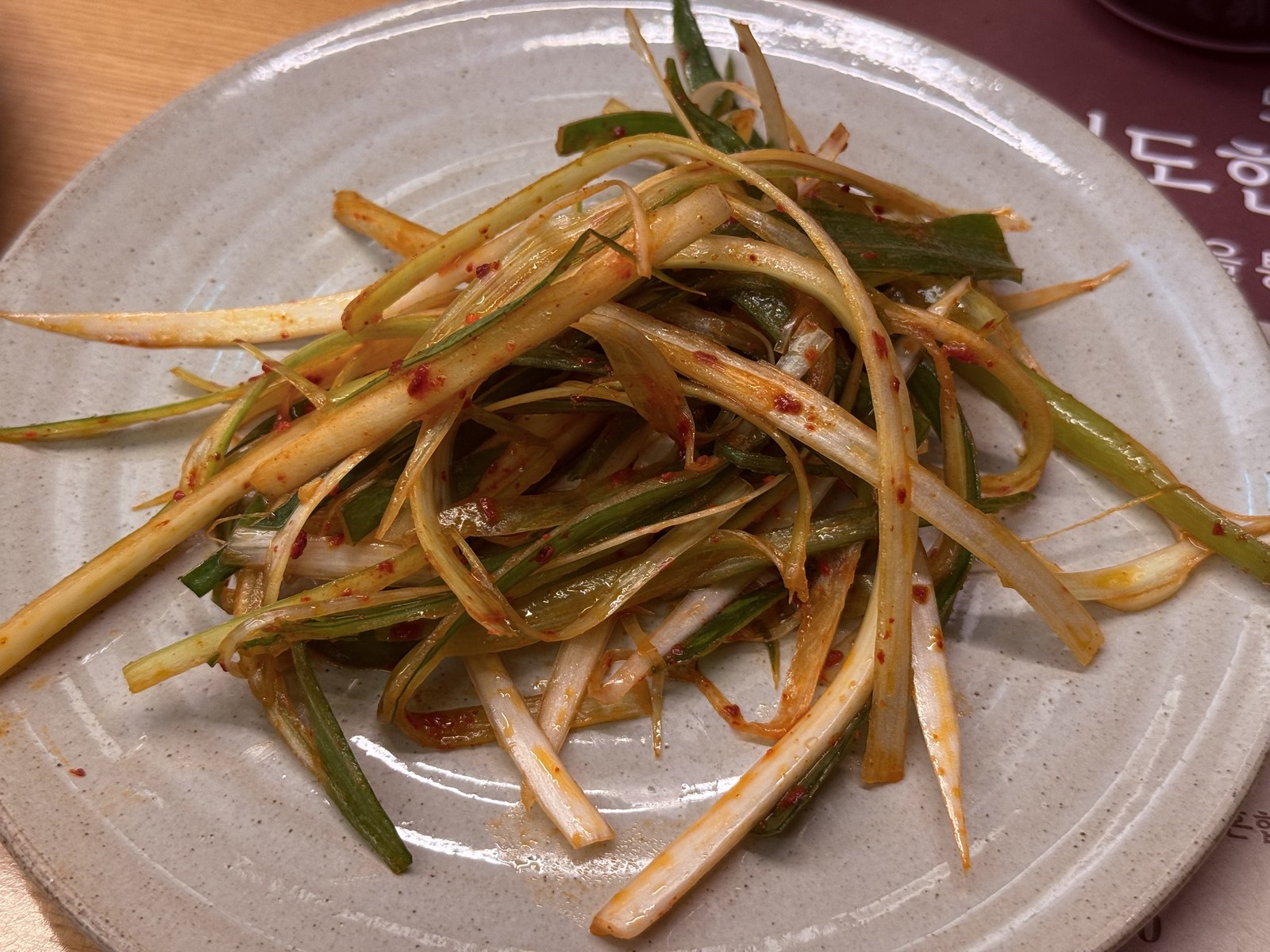
Three sides arrive together and they’re all essential to the cabbage move. Pa-jeori (파절이) — slivered scallion in red-pepper vinegar — is the standard hanwoo accompaniment. Sharp, oniony, cuts the beef fat.
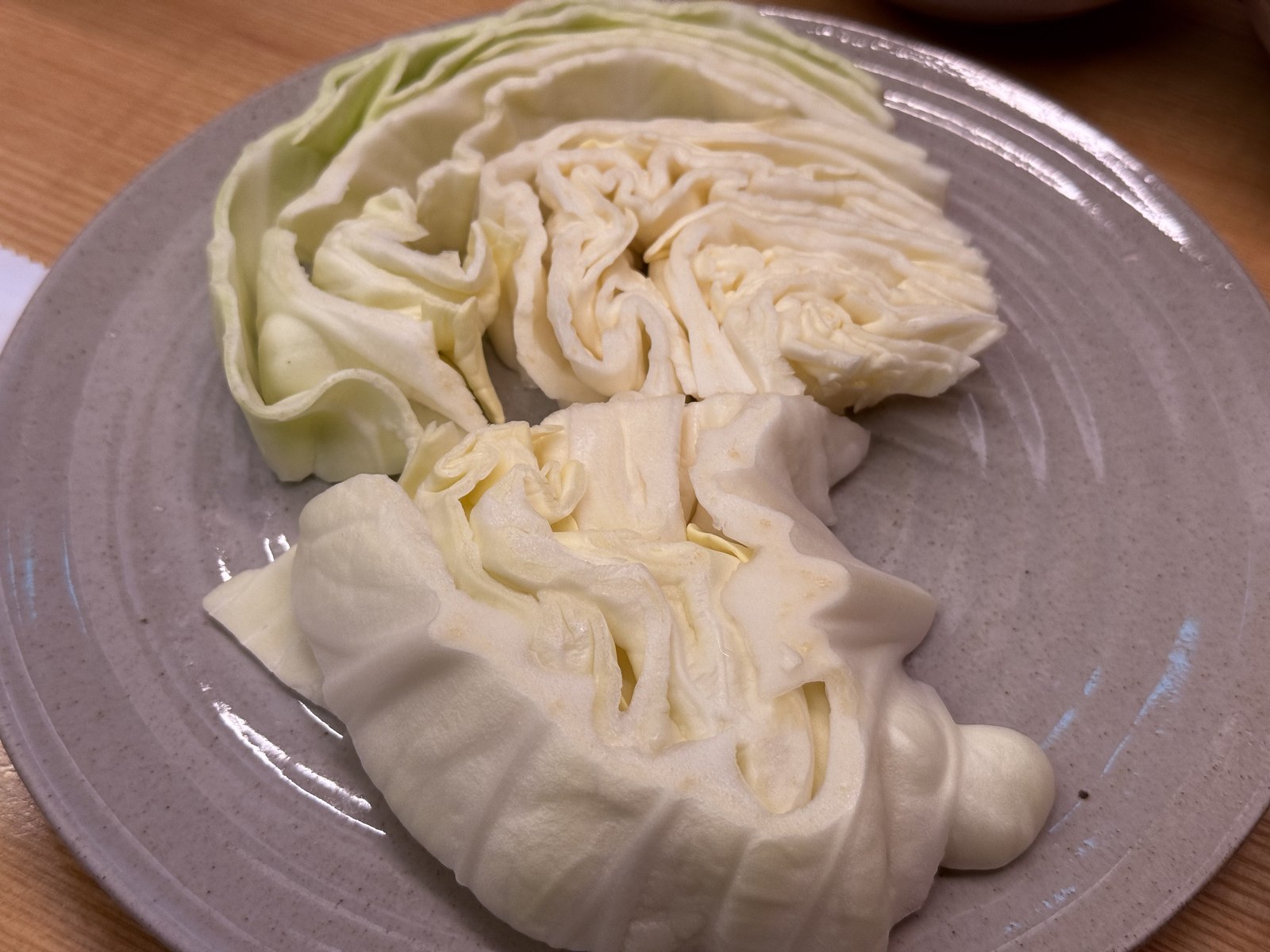
Plain cabbage leaves arrive in a separate plate. Most foreign diners assume these are decoration. They are not. This is the entire trick of the meal.
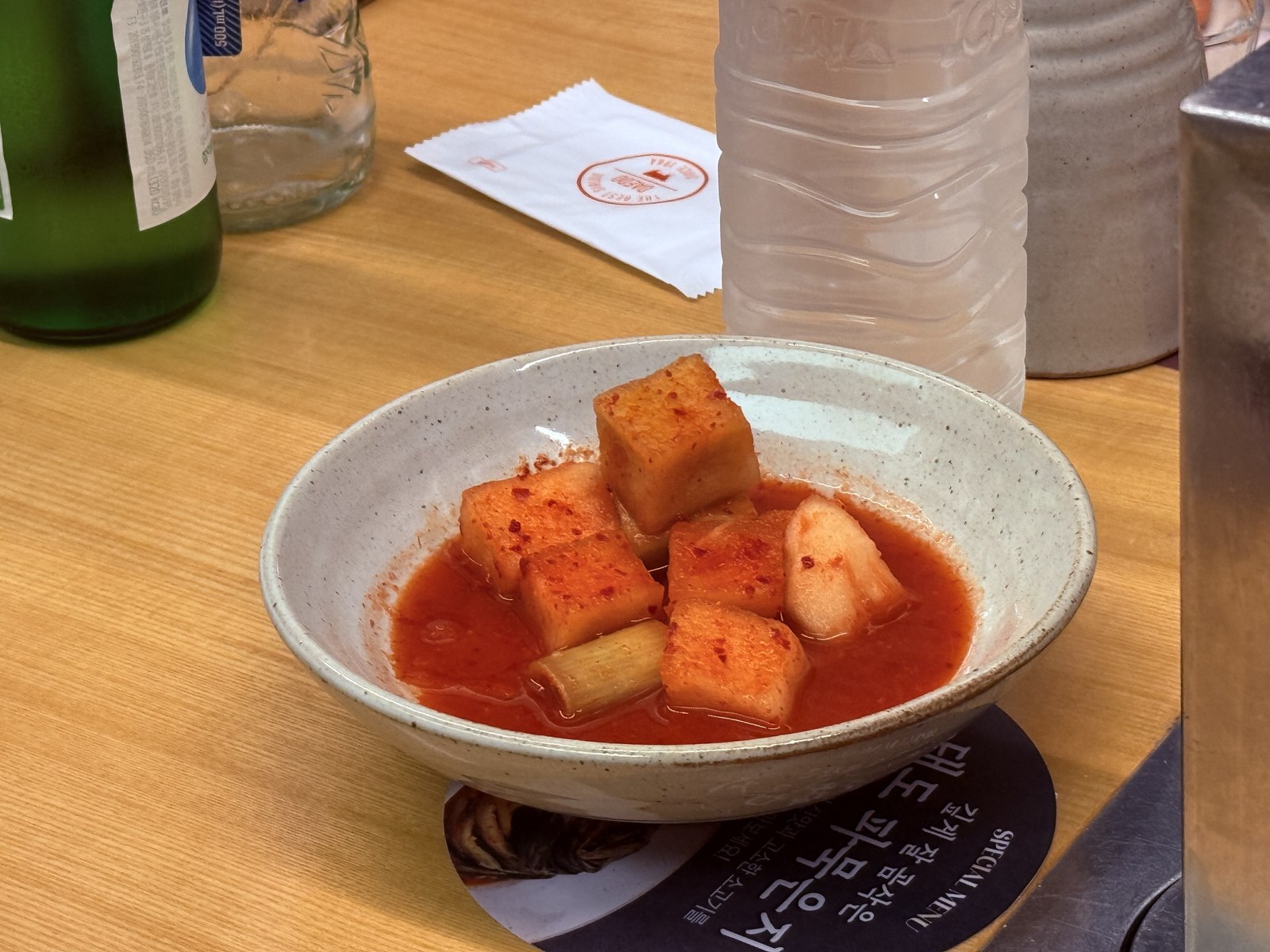
Kkakdugi (깍두기) — diced radish kimchi in cold broth — is the palate-reset between bites of fatty hanwoo. The cubes are crunchy, lightly fermented, the kimchi juice is sweet-savory. Drink the juice when you’re done with the cubes; the broth becomes critical in the carb course later.
The Grill — Cast-Iron Skillet, Staff-Cooked
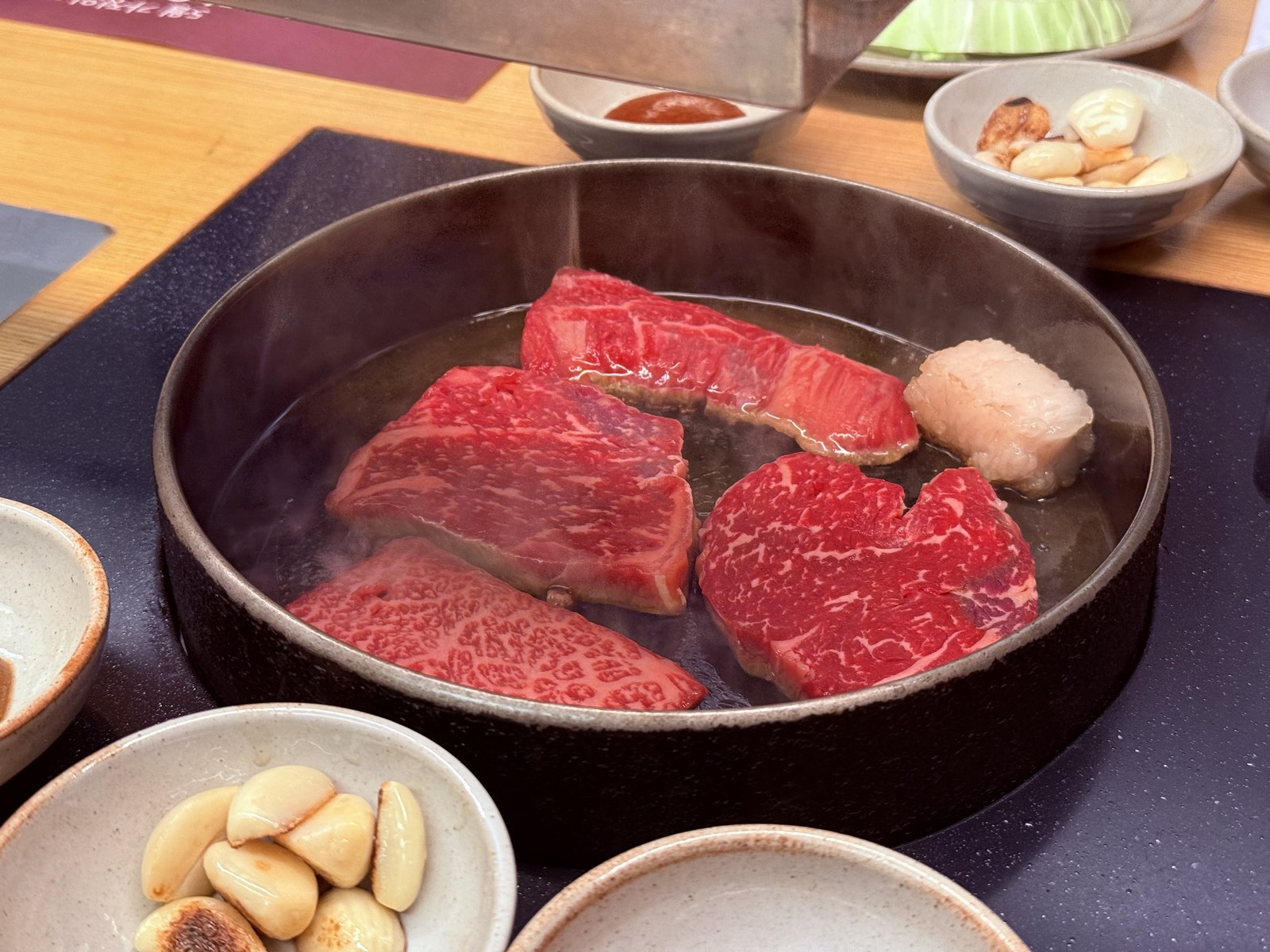
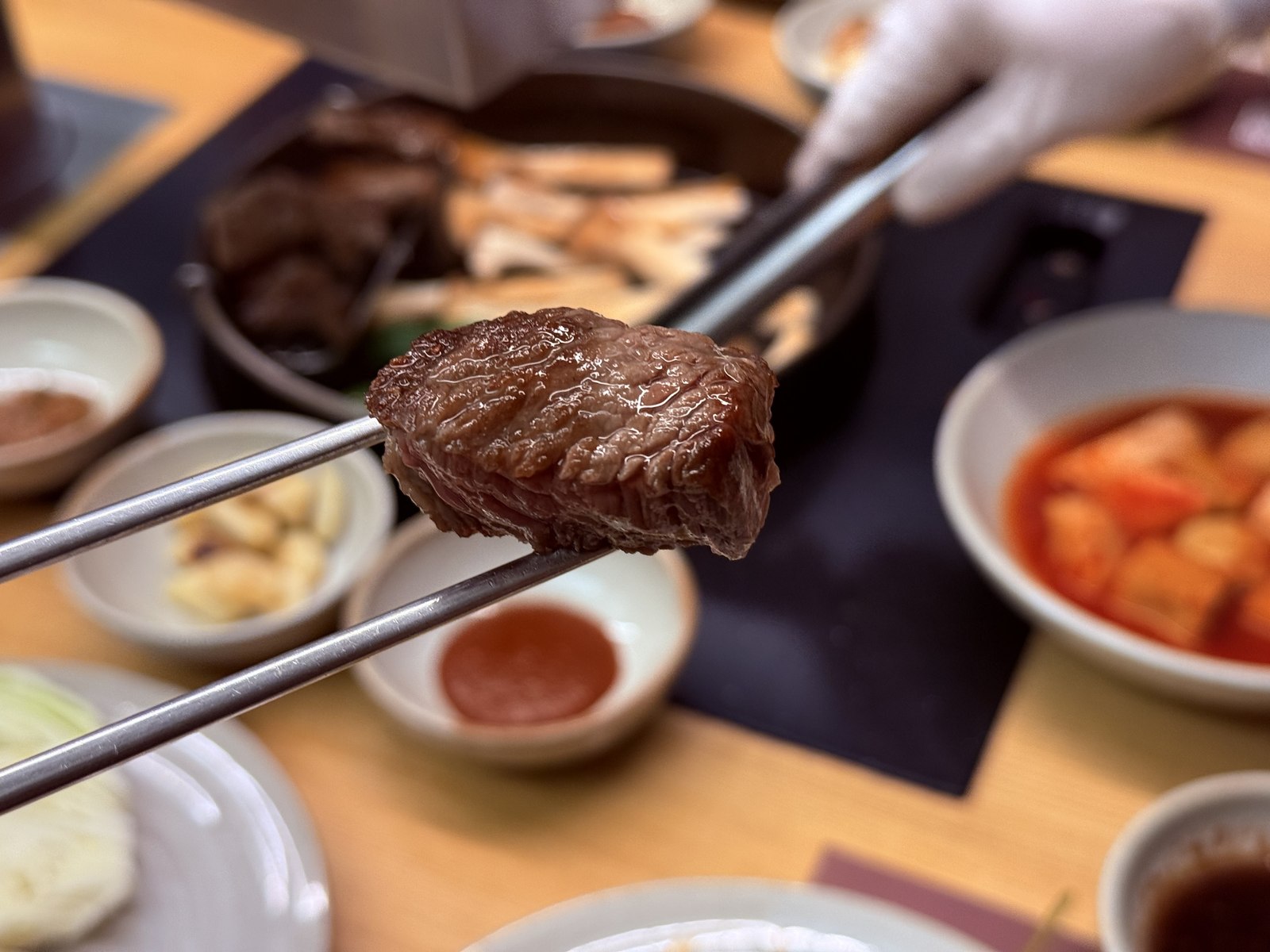
Daedo does not let you grill the meat yourself. White-gloved staff bring a screaming-hot black cast-iron pan to the table, sear the cuts in 30-second flips, and pass them onto a flat cooler section of the pan. The result: deep mahogany crust, ruby-rare interior, no charcoal taste. This is closer to a Tokyo wagyu-ya cast-iron grill than a Korean charcoal house — drier, cleaner, more controlled.
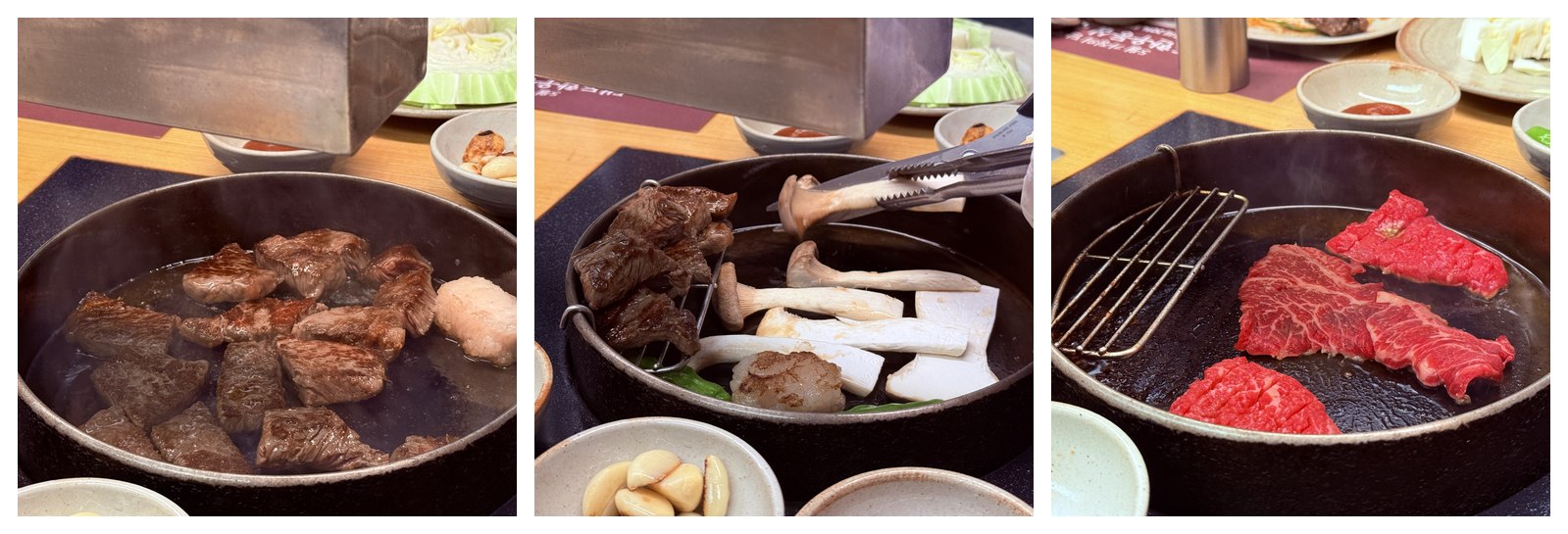
Each piece comes off as it hits perfect — the staff judges it by sound (when the sizzle fades), not by time.
★ The Highlight Move — Cabbage + Gochujang
This is the dish. When you’re ready to assemble your first wrap, the staff does something most foreign diners miss: they take a cabbage leaf, smear a generous stripe of fresh gochujang (red chili paste) across it with tongs, lay a hot piece of hanwoo on top, and hand it to you. This is the way Daedo wants you to eat the meat.
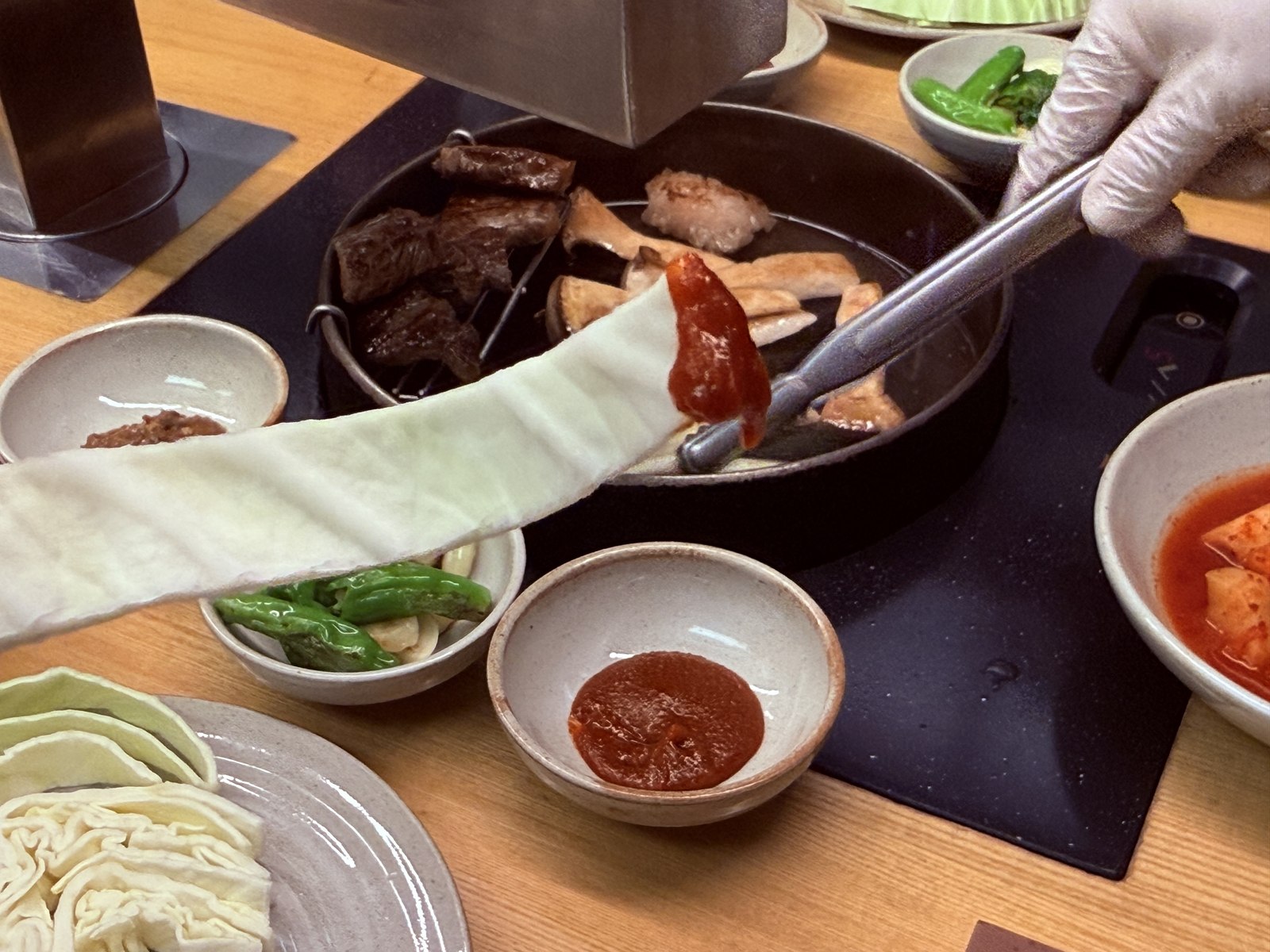
Why it works: the cabbage is cool, crisp, slightly sweet — the opposite of fatty hanwoo. The gochujang is sharp and fermented, not just spicy. Together they reset the palate so the second bite tastes as bright as the first. The wrap traps a little of the rendered beef fat against the cabbage, so the cabbage absorbs the flavor without losing its crunch.
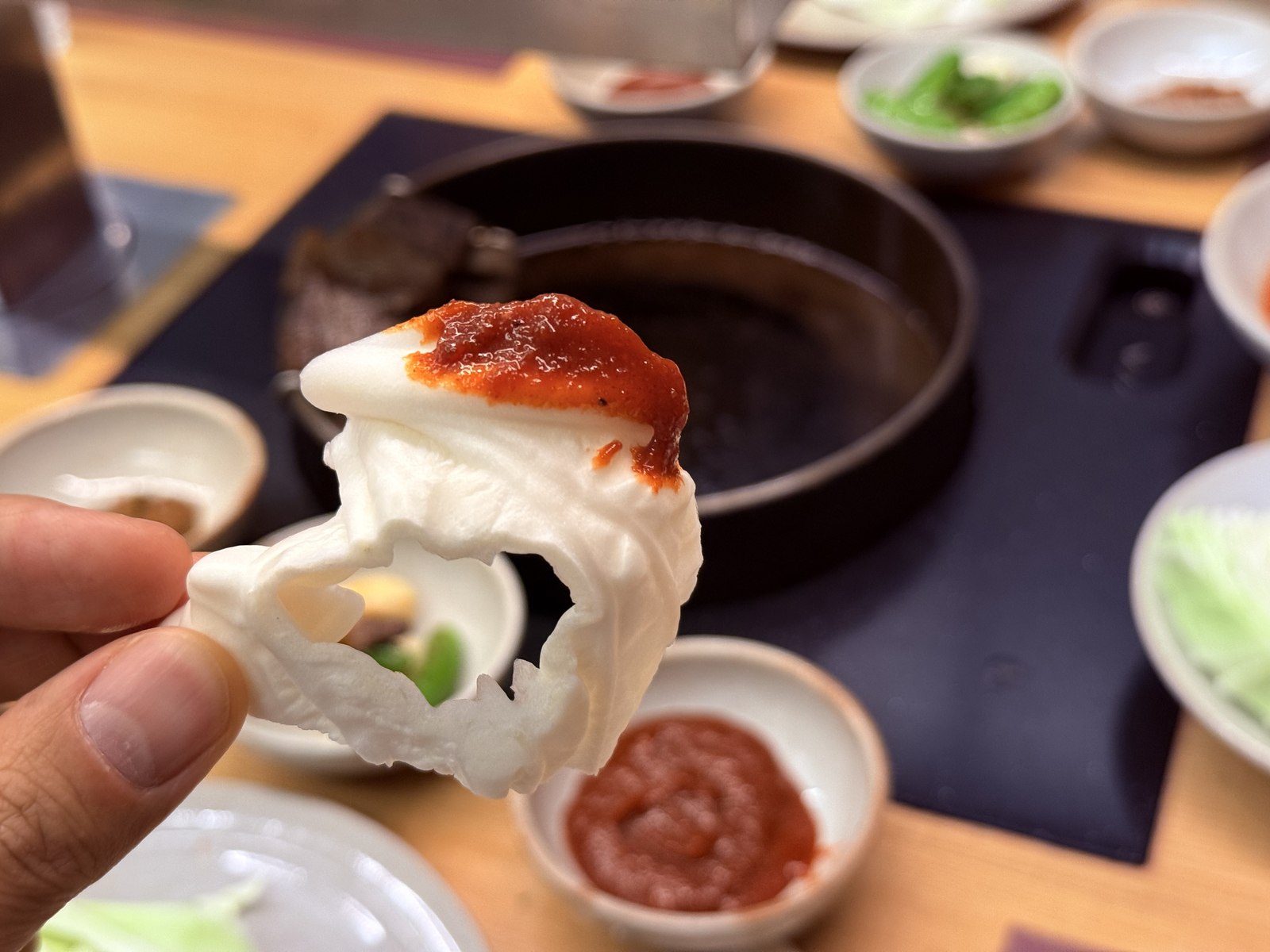
Don’t use lettuce. Don’t use perilla. Use the cabbage. Korean regulars at the next table will all be doing this — once you notice, you’ll see it everywhere in the room. This is the move that turns a great Korean BBQ into the Korean BBQ.
The Carb Finale — Two Things to Order Together
When the meat is done, order both: 된장술밥 (doenjang sool bap) and 깍두기 볶음밥 (kkakdugi bokkeumbap). The carb course at Daedo is what people come back for almost as much as the beef.
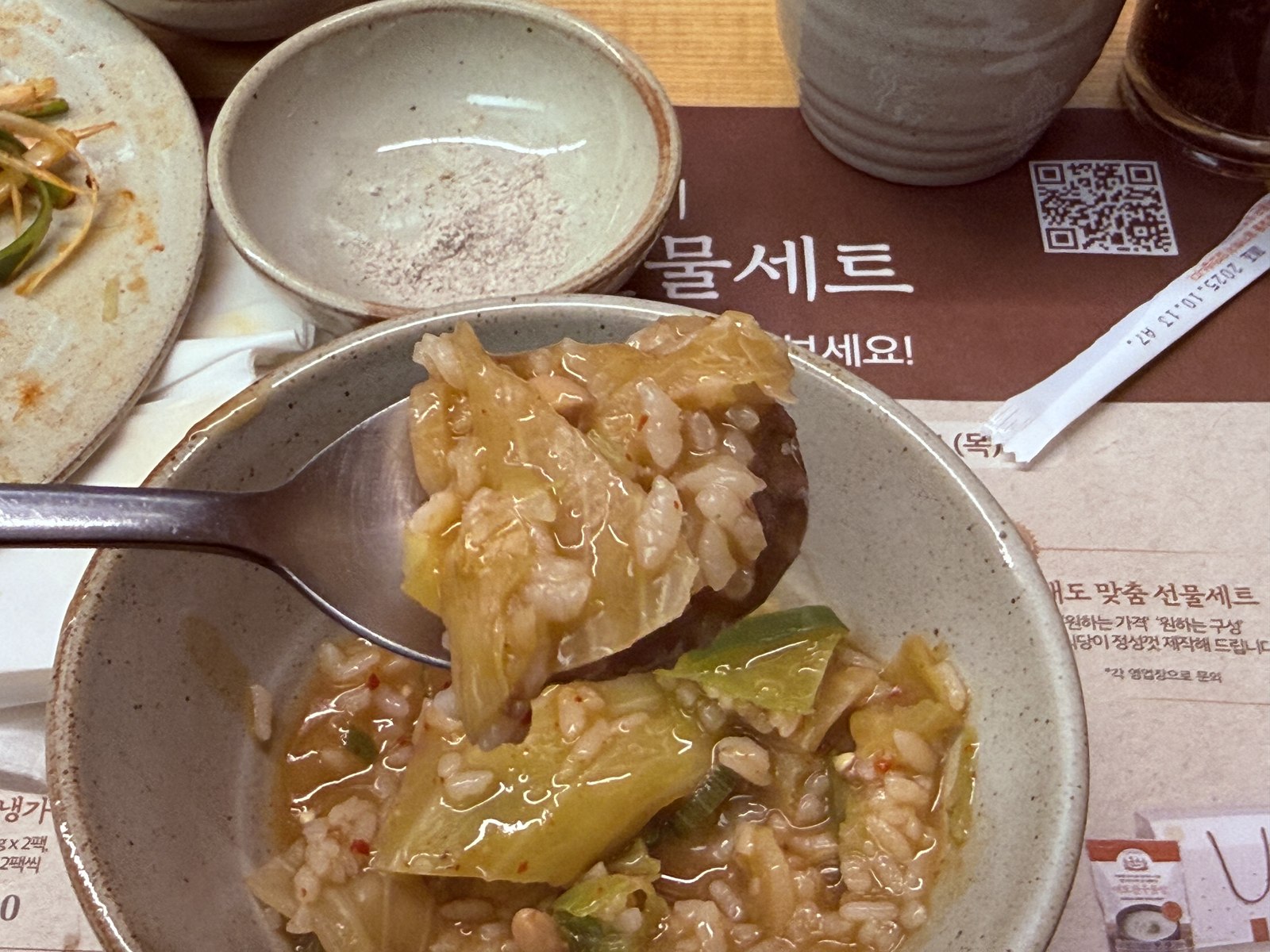
Doenjang sool bap (된장술밥, ₩12,000 / $8) — a soupy soybean-paste stew with rice, kimchi, cabbage, and a splash of rice wine, cooked tableside in the same cast iron the meat was grilled on. The pan picks up all the rendered beef fat. The doenjang is funky, the rice wine cuts the heaviness, the rice gets just-barely-set. It tastes like a Korean grandmother’s Sunday lunch built on top of a $60 steakhouse meal.
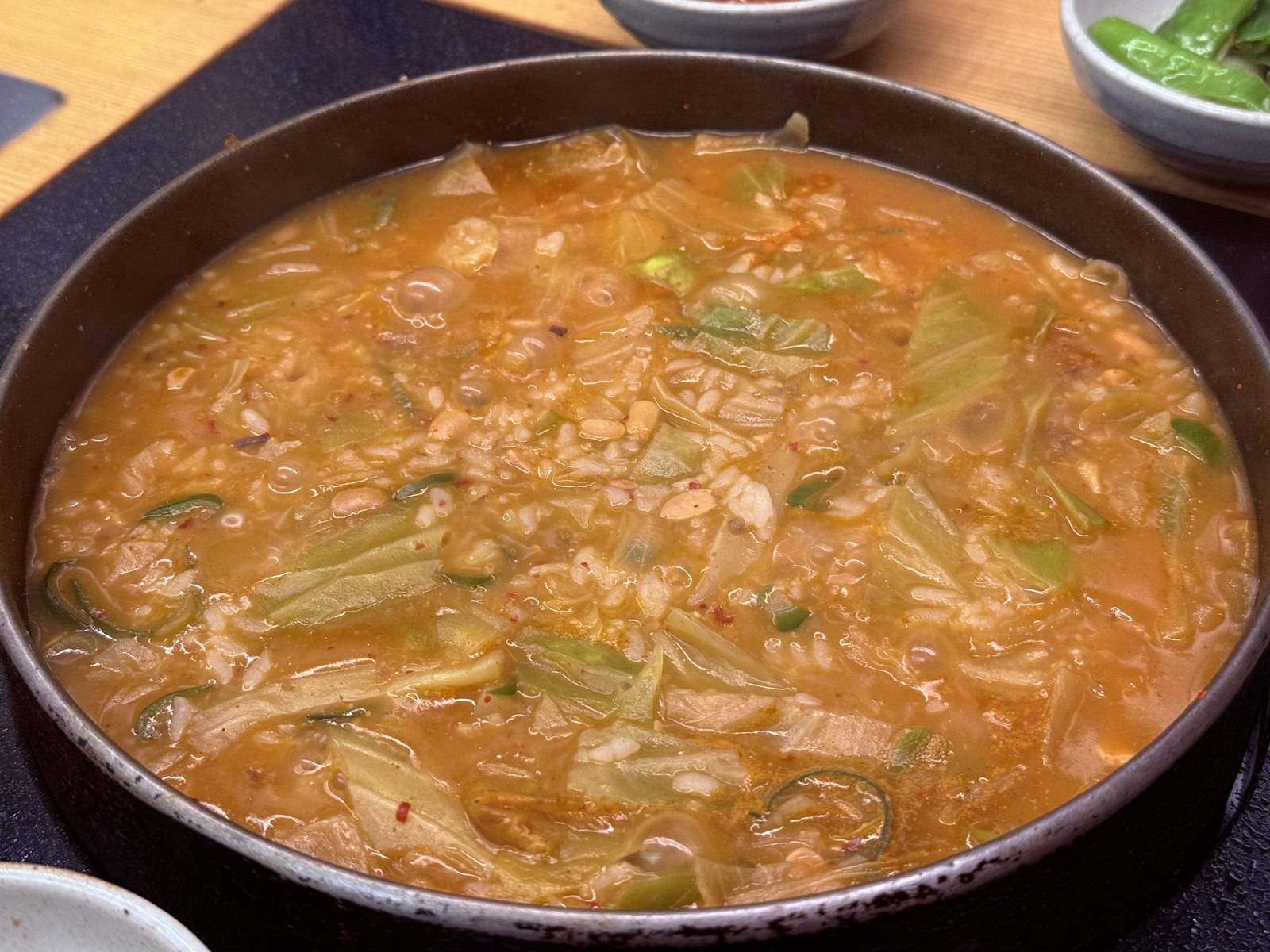
Kkakdugi bokkeumbap (깍두기 볶음밥, ₩9,000 / $6) — the radish kimchi from earlier, chopped finer and stir-fried with rice in the leftover beef fat. The radish becomes sweet from caramelization, the kimchi turns smoky, the rice gets crispy at the bottom. This is the better of the two, and arguably the best kkakdugi-bokkeumbap in Seoul.
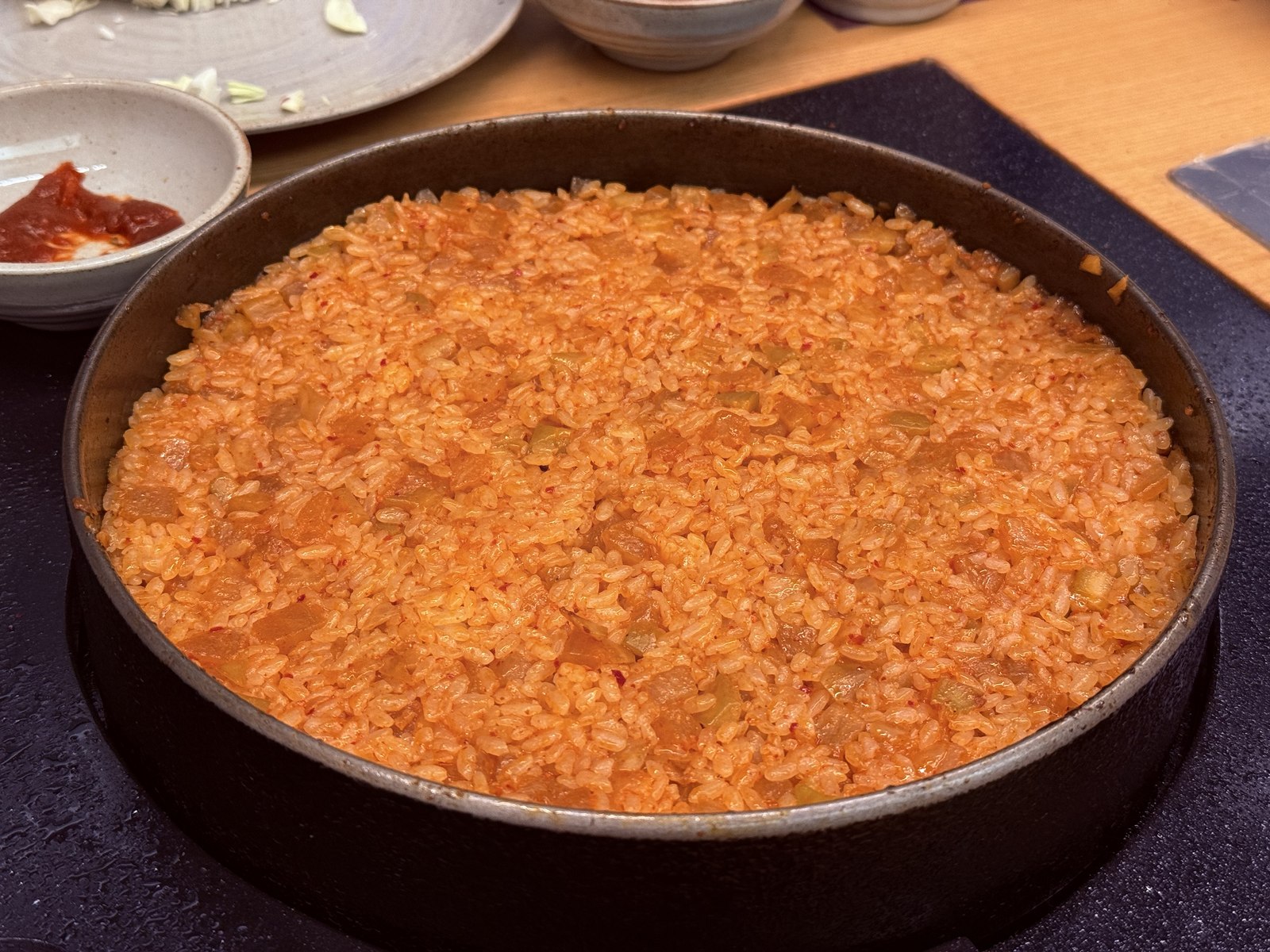
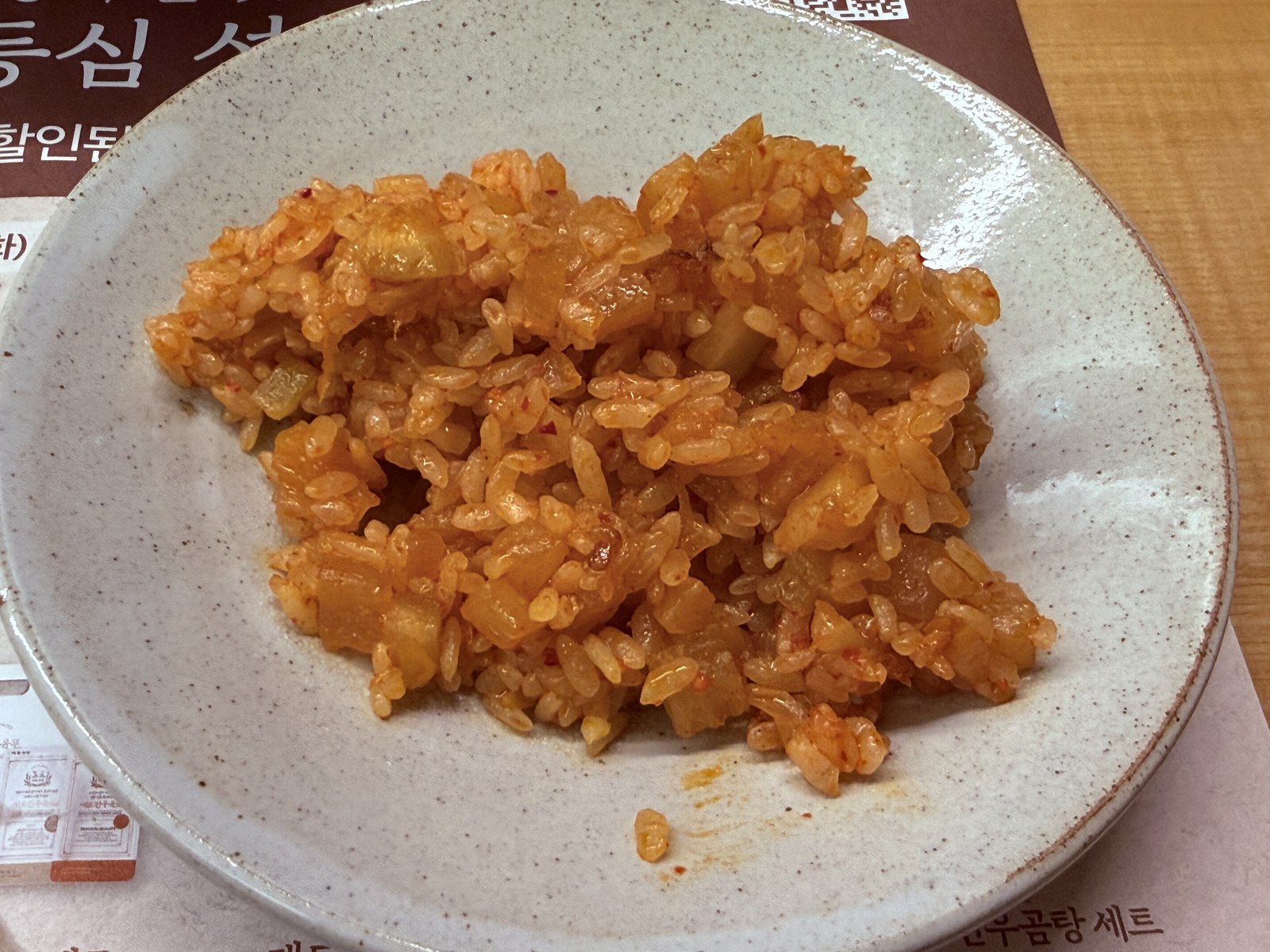
Don’t pick one. Order both, share them between two people, eat the doenjang stew first with a spoon and the fried rice second straight from the pan.
The Finish — Complimentary Soft Serve
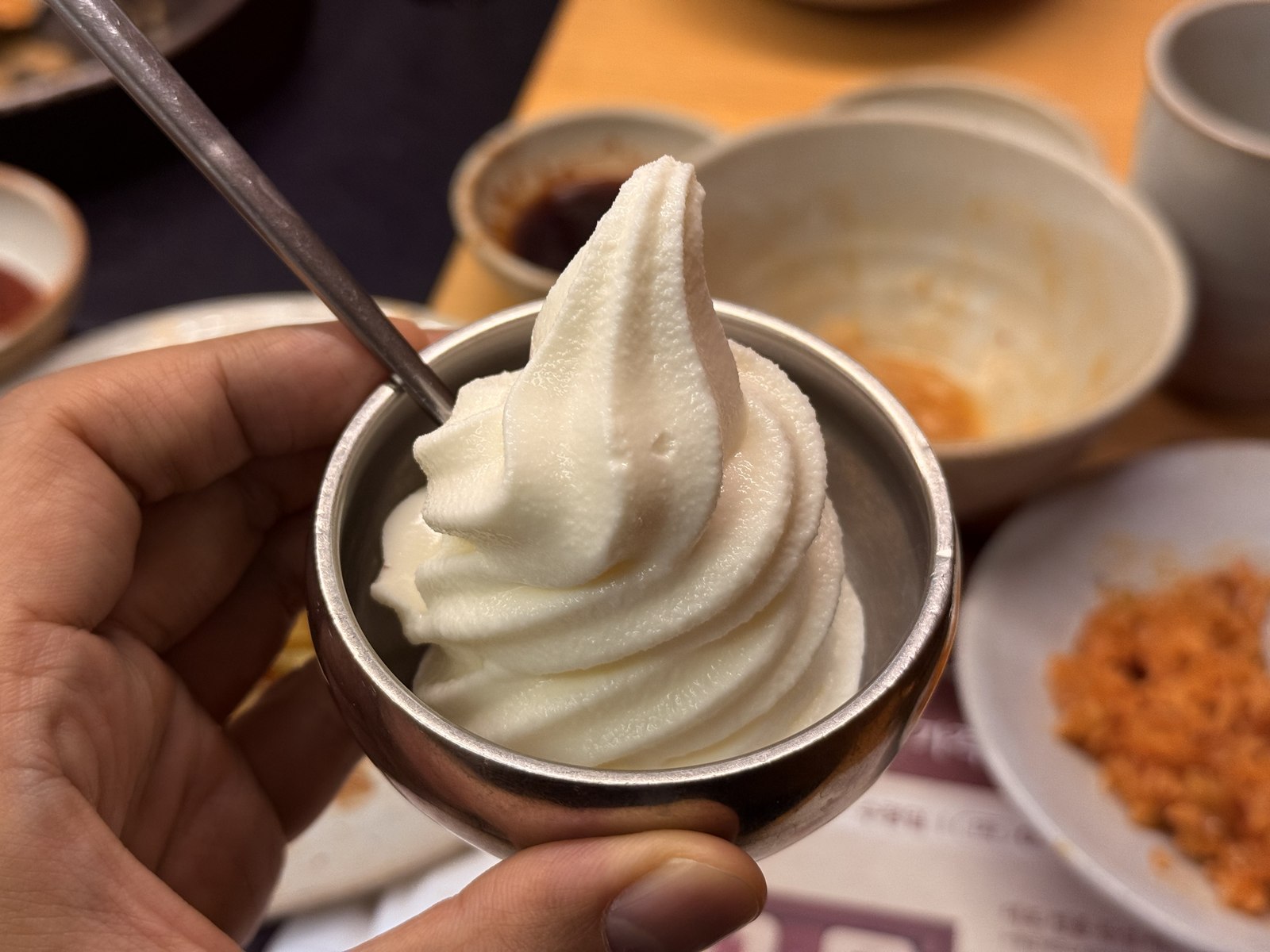
On the way out, a small soft-serve ice cream arrives in a tiny stainless cup. Plain vanilla, dense, milky. It’s the kind of small finishing touch that signals Daedo is paying attention to the whole experience, not just the marquee dish.
Practical Notes for Visitors
- Reservation: Recommended on weekends and dinner peak. Call 02-715-7775 1–2 days ahead. Lunch is easier walk-in than dinner.
- What to order: hanwoo sirloin 200g × number of people · kkakdugi bokkeumbap × 1 · doenjang sool bap × 1 to share. Two people: ~₩200,000 ($136) total including sides.
- The cabbage move: if the staff doesn’t demonstrate it (sometimes they don’t for non-Korean tables), do it yourself — tongs grab a cabbage leaf, dab a fingertip of gochujang on it from the side dish, lay the meat down, fold.
- Sides not on the menu: the charred garlic in the small dish on the side is brilliant — grill the raw garlic cloves on the pan first, then eat them with the meat. Same with the shishito peppers.
- English-friendliness: meat cuts are written in English on the menu. Staff English is functional (“medium rare?” they understand). Other Mapo-side dinners in the area: Matkkalson (Haebangchon Korean), Jumak Boribap (countryside barley rice), Dongnip Millbang (Italian) — all under 20 minutes by taxi.
The Verdict
Daedo Sikdang is the answer to “where should I take someone for hanwoo in Seoul?” It’s expensive — ₩88,000 ($60) per 200g sirloin — but justified by the meat quality, the cast-iron technique, the dry-aging room, the cabbage-and-gochujang wrap that turns the meal into a memory, and the doenjang stew + kkakdugi fried rice finale that almost outshines the beef. Sixty years of doing one thing perfectly. Don’t skip the cabbage. Don’t skip the fried rice. Strong recommendation.
| 🍽️ Food | 5.0 | |
| 💰 Value | 3.0 | |
| 🌏 Foreigner-friendly | 4.0 | |
| 📍 Access | 5.0 |
| Best for | Special occasion · business dinner · first hanwoo experience for visitors · Seoul beef pilgrimage |
| Order this | hanwoo sirloin (200g per person) · cabbage + gochujang for wrap · kkakdugi bokkeumbap + doenjang sool bap to finish |