If you are doing the Namsan Dulle-gil (남산 둘레길) trail and you walk off the back side into Haebangchon, hungry, looking for proof that Seoul still has cheap-and-real food — Matkkalson (맛깔손) is the kind of restaurant you cannot find unless someone tells you about it.
It sits at the very tail of Haebangchon, on the steep edge of the hill, down a winding alley that you would not take unless you had to. Most of its customers are construction workers and day-laborers from the surrounding job sites. The kitchen runs out of the kind of orders most home cooks would consider showing off.
And the prices look like a typo: everything is ₩12,000 ($8.1 USD).

| Korean name | 맛깔손 (Matkkalson) |
| Neighborhood | Haebangchon (해방촌), Yongsan-gu, Seoul — back side of Namsan |
| Subway | Noksapyeong Station (녹사평역), Line 6, Exit 2 — about 12-min uphill walk |
| Price range | ₩₩ — flat ₩12,000 (~$8 USD) per main dish, banchan free refills |
| Signature | 고등어구이 (mackerel grilled set) and 제육볶음 (spicy stir-fried pork) — both ₩12,000 ($8.1 USD) |
| English menu | None — Korean menu only, no pictures. Bring Papago. |
| Foreign cards | Cash preferred — small place. Bring ₩20,000 ($14 USD)–30,000 cash. |
| Hours | Lunch and early dinner — gisa-sikdang style, so check Naver Map for current hours. |
| Map | Google Maps · Naver Map |
My dad’s generation used to eat at gisa-sikdang almost every weekday lunch — they were salarymen, the gisa-sikdang was three blocks from the office tower, and ₩4,500 ($3.1 USD) in 1998 bought you the same plate that costs ₩12,000 ($8.1 USD) today. (Adjusted for inflation, that’s basically flat — which is the whole point of gisa-sikdang.) The Hyatt one block uphill from Matkkalson charges ₩48,000 ($33 USD) for grilled mackerel because it knows you’ll pay it. The construction worker at the next table at Matkkalson is paying ₩12,000 ($8.1 USD) because he knows what mackerel actually costs. Both are correct. One is a deal, and one is a status purchase.
Two Pieces of Korean Vocabulary You Need First
1. 기사식당 (Gisa-Sikdang) — the “Drivers’ Diner”
“Gisa-sikdang” literally means “driver’s restaurant.” The category was born in the 1970s and 80s when Korea’s taxi and trucking industries grew fast and drivers needed cheap, hot, fast meals at all hours. Restaurants near taxi garages, freight depots, and construction zones started running 24-hour or near-24-hour kitchens, with one rule: fill the plate, keep the price low, and never make the driver wait.
Over time, gisa-sikdang became one of Korea’s most distinctive working-class food cultures: stews, grilled fish, jeyuk-bokkeum, banchan with steel chopsticks, instant-cooked rice, and a permanent kitchen smell of gochujang and sesame. They are loud, fluorescent, and often the best Korean home cooking you can buy because that kitchen does not survive bad food — its customers are eating there every day.
Matkkalson is one of these. Inside, you’ll see most of the seats taken by men in work uniforms, and a corner stacked high with takeout boxes — the restaurant runs 100+ portions of group delivery per service to nearby job sites. That’s a real local-credibility signal in Korean food culture.
2. 맛깔손 — “Hands That Make Delicious Food” (Pure Korean)
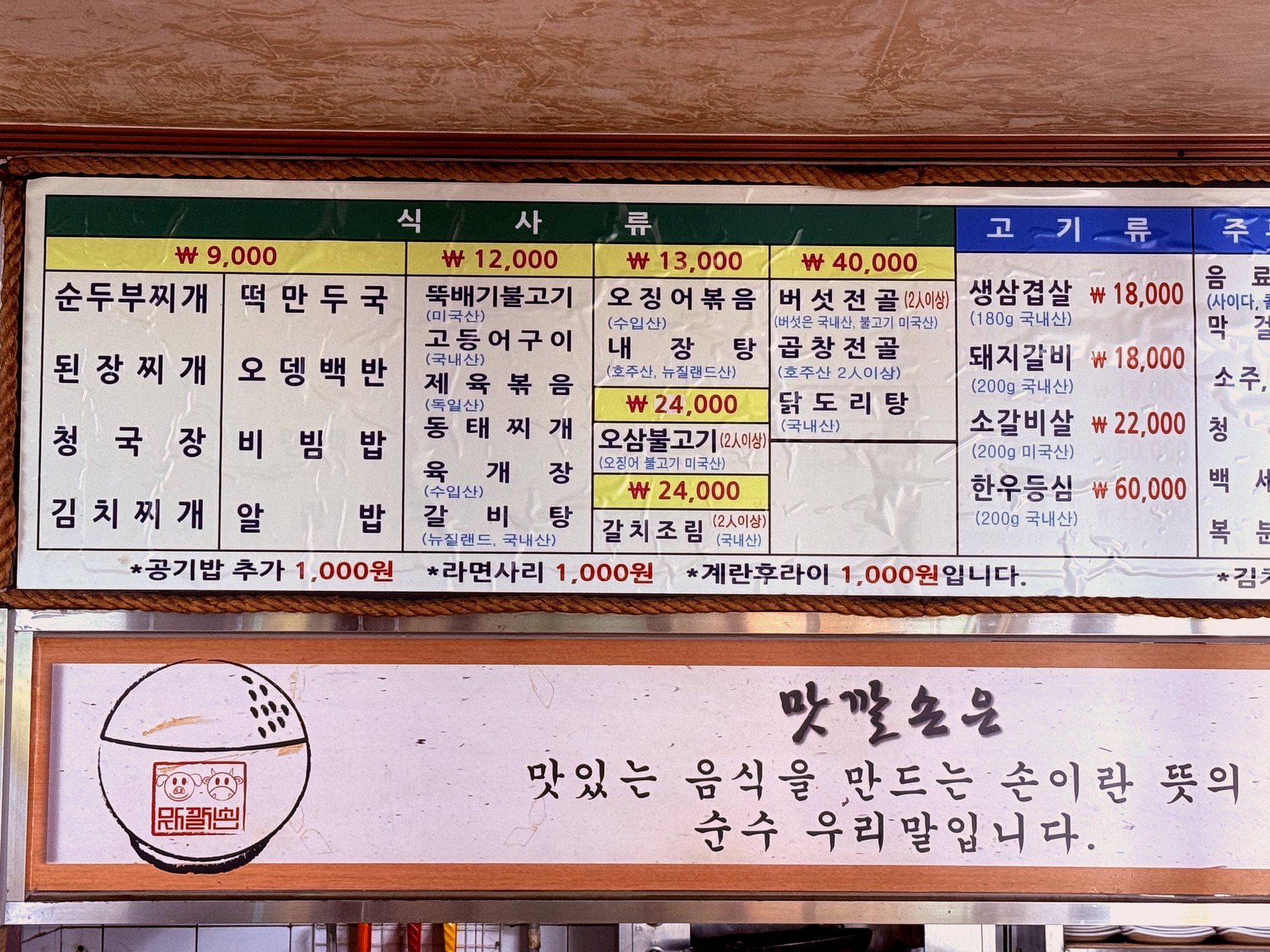
The restaurant’s name is itself a small love letter to Korean. 맛깔 (matkkal) is a native Korean adjective root meaning “tasty / well-flavored,” and 손 (son) means “hand.” Together: matkkalson = the pair of hands that make food taste right. It is a 순우리말 (sun-uri-mal, “pure native Korean”) — no Sino-Korean compounds, no English, just the kind of word that feels like a grandmother’s compliment. The restaurant prints the meaning right under their menu sign:

“맛깔손은 맛있는 음식을 만드는 손이란 뜻의 순수 우리말입니다” — “Matkkalson means ‘hands that make delicious food,’ a pure native Korean word.”
That little card tells you everything about the place’s self-image. Not flashy. Not trendy. Just hands that cook well.
The Spot — All the Way Up Haebangchon, All the Way Back Down
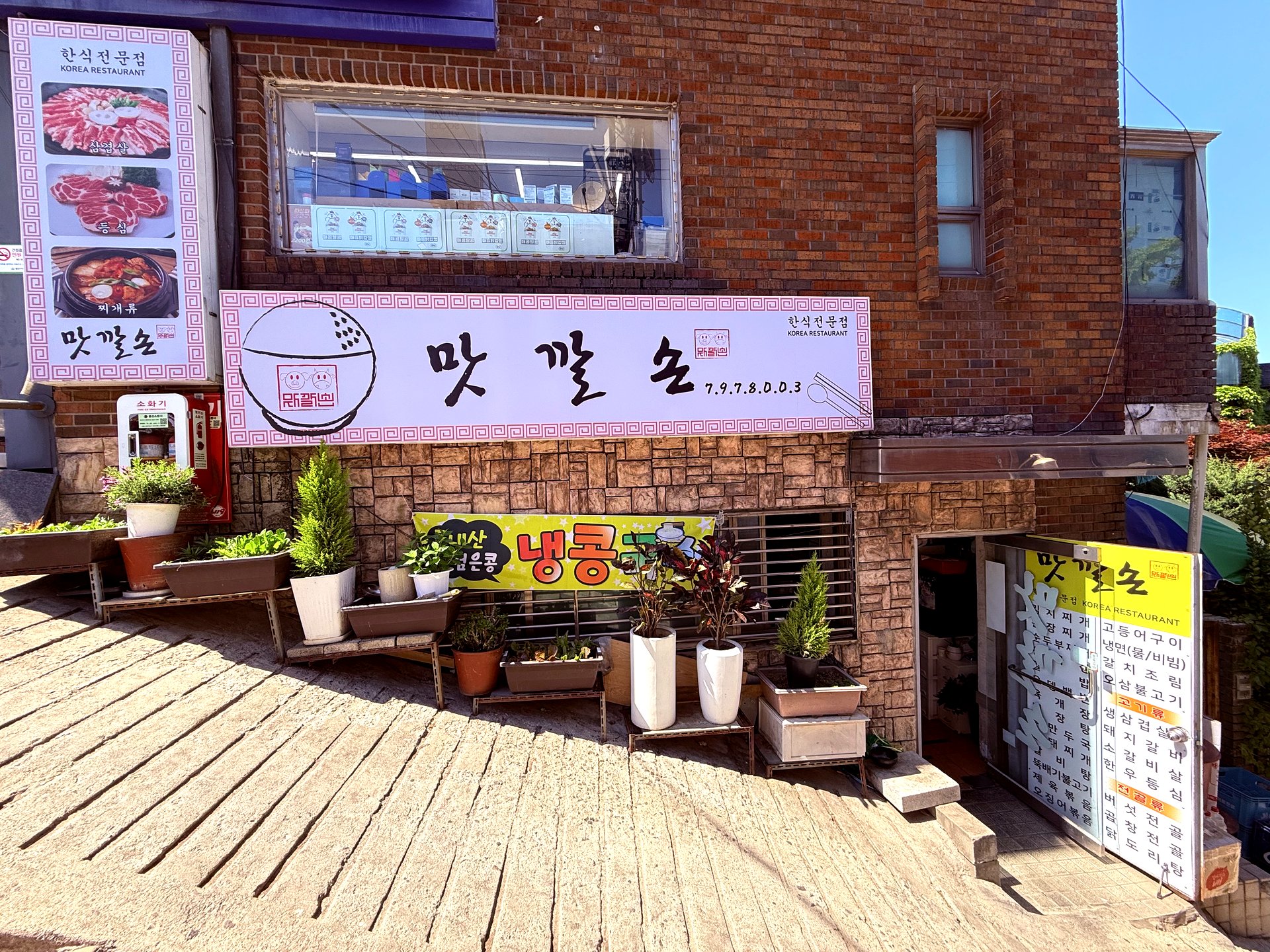
Finding Matkkalson is part of the experience. The restaurant sits at the far end of Haebangchon (해방촌), on the back hillside facing the Hyatt Hotel — which is kind of poetic, because Matkkalson and the Hyatt fine-dining rooms about 800m away are basically opposite poles of the Seoul food economy. You take a steep climb up, then turn down a curving narrow alley that you would never enter without intent. Then you spot the brick building.

Inside — Working-Class Diner, Exactly As Promised
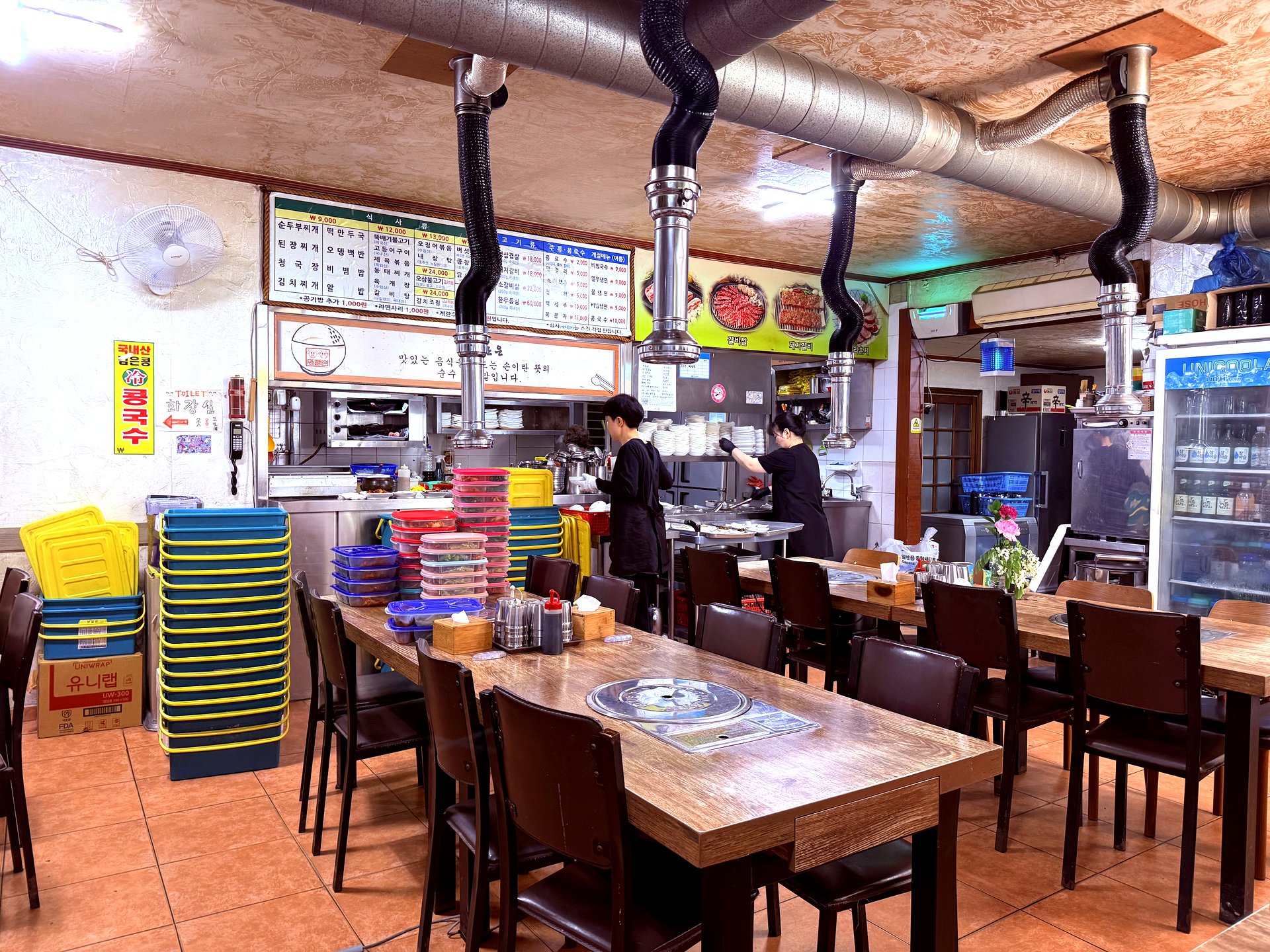
Steel ductwork running across the ceiling. Stacks of plastic delivery boxes against the wall. Wooden tables with portable burners built in. A large posted menu with hand-stamped pricing. The cook visible behind the counter, working fast. This is what a real Korean working-class diner looks like — utilitarian, busy, and proudly unconcerned with aesthetics.
The Menu — Most of It Is Under ₩15,000 ($10 USD)
- ₩9,000 ($6.1 USD) row: 순두부찌개, 된장찌개, 청국장, 김치찌개 — single-pot stews
- ₩12,000 ($8.1 USD) row: 떡만두국, 고등어구이, 제육볶음, 동태찌개, 알밥 — what most workers order
- ₩13,000 ($8.8 USD) row: 오징어볶음, 내장탕, 육개장, 갈비탕, 갈치조림 — slightly more involved
- ₩24,000 ($16 USD) / 2 people: 오삼불고기 (squid + pork stir-fry, 호주산 / Australian beef variant)
- Hot pots ₩40,000 ($27 USD) / 4 people: 뼈전골, 곰장전골, 닭도리탕
- Cuts (right column): 생삼겹살 ₩18,000 ($12 USD), 돼지길비 ₩18,000 ($12 USD), 소갈비살 ₩22,000 ($15 USD), 한우등심 ₩60,000 ($41 USD)
Most regulars order the kimchi-jjigae lunch combo because it’s the cheapest. But the real noporo (노포, “old-school institution”) test, if you ask me, is the fried mackerel and the jeyuk-bokkeum. So that’s what we ordered.
Jeyuk-Bokkeum (제육볶음) — ₩12,000 ($8.1 USD)
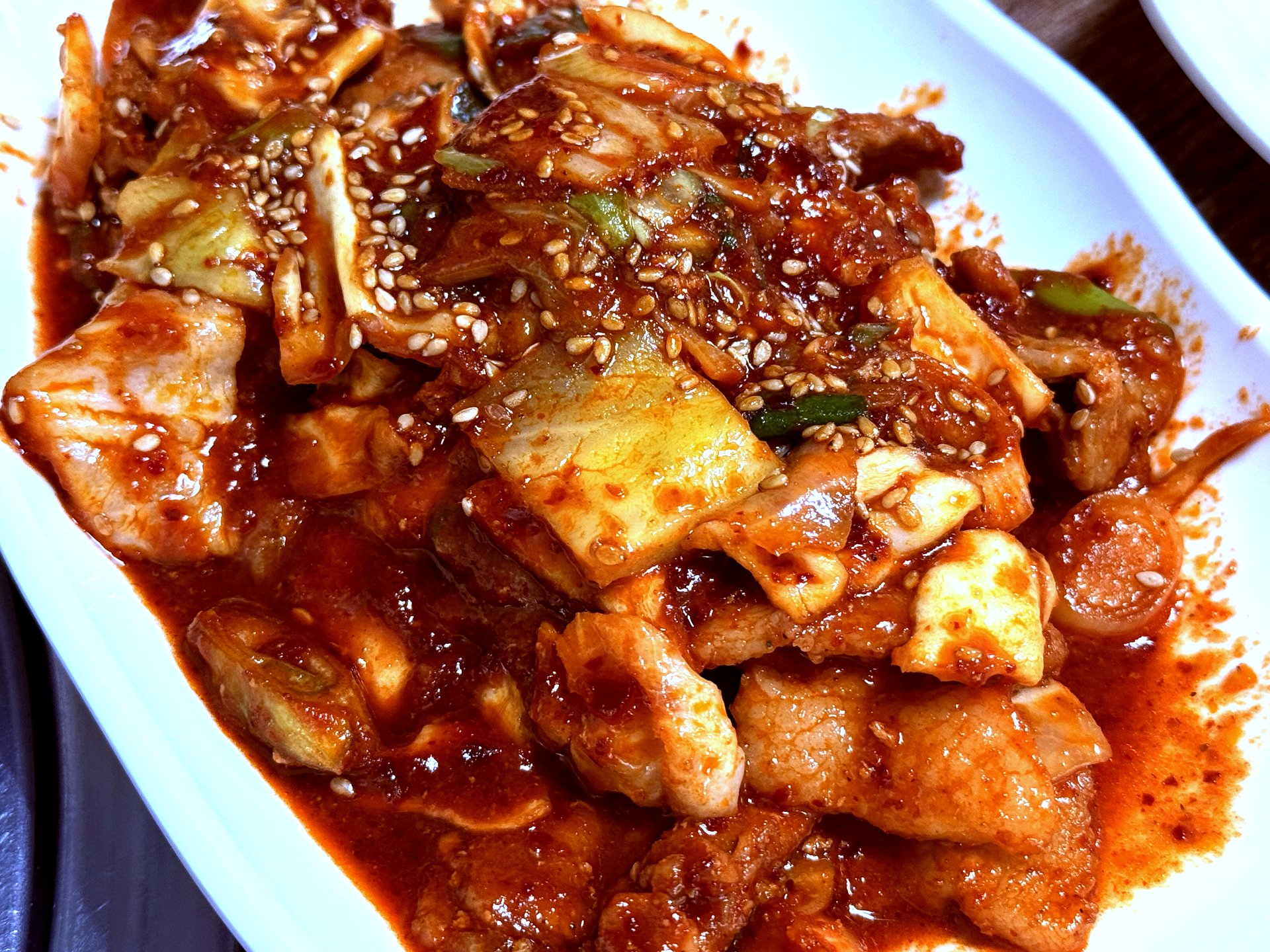
The jeyuk-bokkeum is competent — pork, gochujang, onion, cabbage, sesame seeds. Solid and well-portioned. One small note: the seasoning here leans more toward ojingeo-bokkeum (squid stir-fry) marinade than the typical jeyuk style — it has a bit more sweetness and a different kick.
Nothing wrong with that, but if you have two or more people in your group, my actual move is to order the 오삼불고기 (osam-bulgogi, squid + pork stir-fry) instead. Same sauce profile, more textures, better value at ₩24,000 ($16 USD) / 2 people.
Godeungeo Gui (고등어구이) — ₩12,000 ($8.1 USD)
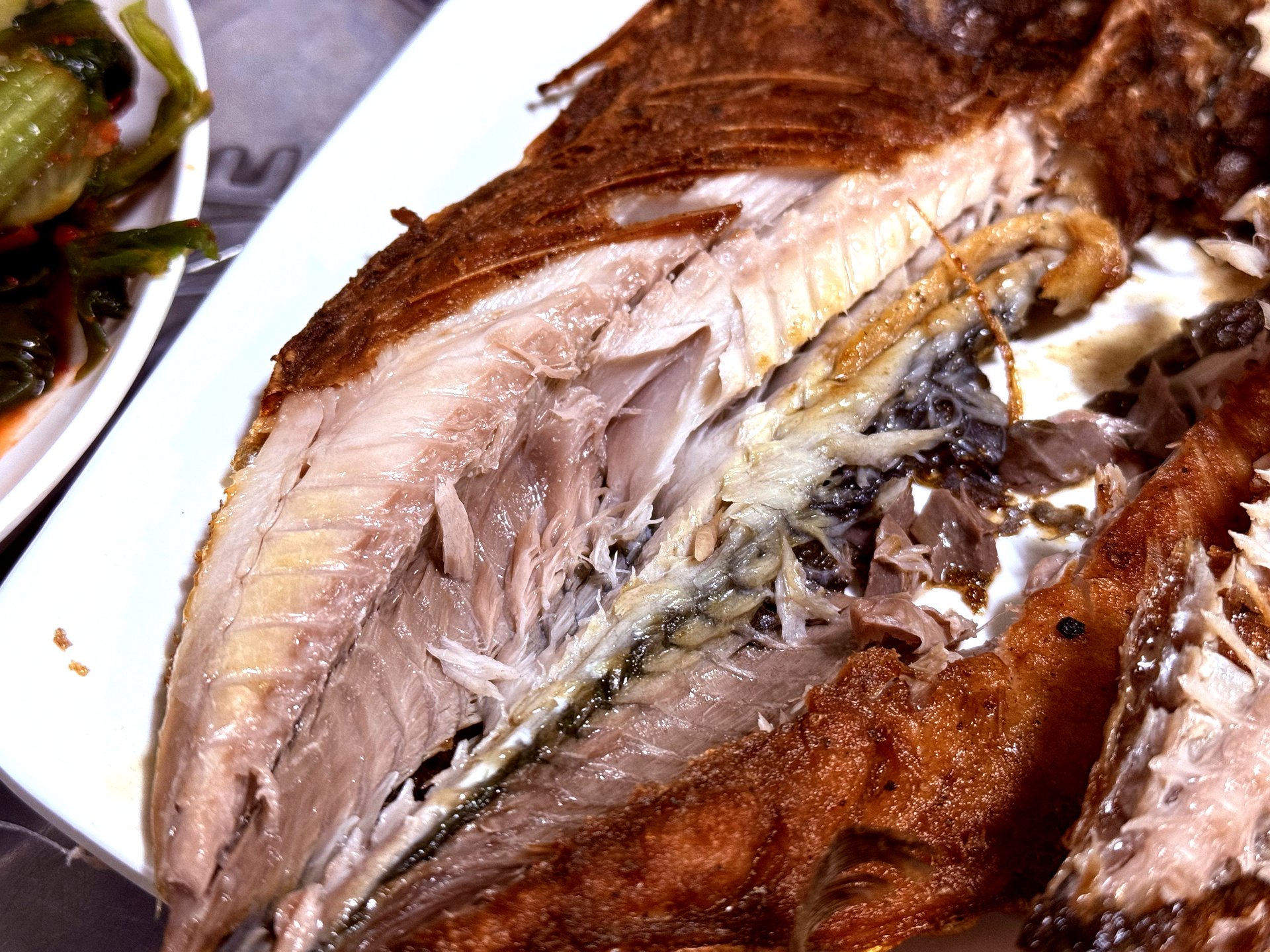
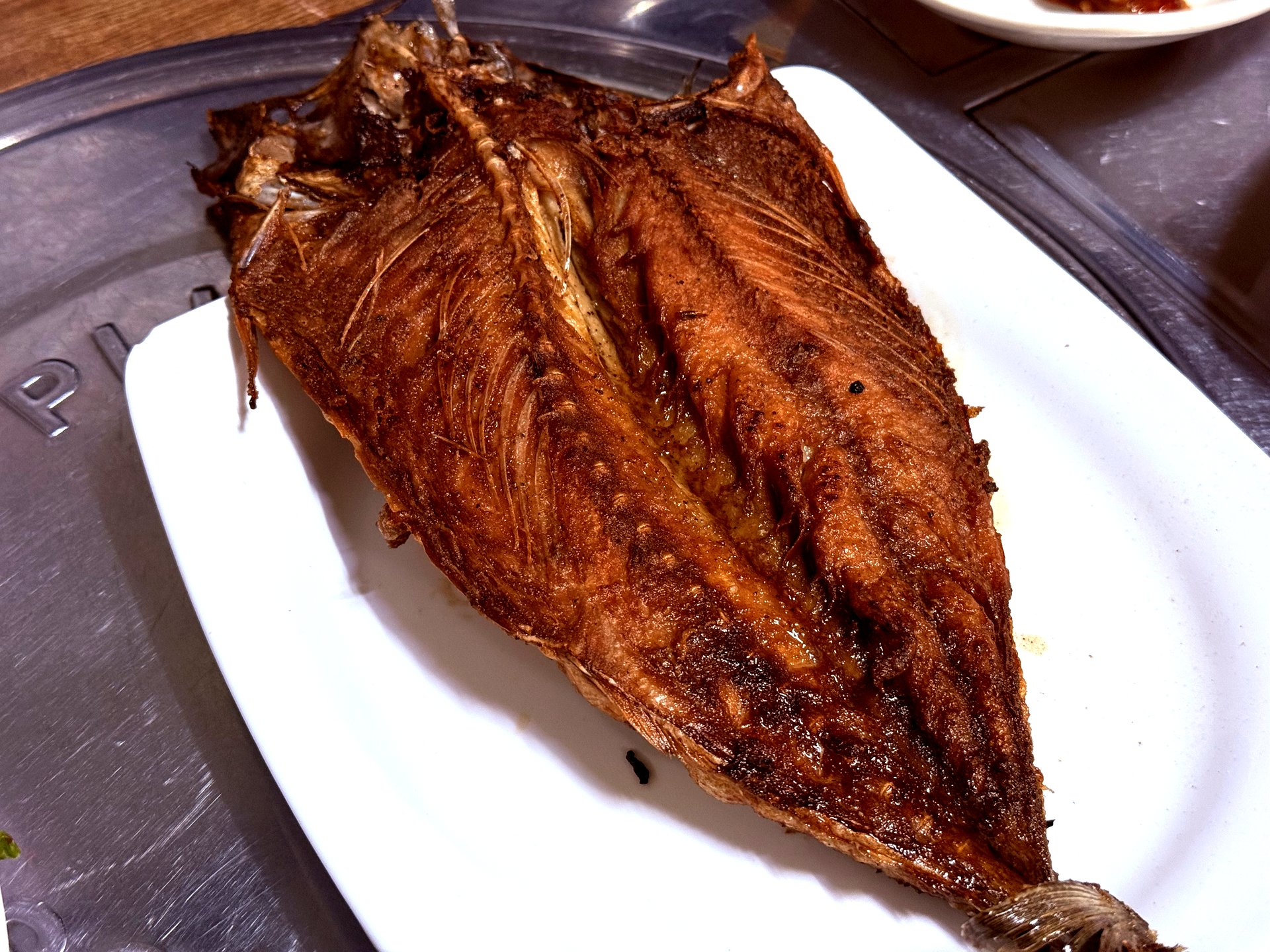
This is the headline. Most Korean restaurants serve mackerel either grilled or pan-fried. Matkkalson deep-fries the whole fish — a thick, oily, full-bodied mackerel dropped intact into hot oil until the skin is bronze and the inside is just-cooked. The fat from the fish self-bastes the flesh as it fries, and the skin develops the kind of crisp that you cannot get on a pan.

Peel back the skin. The flesh comes off in big white flakes — oily in the way good mackerel is supposed to be, never dry, never fishy. With a spoonful of rice and a piece of yeolmu kimchi, this is one of the better ₩12,000 ($8.1 USD) plates of food in Seoul.
Galbitang (갈비탕) — ₩12,000 ($8.1 USD) — The Surprise Kick
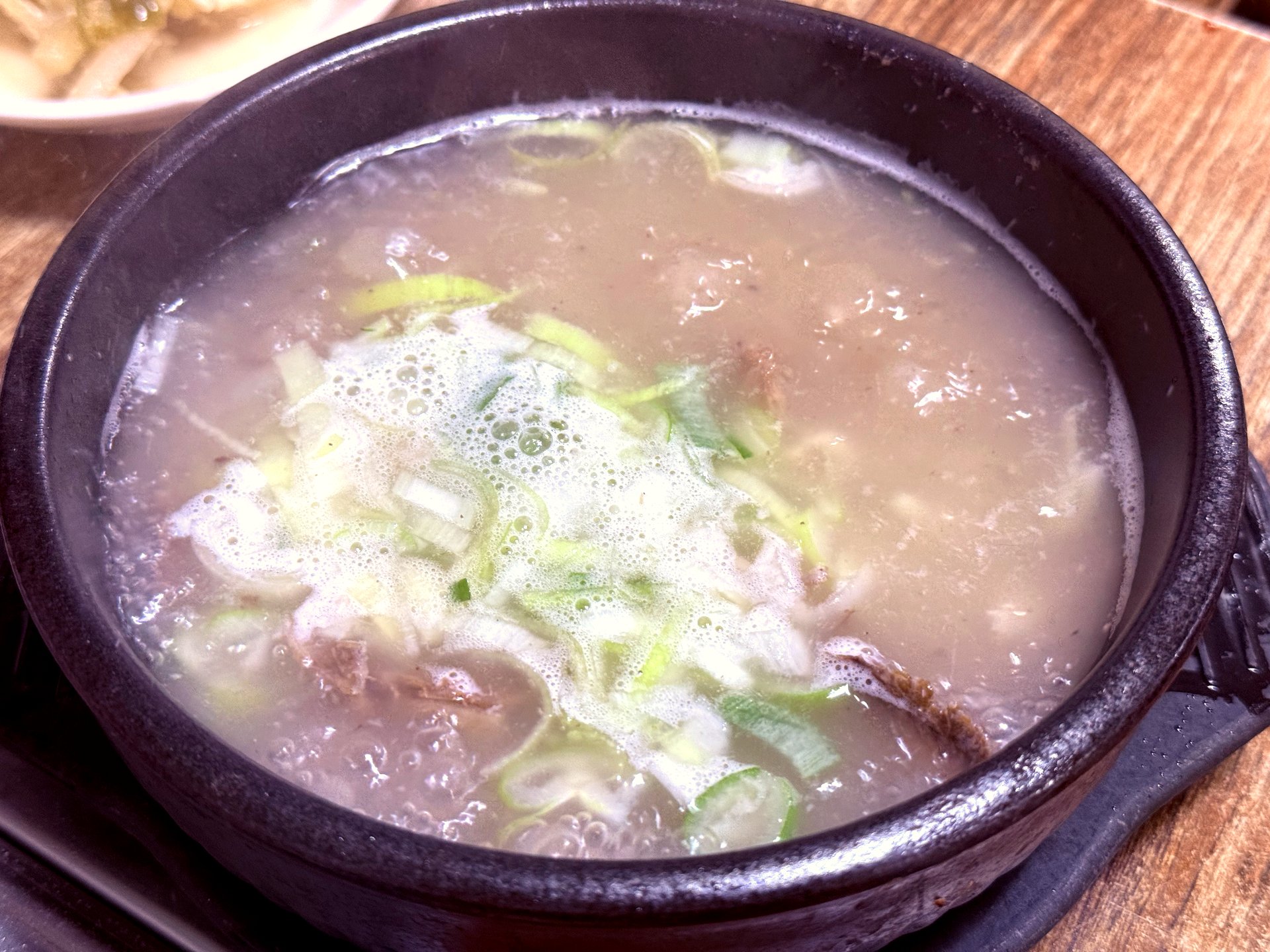
I did not expect anything from this. Galbitang at a ₩12,000 ($8.1 USD) price point is usually thin, salty, and forgettable. Matkkalson’s version is the opposite:

Deep, milky-but-clear bone broth. Scallions float on top. Underneath, a generous chunk of beef rib that has actually been simmered long enough to give up flavor instead of just sitting there. The broth tastes like someone has been minding a stockpot for hours, not opening a packet. For the price, this is the dish that turned the meal from a “good cheap lunch” into a “I will be coming back” lunch. Order it.
The Banchan
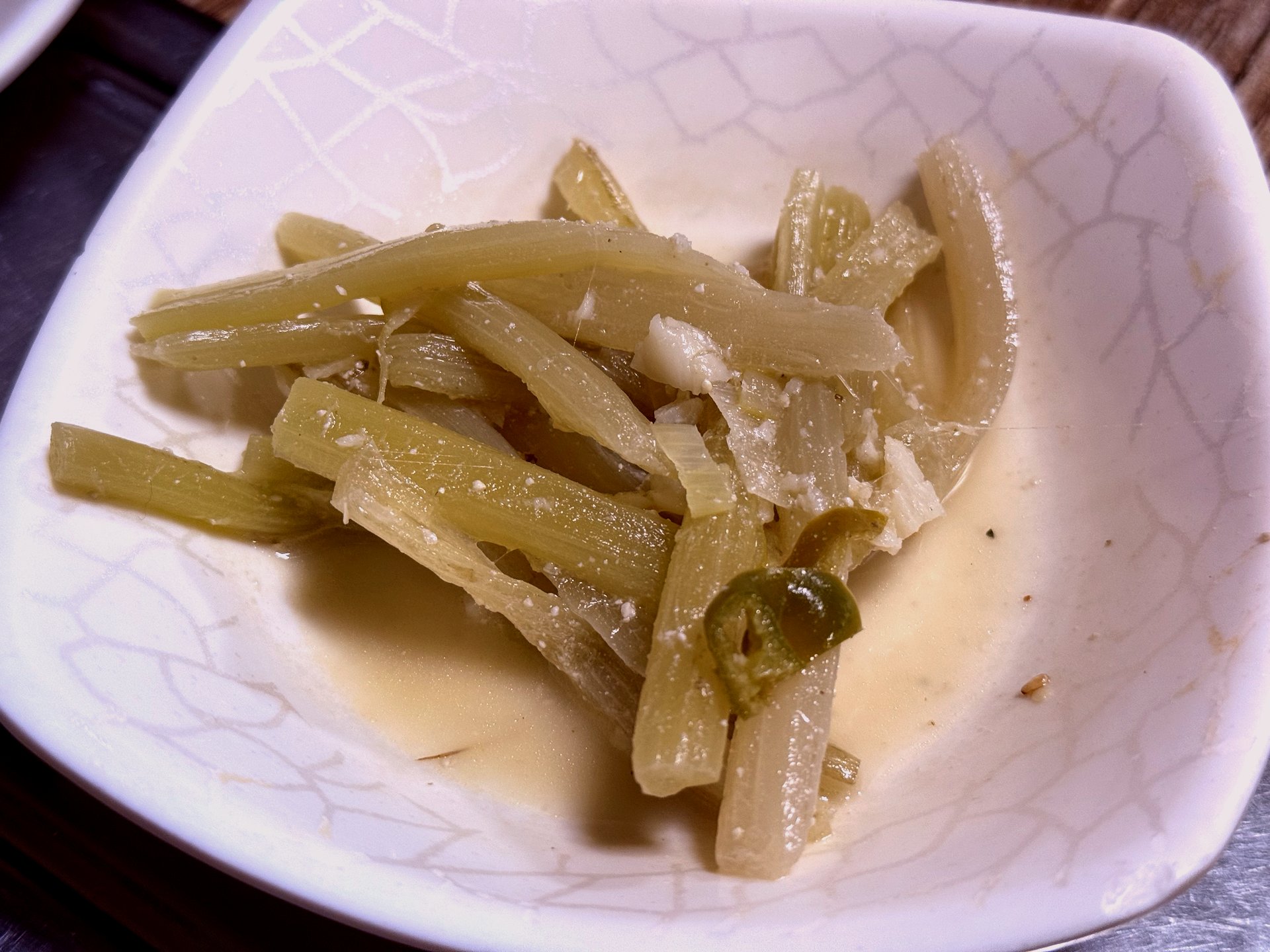
The sides arrive on small white plates — what you would expect at any honest gisa-sikdang. Don’t sleep on them.
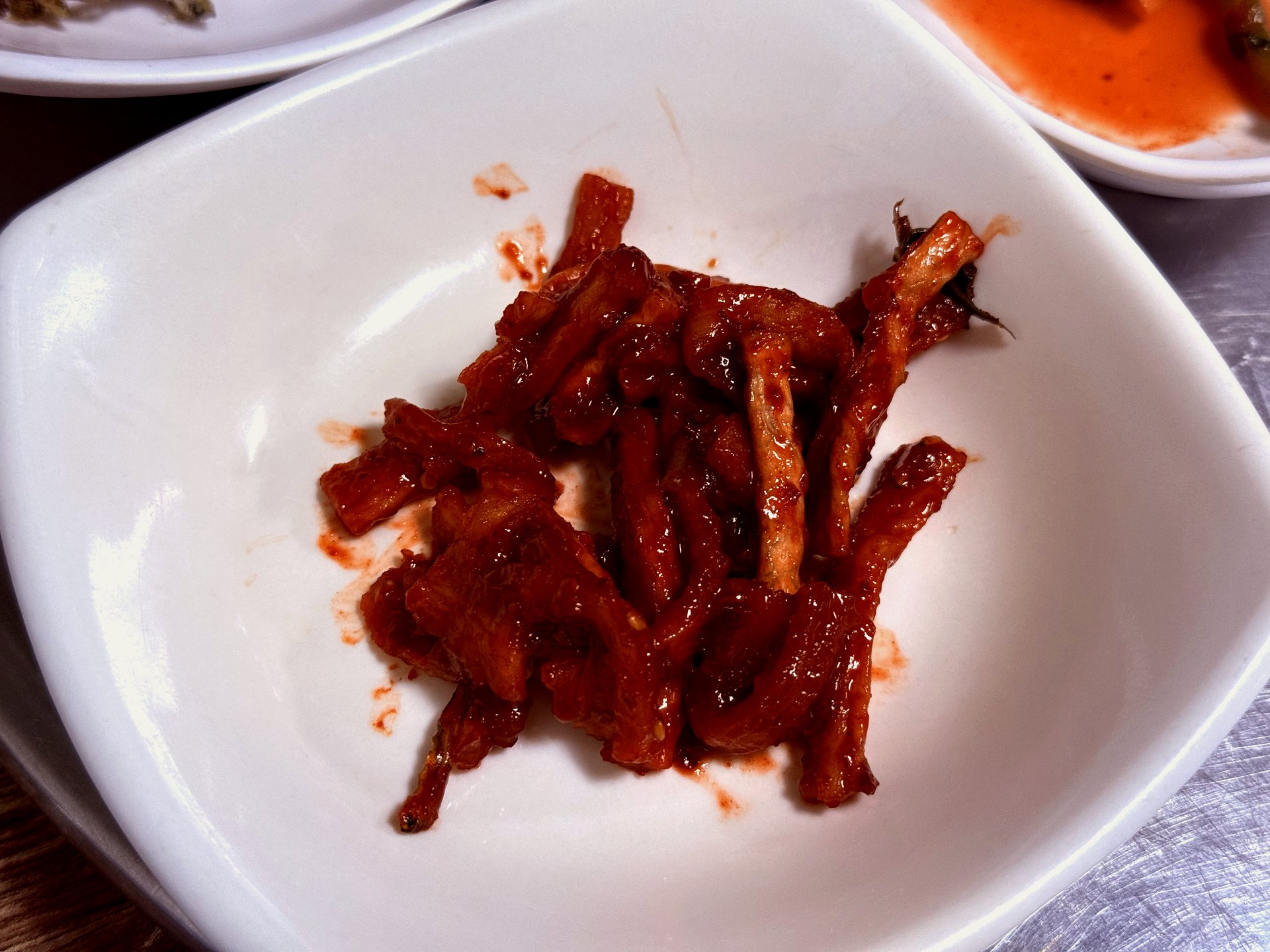
Sweet-Spicy Fishcake

Soft, glossy, sweet-spicy. Goes in the wraps, goes on the rice, goes anywhere.
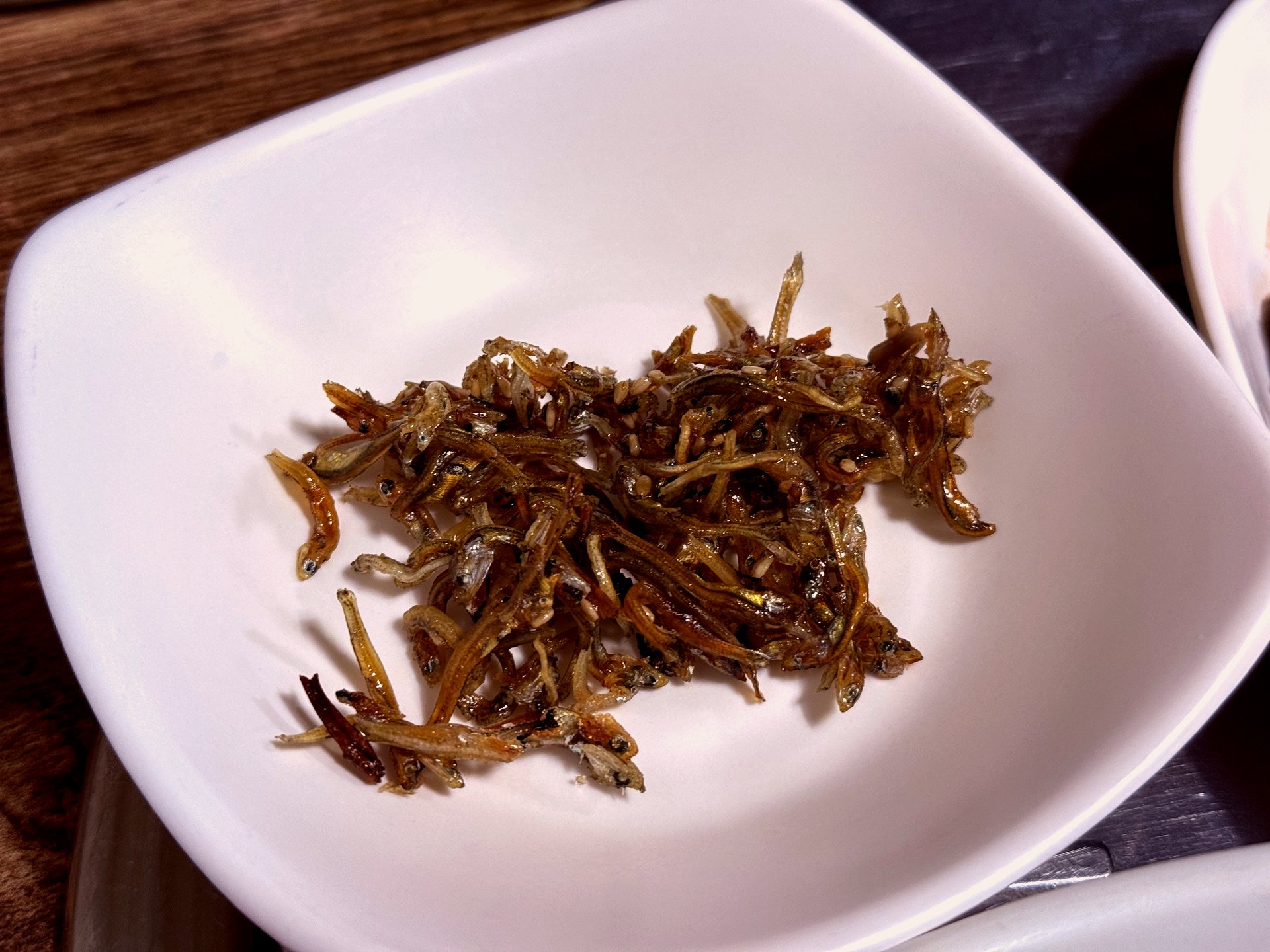
Myeolchi Bokkeum (멸치볶음)

Soy-glazed dried anchovies — the lightly-sweet, lightly-toasted version (not the spicy one). Crunchy, salty-savory, perfect grain-of-rice scaling.
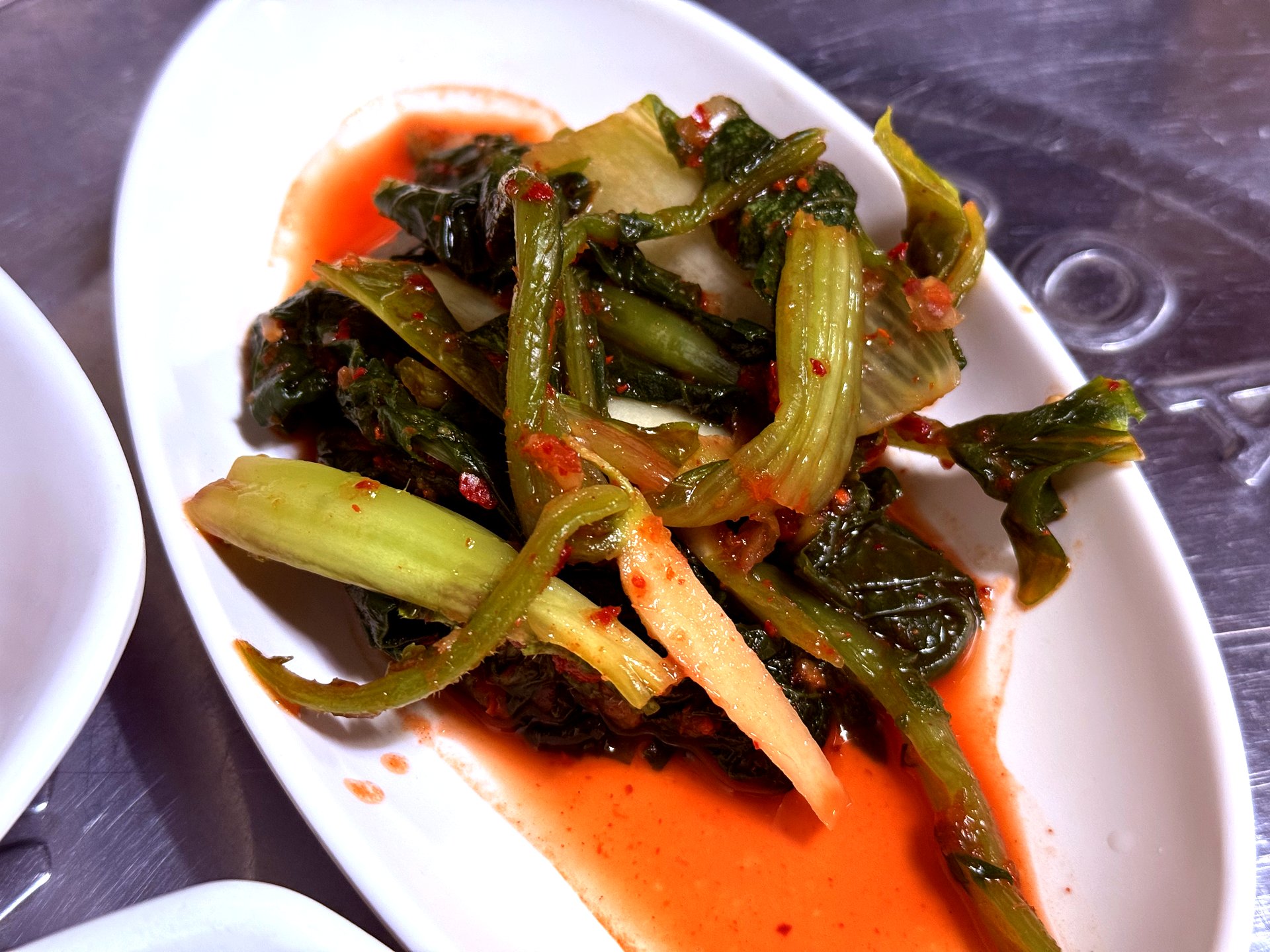
Yeolmu Kimchi (열무김치)

Young-radish kimchi, freshly cut, slightly bitter, gently spicy. A summer-into-fall side dish that works as a palate reset between bites of fried mackerel.
Jogae Jeotgal (조개젓갈) — Salted Fermented Clams
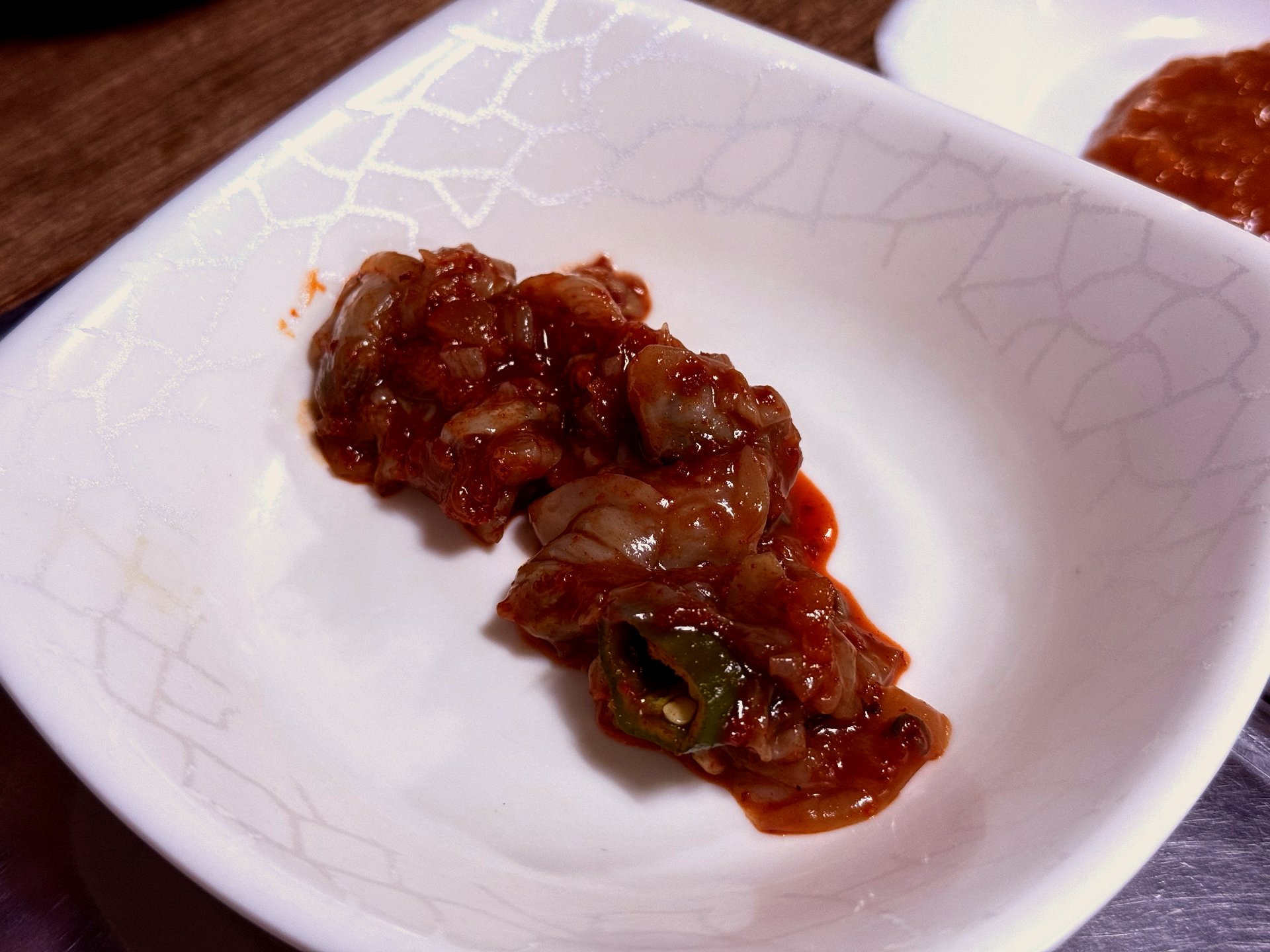
Tiny soft clams cured in salt and chili, glossy and intensely savory. This is the rare jeotgal where the protein is recognizably clam — chewy, briny, and just enough of a kick that one chopstick-tip’s worth seasons a full bite of rice. Don’t try to eat it on its own; it is a flavor concentrate, not a side dish.
Mu-Malraengi Muchim (무말랭이 무침)

Dried radish strips, lightly seasoned. Chewy, savory, a quiet workhorse banchan.
Practical Notes for Visitors
- Cards? Yes, accepted.
- Parking? No — you walk in.
- Foreign-friendly? Honestly, low. Korean-only menu, basic Korean from staff. This is part of the experience but not for everyone.
- Honest warning: if you do not enjoy old-school noporo aesthetics — fluorescent lights, working-class crowd, stacked delivery boxes — this will not be your kind of restaurant. Go to one of the trendier Haebangchon spots instead.
- Best paired with: a Namsan trail walk in either direction. Eat heavy after, then walk it off down toward Itaewon.
The Verdict
Matkkalson is not a destination restaurant in the conventional sense. It is a small, no-frills gisa-sikdang that feeds construction workers and the occasional curious local for under ₩15,000 ($10 USD) a head, and it does it with the kind of quiet competence that earns the name on the door. The fried mackerel is excellent. The galbitang is a sleeper.
The pricing is from another decade. And it sits roughly 800 metres from one of Seoul’s most expensive hotel restaurants, which is the kind of geographic irony that defines Korean food culture.
Worth the climb if old-school is your thing.
Taste: ★★★★
Value: ★★★★
| 🍽️ Food | 4.5 | |
| 💰 Value | 5.0 | |
| 🌏 Foreigner-friendly | 3.0 | |
| 📍 Access | 4.0 |
| Best for | Cheap-eats hunters, Namsan trail walkers needing real food, anyone tired of Itaewon prices |
| Skip if | You can’t read Korean and refuse to use Papago, you came for atmosphere, you only eat at places with English menus |
| Order this | 고등어구이 (mackerel set) – ₩12,000 ($8.1 USD) – or whatever your neighbor is eating |
| Visited | 2026 – multiple visits |
Go. Take Line 6 to Noksapyeong, walk uphill into Haebangchon, find the alley, and order whichever set the construction worker at the next table is eating. Don’t try to order in English — point at his plate. Don’t bring a date here on a first date. Don’t post the address on Instagram. Bring cash. Eat the rice. Refill the banchan twice.
P.S. Visited multiple times in 2026. Second visit is when you start nodding at the same regulars on the way in.
Been to Matkkalson? Tell me what you ordered — drop a comment below.