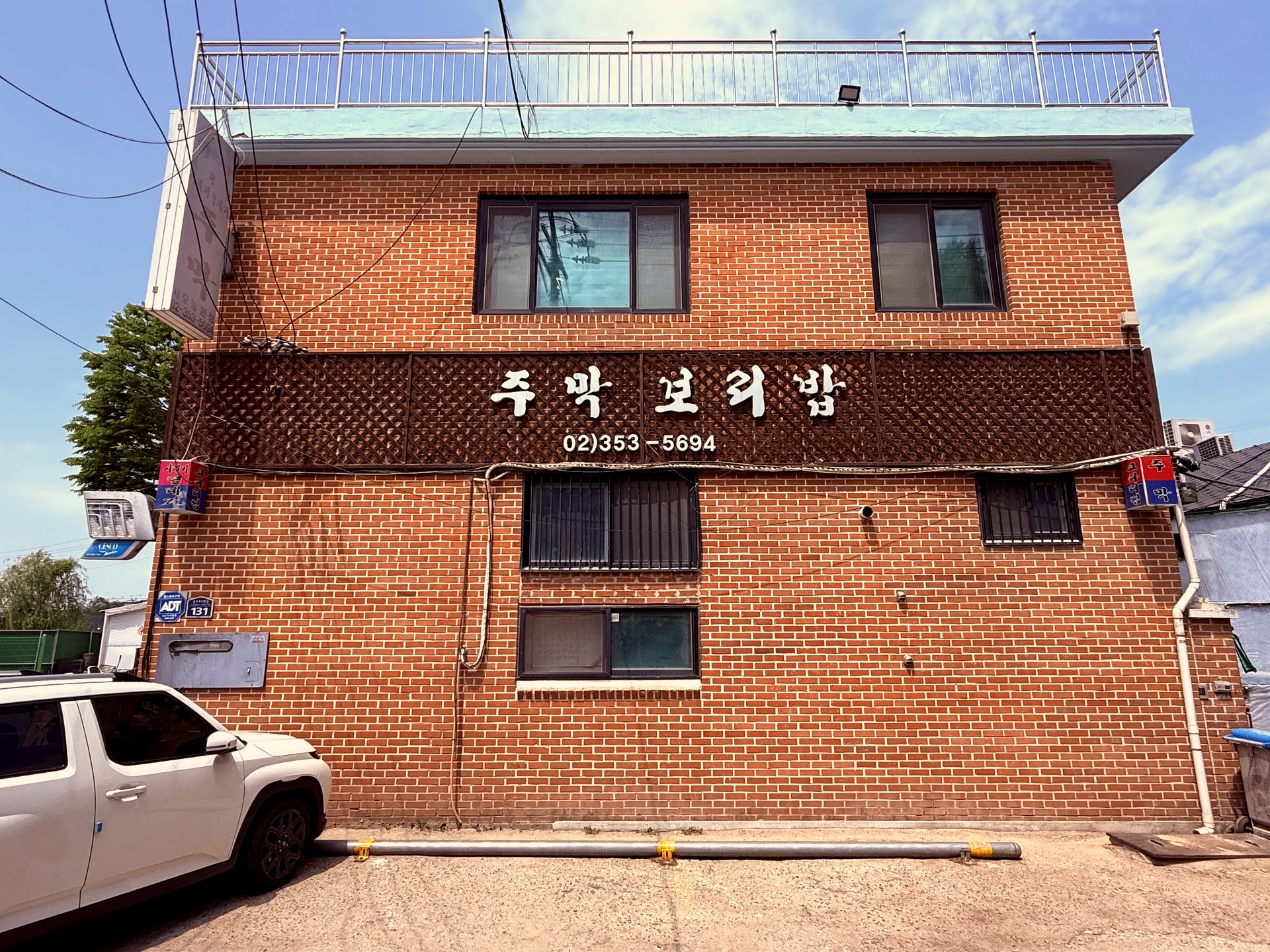
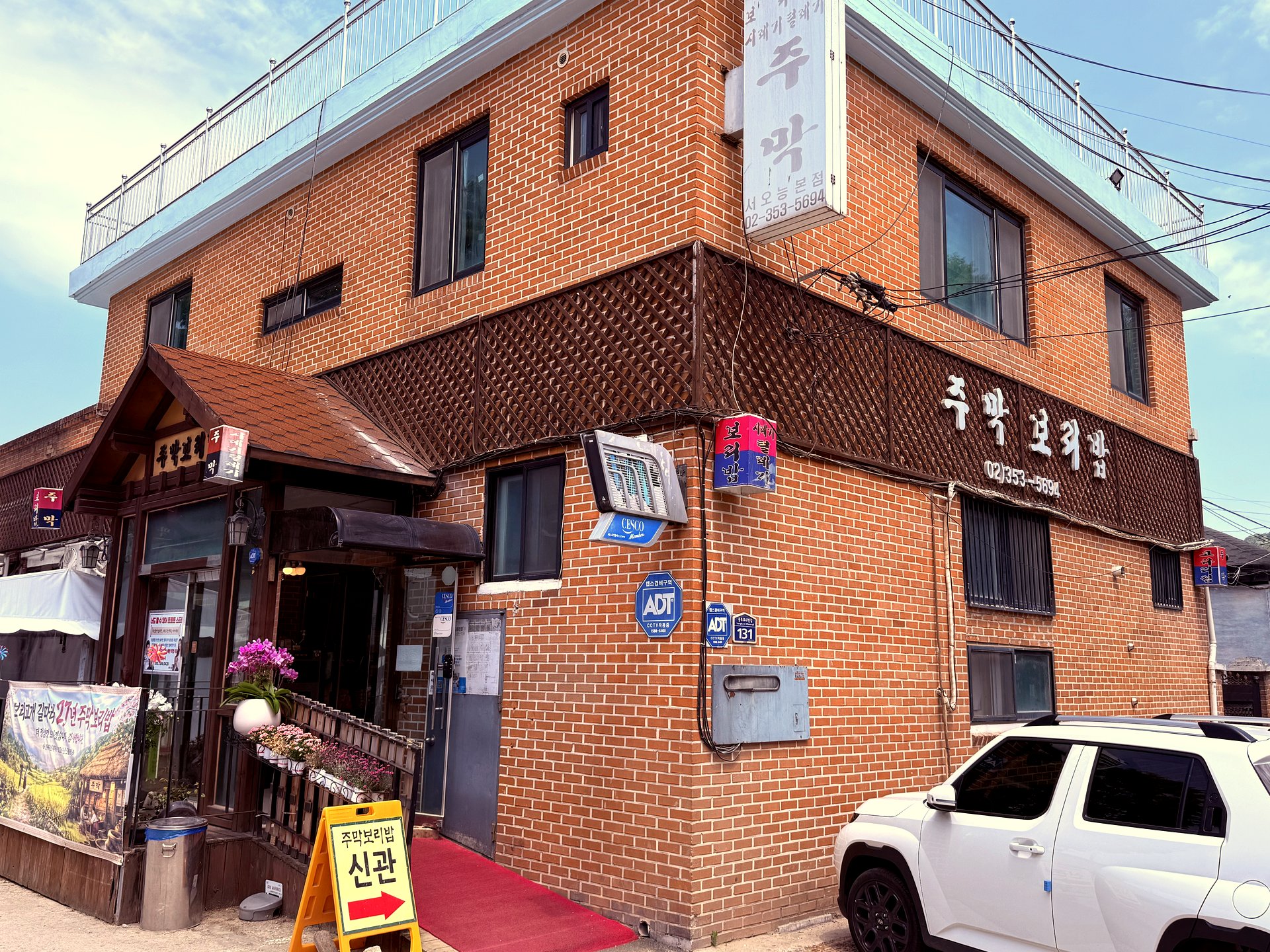
- Korean traditional barley-rice house outside Seoul, beside the Joseon-era Seoorung royal tombs.
- Order: boribap (₩14,000 / $9.5 USD) + signature sujebi pot + patented kodari jjim.
- Worth the 25-min drive west of Seoul for one of the most complete Korean countryside meals.
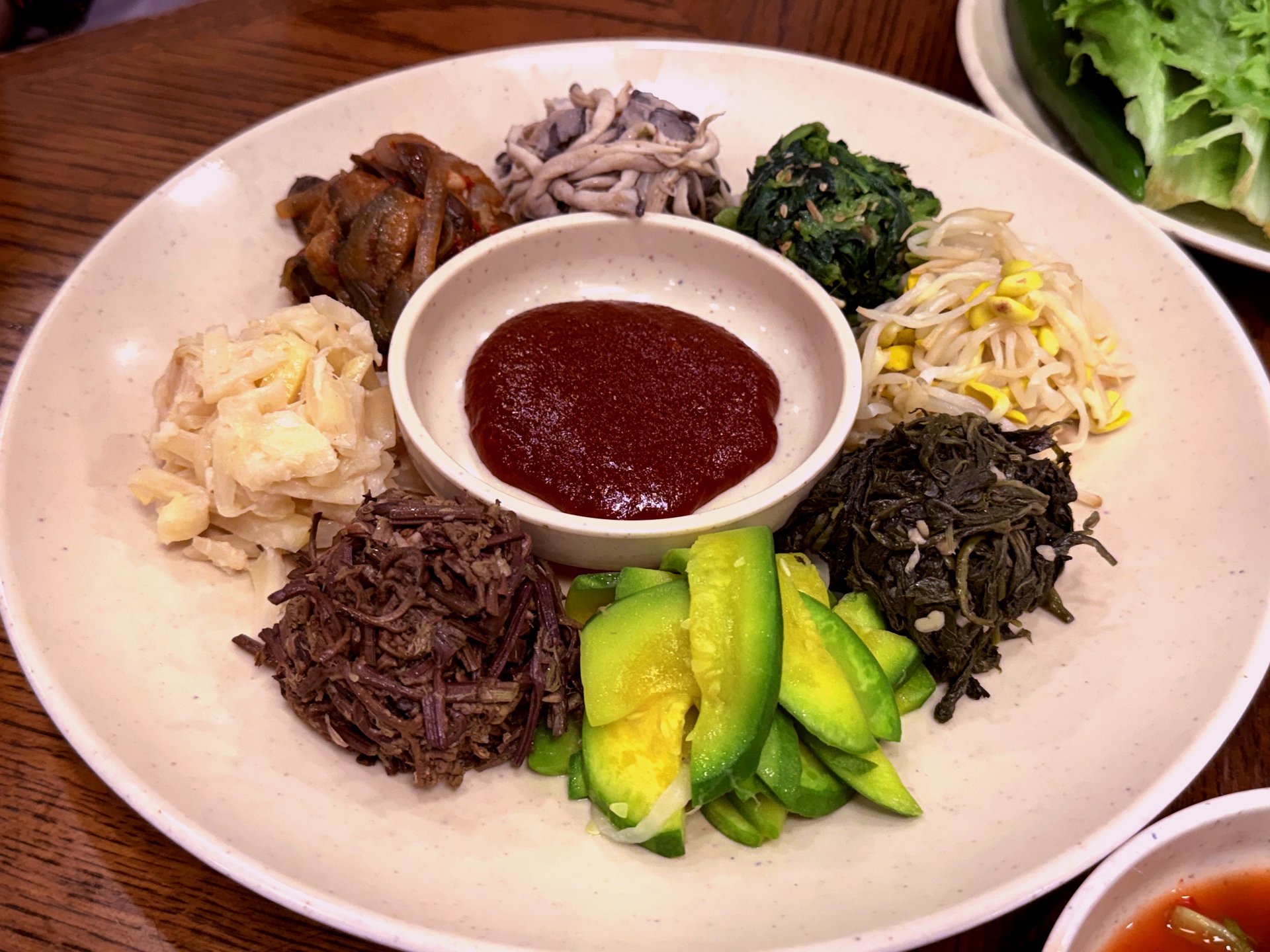
- Whether the namul taste like they were prepped that morning, with seven-plus varieties
- Whether the gochujang is homemade — fermented, not sweet, with depth
- Whether the secondary dishes (sujebi, jjim) match the rice setup, not bolt-ons
| Korean name | 주막보리밥 서오릉점 (Jumak Boribap Seoorung) |
| Neighborhood | Goyang, near Seoorung (서오릉) royal tombs — just outside Seoul |
| Getting there | ~25-min drive from western Seoul (Eunpyeong-gu / Mapo-gu Sangam-dong). Bus from Seoul possible but slow. Rental car or taxi recommended. |
| Price range | ₩₩ — ₩14,000–25,000 (~$9.5–$17 USD) per person |
| Signature | Boribap (₩14,000 ($9.5 USD)) + signature sujebi pot + patented kodari jjim |
| English menu | Limited — Korean menu, but staff handles “boribap” and pointed orders. Bring Papago. |
| Foreign cards | Visa/Mastercard accepted |
| Hours | Lunch and early dinner — check Naver Map for current |
| Map | Google Maps · Naver Map |
The Spot — Outside Seoul, Beside the Royal Tombs
Here is the thing about eating outside Seoul: most visitors never do it, and I understand why. Why drive anywhere when Myeongdong is right there? But Jumak Boribap sits beside Seoorung, a cluster of Joseon-era royal tombs, and the whole area still feels like proper countryside.
Growing up, boribap was just cheap food — barley stretched the rice when meat was scarce. It is the kind of everyday meal my parents never called “traditional.” My father still refers to it as poor man’s rice. Now people drive out here on weekends to pay for it. Funny how that works.
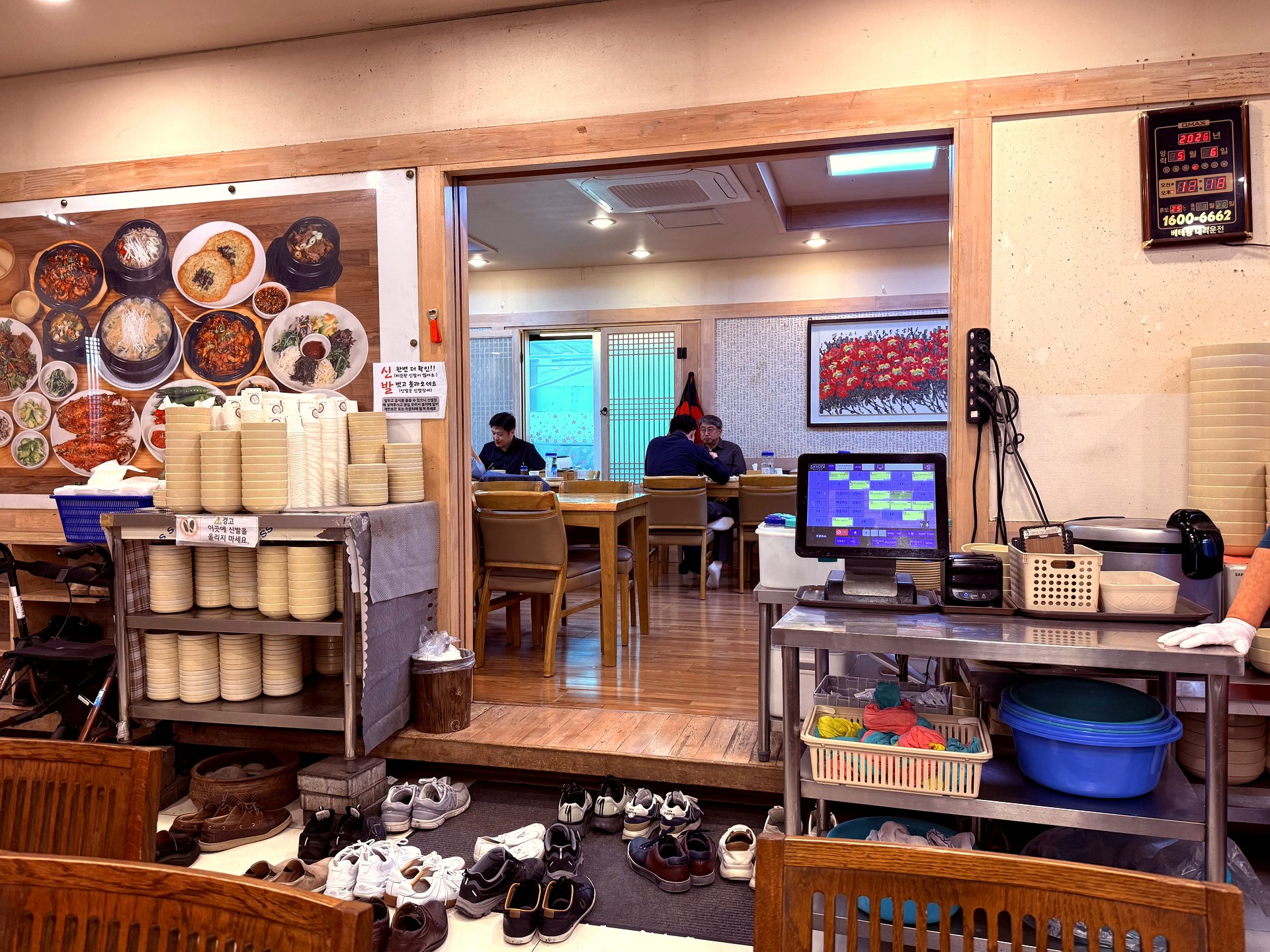
Come on a weekday if you can. When I visited on a Saturday the lot filled fast, and I waited a while for a table.
The Menu
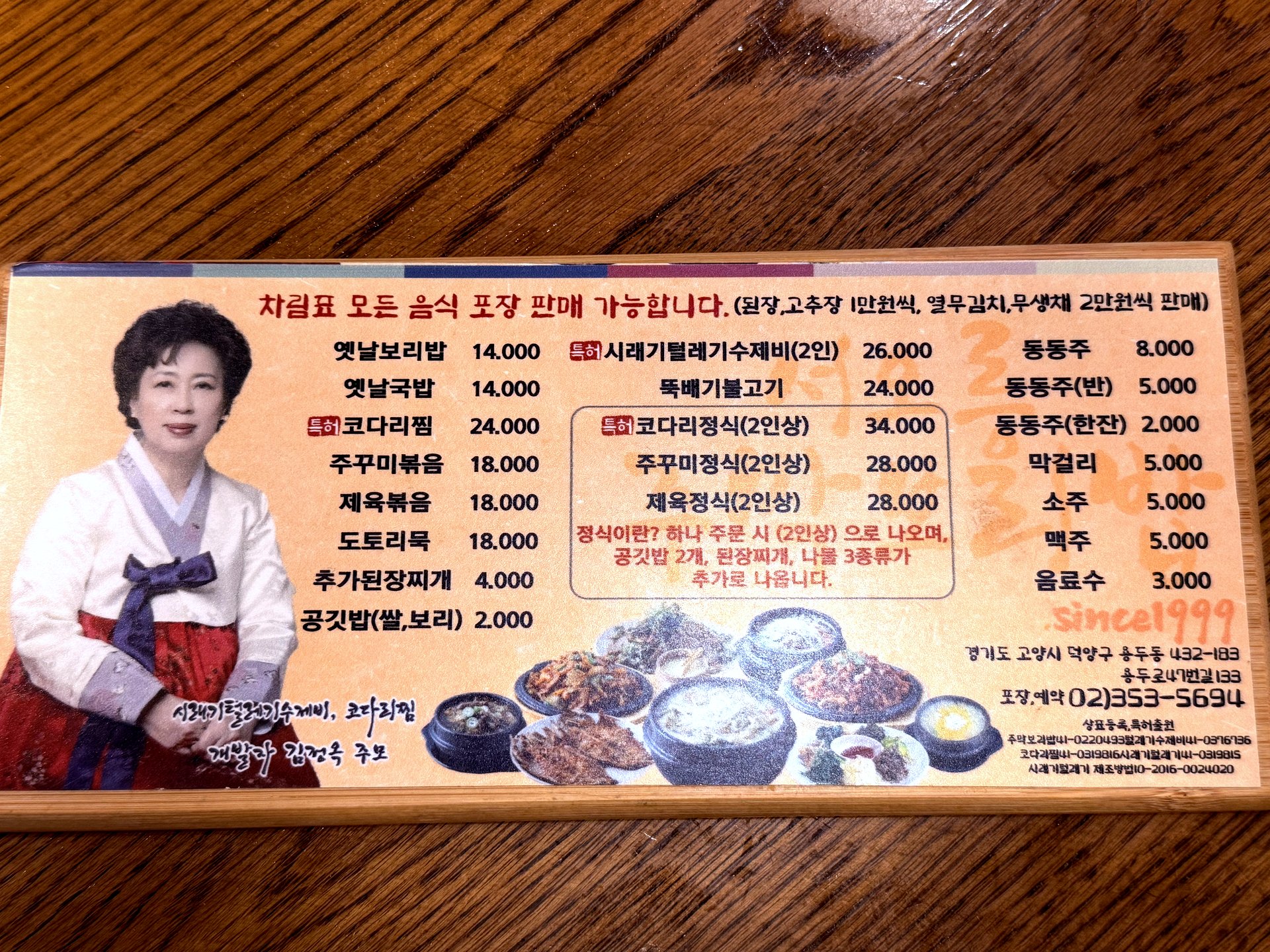
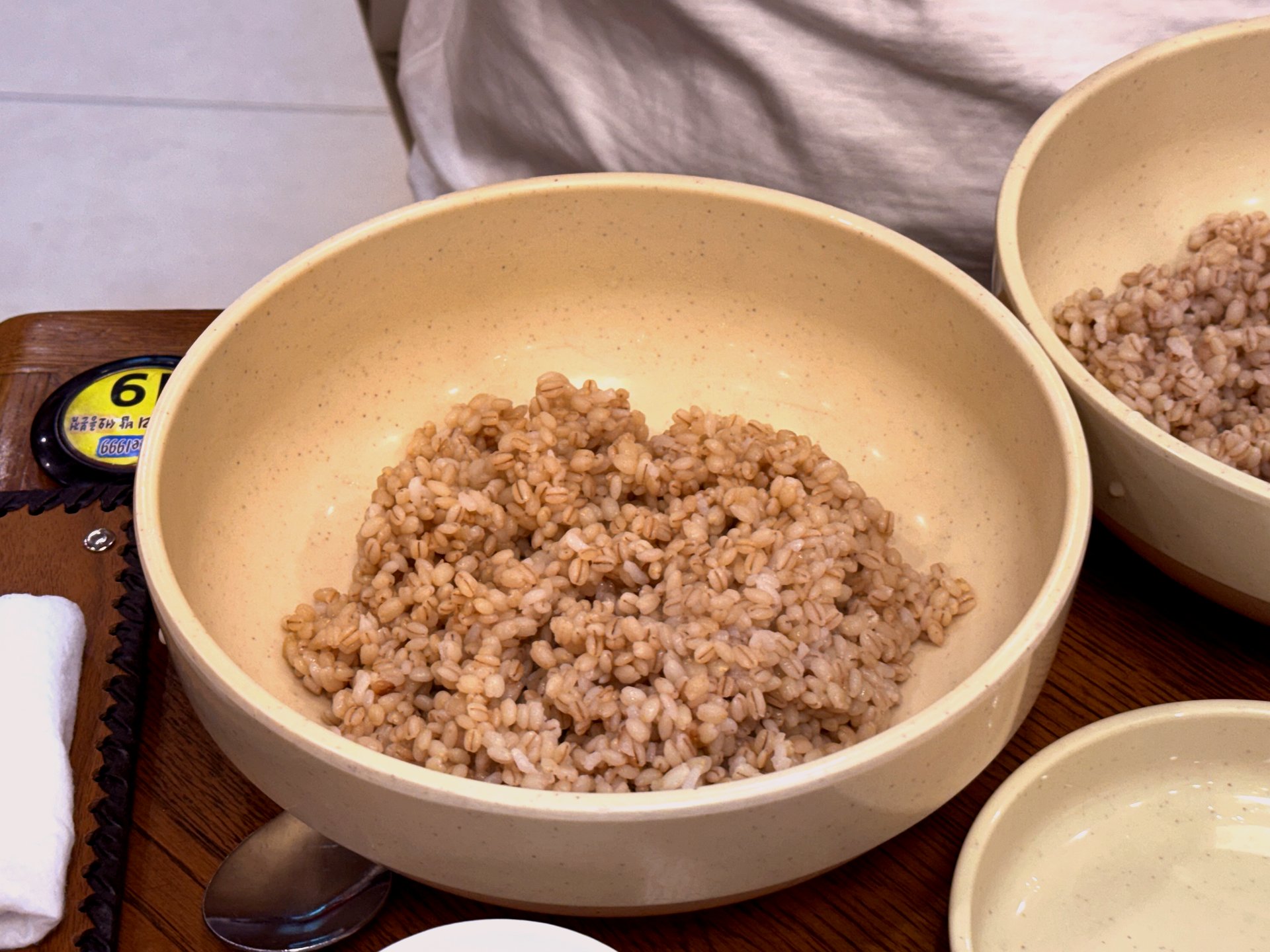
- 옛날 보리밥 (Yetnal Boribap) ₩14,000 ($9.5 USD) — Old-style barley rice + nine namul + house gochujang. The default order. Solo-friendly.
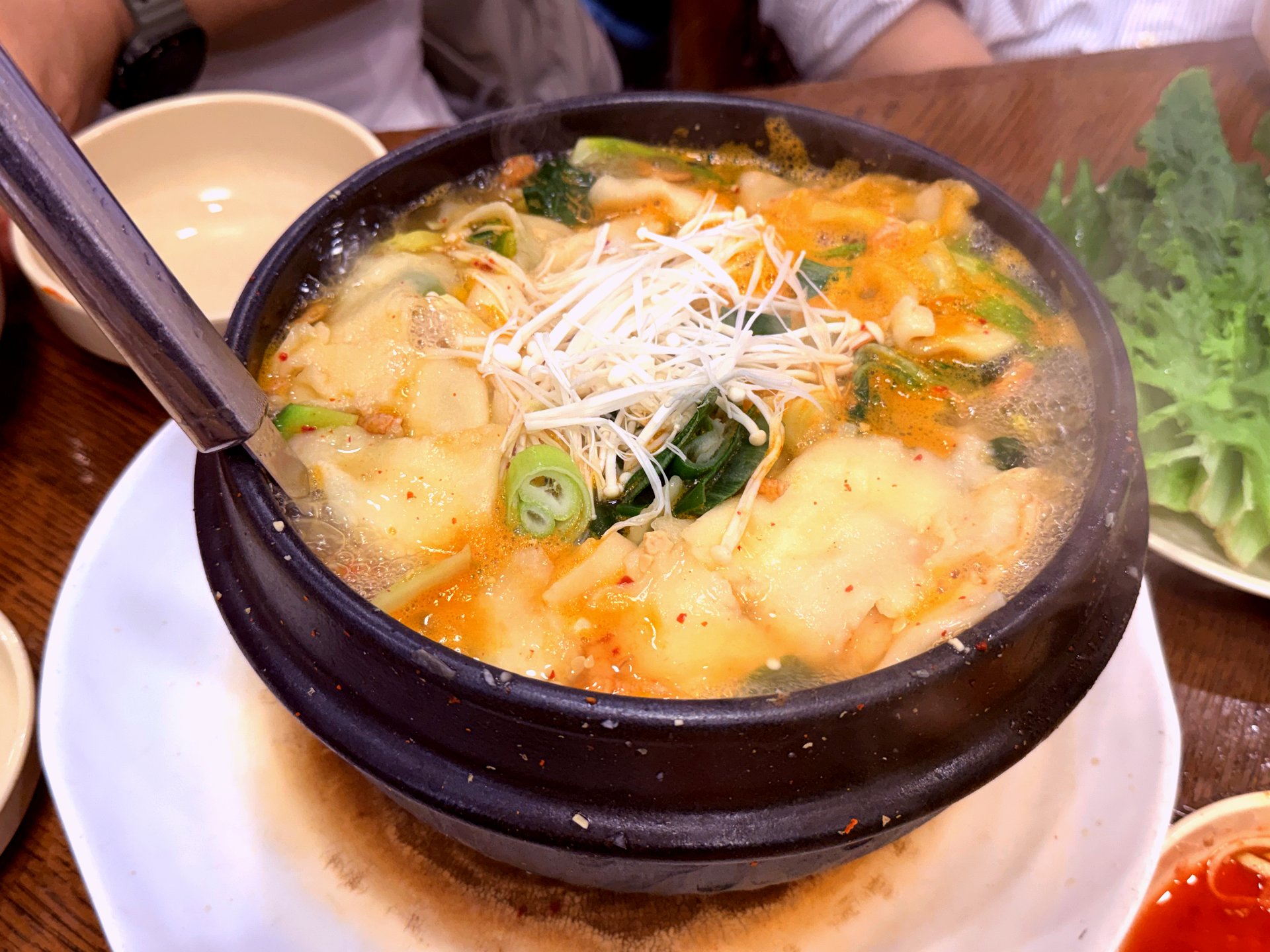
- 시래기 털레기 수제비 (Siraegi Tteol-le-gi Sujebi) ₩26,000 ($18 USD) / 2 people only — The signature. Hand-torn dumplings in a deep dried-radish-leaf broth, finished with dried shrimp. Order-of-the-house.
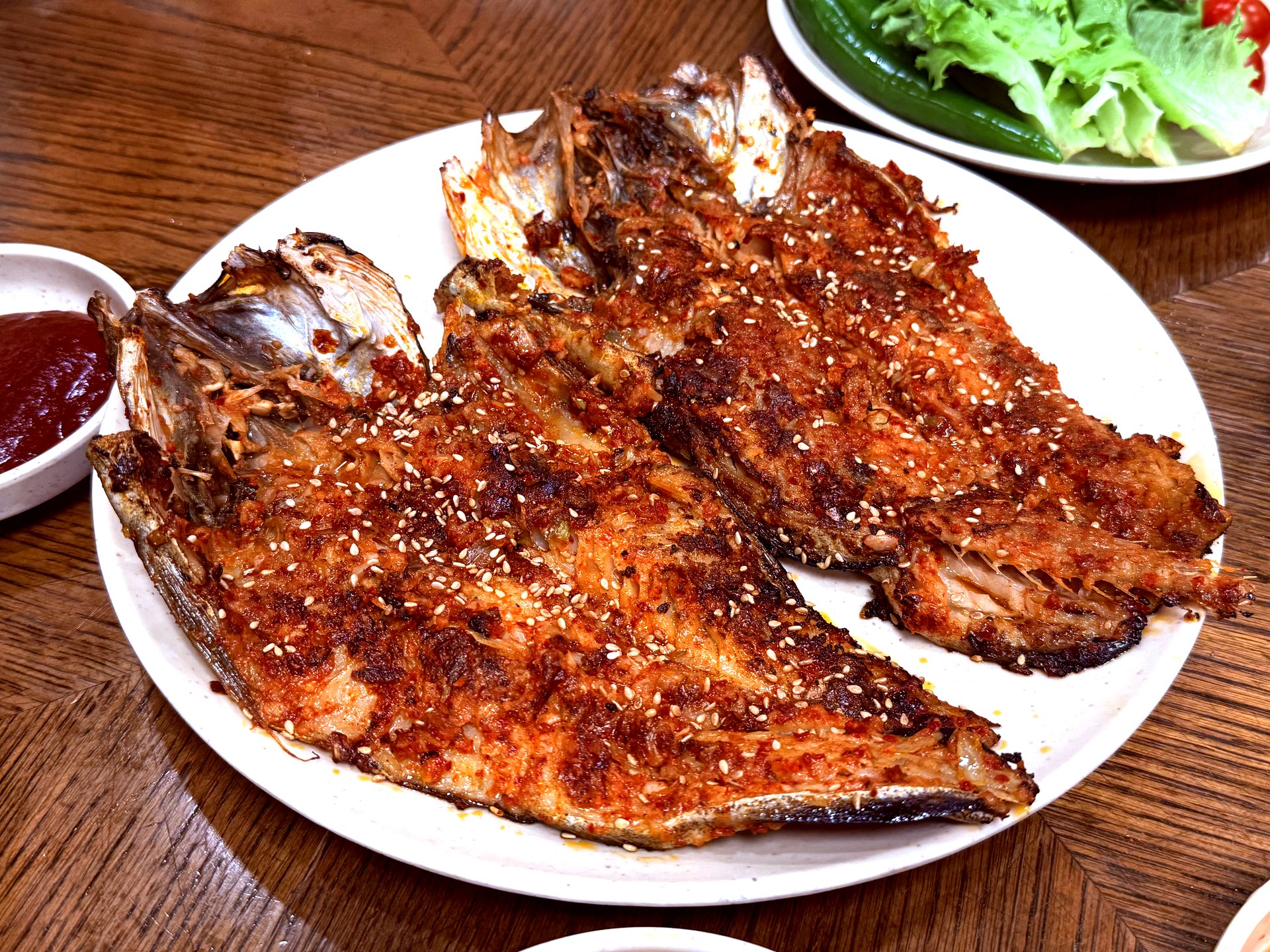
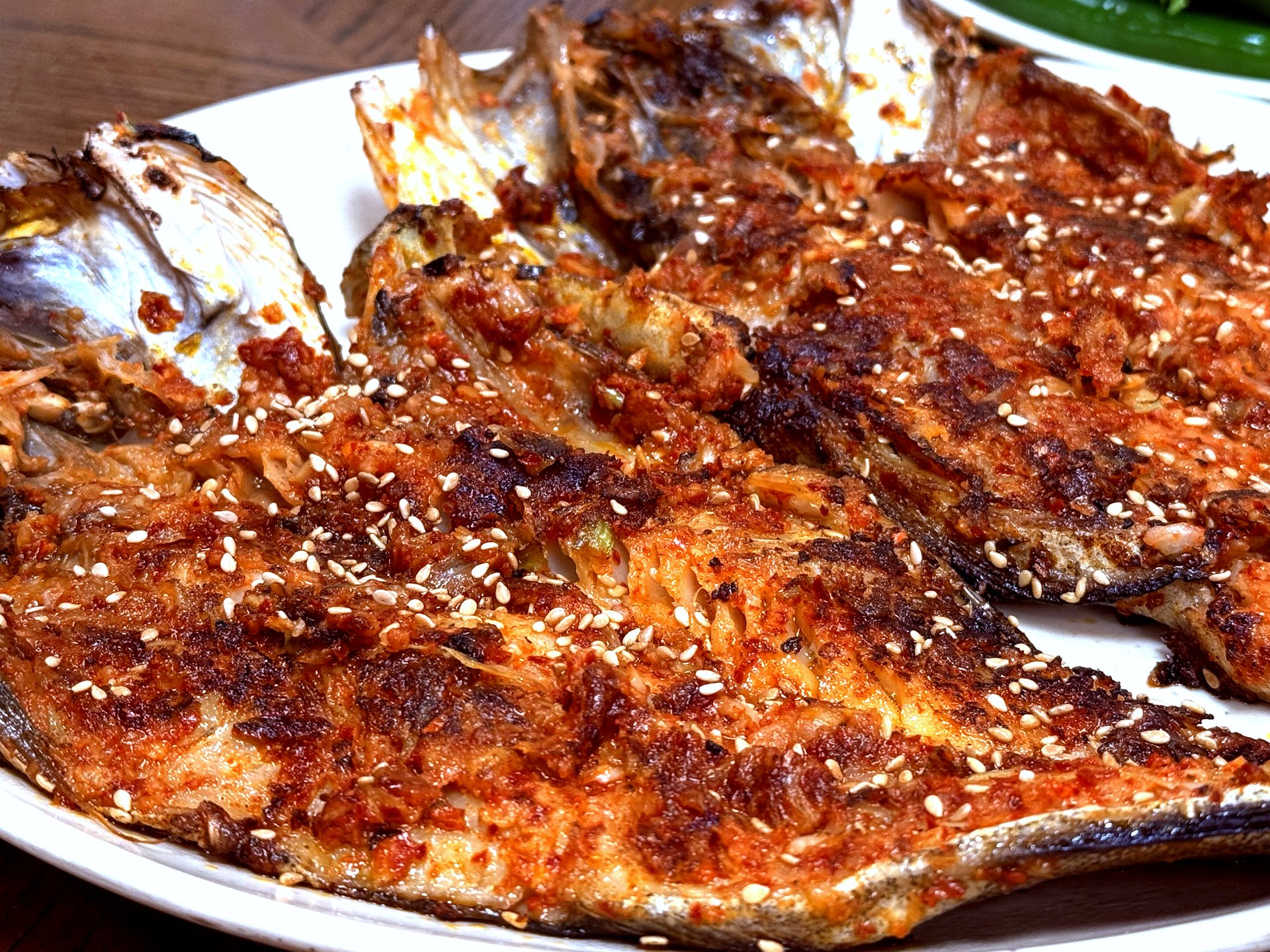
- 코다리 찜 (Kodari Jjim) ₩24,000 ($16 USD) — Half-dried pollack braised in their patented sweet-spicy sauce. Don’t skip.
- Other plates: 옛날 국밥, 주꾸미볶음, 제육볶음, 도토리묵, plus set meals (정식) for 2.
- Drinks: house 동동주 (cloudy-rice wine, ₩8,000 ($5.4 USD) per pot or ₩2,000 ($1.4 USD) per cup), 막걸리, 소주, 맥주.
The Boribap — How to Eat It
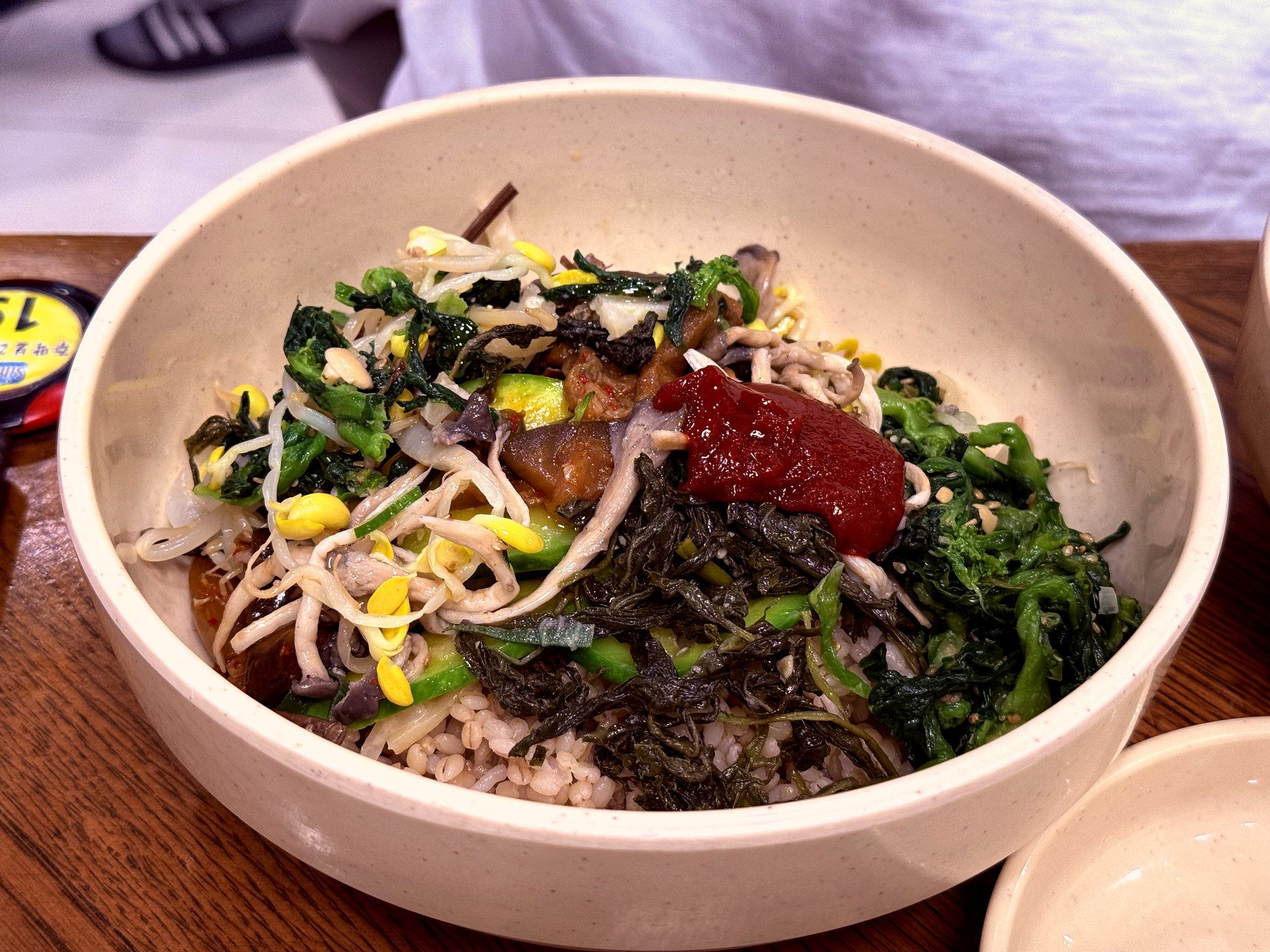
Nine namul, one bowl, one big spoon of the house gochujang. Here is how I do it — mix slowly, do not drown it in sauce, and let each vegetable keep its own texture. The namul the day I went:
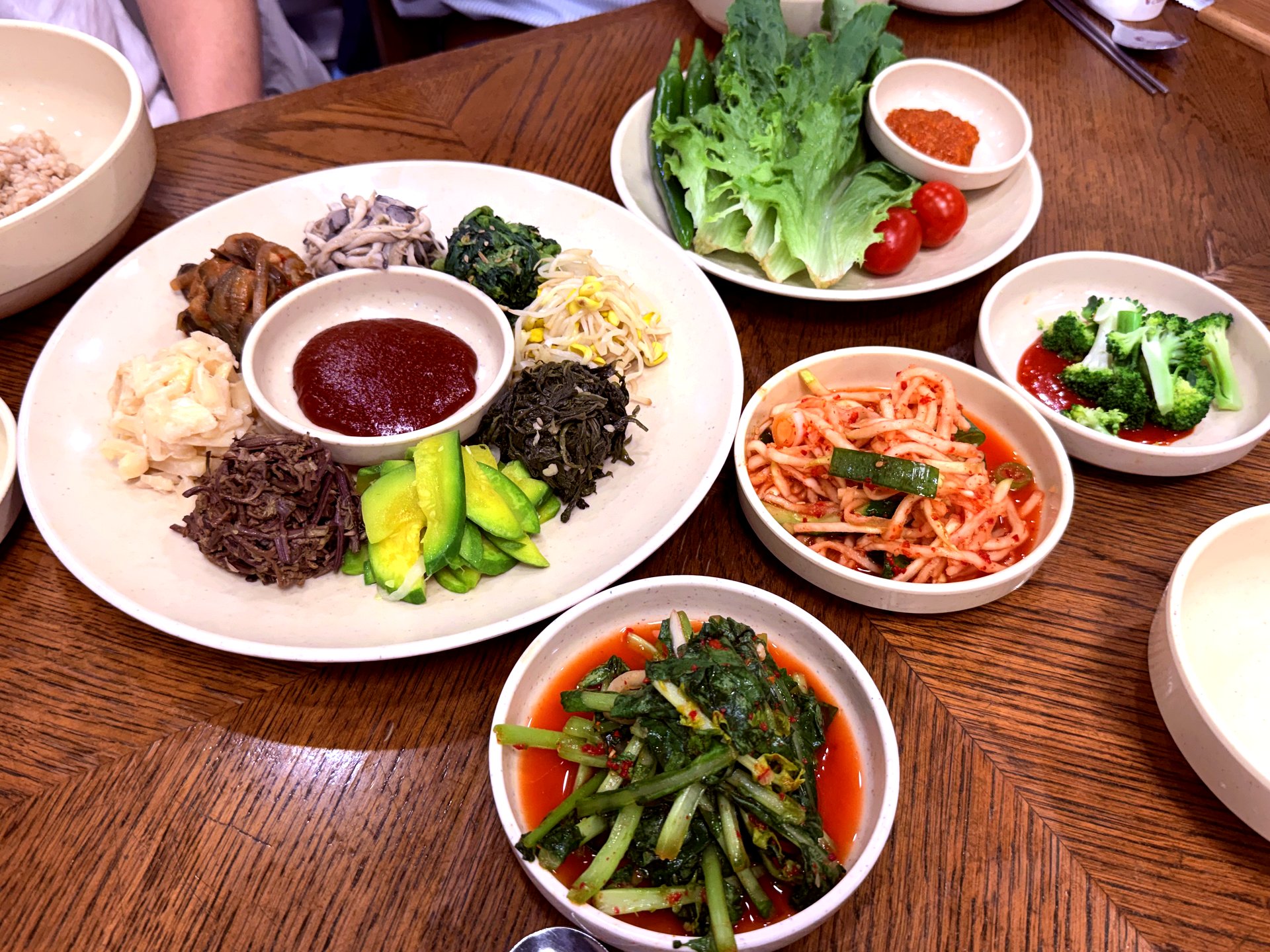
- 고사리 (gosari, fernbrake)
- 시래기 (siraegi, dried radish leaves)
- 오이 (oi, cucumber slices)
- 콩나물 (kongnamul, soybean sprouts)
- 시금치 (sigeumchi, spinach)
- 가지 (gaji, eggplant)
- 도라지 or 더덕 (mountain root)
- 버섯 (mushroom)
- 배추나물 (cabbage namul)
The Signature — Siraegi Tteol-le-gi Sujebi (시래기 털레기 수제비)
Order this and you will understand why the ajumma calls it the house dish. Siraegi — dried radish leaves — get simmered into a broth so deep it tastes like someone has been building it for thirty years. (Someone has.)
The sujebi itself is hand-torn, not cut. You can feel it — every dumpling has an uneven, chewy edge that machines never manage. They finish the pot with dried shrimp for a clean hit of the sea.
It is a two-person minimum at ₩26,000 ($18 USD). I ordered it on a whim, then I noticed I kept reaching back into the pot. This is one of the few sujebi bowls I still think about.
The Other Star — Kodari Jjim (코다리찜) with the Patented Sauce
Kodari is half-dried pollack — dried just enough to firm the flesh without turning it into jerky. Foreigners rarely order it, and honestly that is a mistake.
Here it is braised in a sauce the owner actually patented. I tried it half-expecting a gimmick, then stopped doubting. Sweet, spicy, sticky, clinging to every flake of fish. It quickly became my favorite plate on the table.
Get it. At ₩24,000 ($16 USD) it is the one I would quietly fight you for.
Practical Notes for Visitors
- Cards? Yes, accepted.
- Parking? Yes — the restaurant has its own lot. You will need it; this is not a public-transit-friendly spot.
- Wait time? Long. Expect 30+ minutes at peak weekend lunch. Worth it.
- Foreign-friendly? Honestly low. Korean-only menu, Korean-only staff, Korean-only signage. This is part of the experience but bring a Korean friend or be ready with translation tools.
- Solo dining? Boribap fine; the sujebi is 2-person minimum. Don’t come alone if you want the full experience.
- Pair with: a walk through Seoorung tombs after lunch. The tombs themselves are on the UNESCO World Heritage list of Joseon royal tombs and the ground around them is one of Goyang’s prettier walking paths.
The Verdict
| 🍽️ Food | 5.0 | |
| 💰 Value | 3.5 | |
| 🌏 Foreigner-friendly | 3.0 | |
| 📍 Access | 3.0 |
| Best for | Korean traditional food lovers, weekend day-trips out of Seoul, anyone who has a car |
| Skip if | You only want fast urban dining, you cannot get a taxi or car, you came for spicy/heavy meals |
| Order this | Boribap + sujebi pot + patented kodari jjim |
| Visited | 2026 – 1 visit |
Go. Drive 25 min west out of Seoul (or take a taxi from Yeonsinnae Station, ~₩15,000 ($10 USD)), park beside the royal tombs, and order the boribap + the sujebi for two + the kodari jjim. Don’t share the boribap — get one bowl per person. Mix it slowly with the homemade gochujang. Don’t skip the kodari jjim — it is what makes this place patented (literally — it is on the menu).
P.S. Second visit is when you start ordering the makgeolli kettle. (You will. Trust the makgeolli.)
Been to Jumak Boribap? Tell me what you ordered — drop a comment below.
Disclosure: I visited on my own and paid for the meal in full. Not sponsored, not gifted — 내돈내산 (I-paid-for-it-myself).