- Mugunghwa is Lotte Hotel Seoul’s 35th-floor Korean fine-dining room, ₩190,000 ($129) for the nine-course Geumgang tasting.
- The room cooks hansik with international-level technique — gujeolpan, Hanwoo, mandu, mugwort rice cake — every plate treated like a main course.
- I brought my parents here for an anniversary dinner. Mugunghwa is what I send foreign friends to when they ask “where can I really taste Korea.”
When you want to introduce someone — a parent, a partner, a visiting friend — to what Korean fine dining can be, you go to Mugunghwa (무궁화).
Named for the rose of Sharon (Korea’s national flower), the room sits on the 35th floor of Lotte Hotel Seoul in Sogong-dong, just steps from Myeong-dong. I came here for an anniversary dinner with my parents — the kind of meal where I wanted zero ambiguity about whether it would deliver. It did.
Mugunghwa runs a nine-course Geumgang (금강, “Diamond Mountain”) tasting that walks through the full vocabulary of Korean royal-court hansik: hand-rolled gujeolpan, slow-braised dumplings in beef broth, grilled Hanwoo tenderloin, mugwort rice cake — all served on a single, perfectly-paced table.
| 📍 Where | 35F, Lotte Hotel Seoul, Sogong-dong (Jung-gu) — 5 min from Myeong-dong |
| 🚇 Subway | Euljiro 1-ga Station (Line 2), Exit 8 — direct hotel access |
| 🕒 Hours | Lunch 12:00–15:00 · Dinner 18:00–22:00 (last order ~21:00) |
| 💰 Price | Geumgang nine-course tasting ₩190,000 ($129 USD) per person, +10% service |
| 📖 English menu | Yes — full English menu, staff speak English |
| 💳 Cards | All major international cards (Visa / Mastercard / AMEX / JCB) |
| 📞 Reservation | Essential — book via Lotte Hotel Seoul (recommended 1+ week ahead) |
| 👔 Dress code | Smart casual — no shorts, no flip-flops |
The Spot — 35th Floor of Lotte Hotel Seoul
Mugunghwa is on the top of Lotte Hotel Seoul in Sogong-dong (소공동), a five-minute walk from Myeong-dong’s shopping streets and immediately adjacent to City Hall. The view through the windows tilts across the Jung-gu rooftops toward the Han River horizon. Inside, the room is hushed and warm — quilted leather chairs, white linens, a hush that hotel fine-dining gets right and few standalone restaurants do.
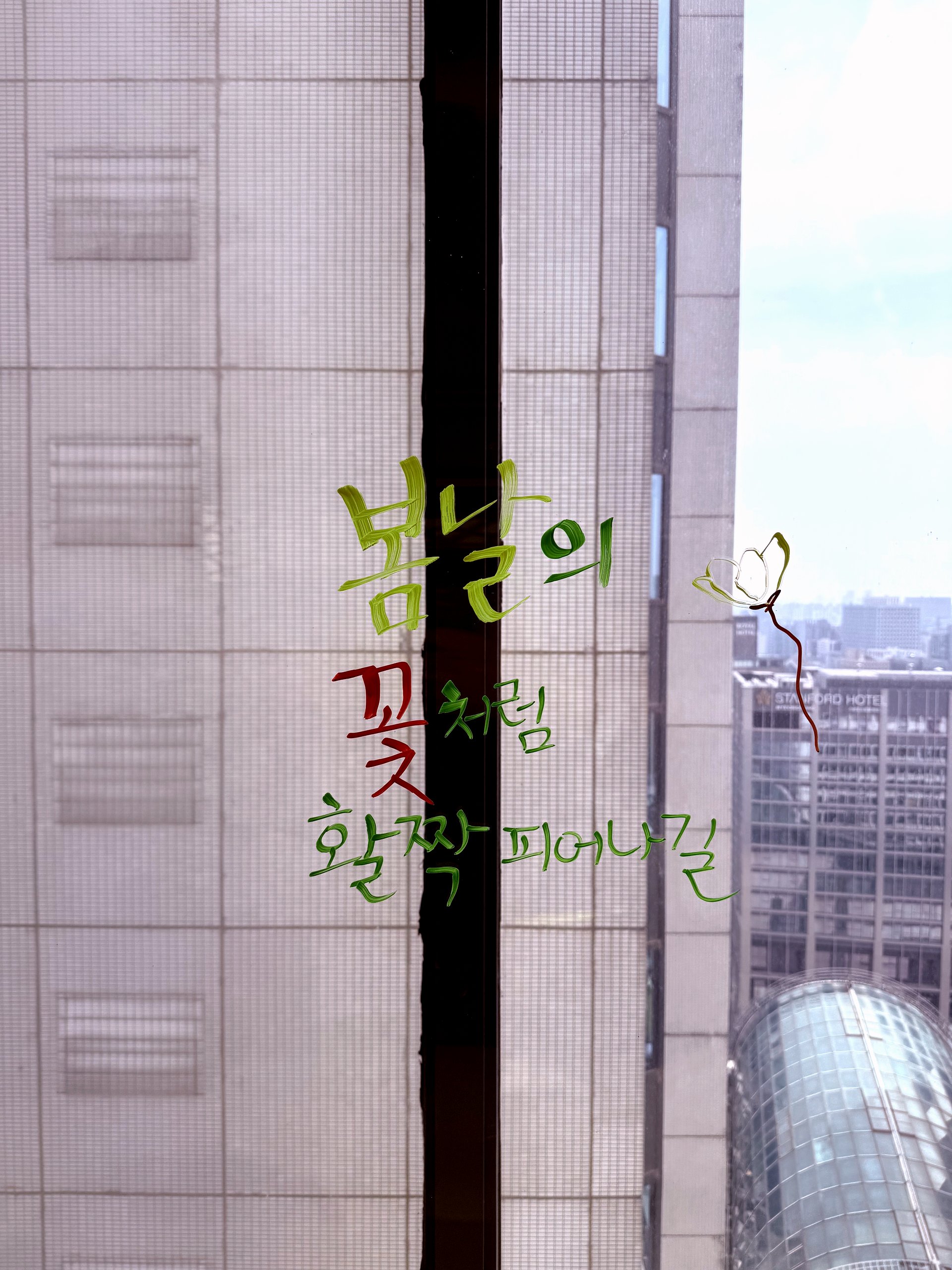
Korean traditional calligraphy on the entrance window sets the tone. The room does not perform Korean tradition with gimmicks — there are no costumes or hanok pastiches — but every gesture, plate, and pacing decision has been made by someone who knows what hansik is supposed to do.
📍 무궁화 (Mugunghwa) on Google Maps
The Menu — Geumgang (금강) Course, ₩190,000 ($129 USD) per person
Mugunghwa offers several tasting menus; we ordered Geumgang — the headline course, named after Mt. Geumgang (“Diamond Mountain”), one of the most poetically charged landscape names in Korean culture. Nine courses, served in fixed sequence:
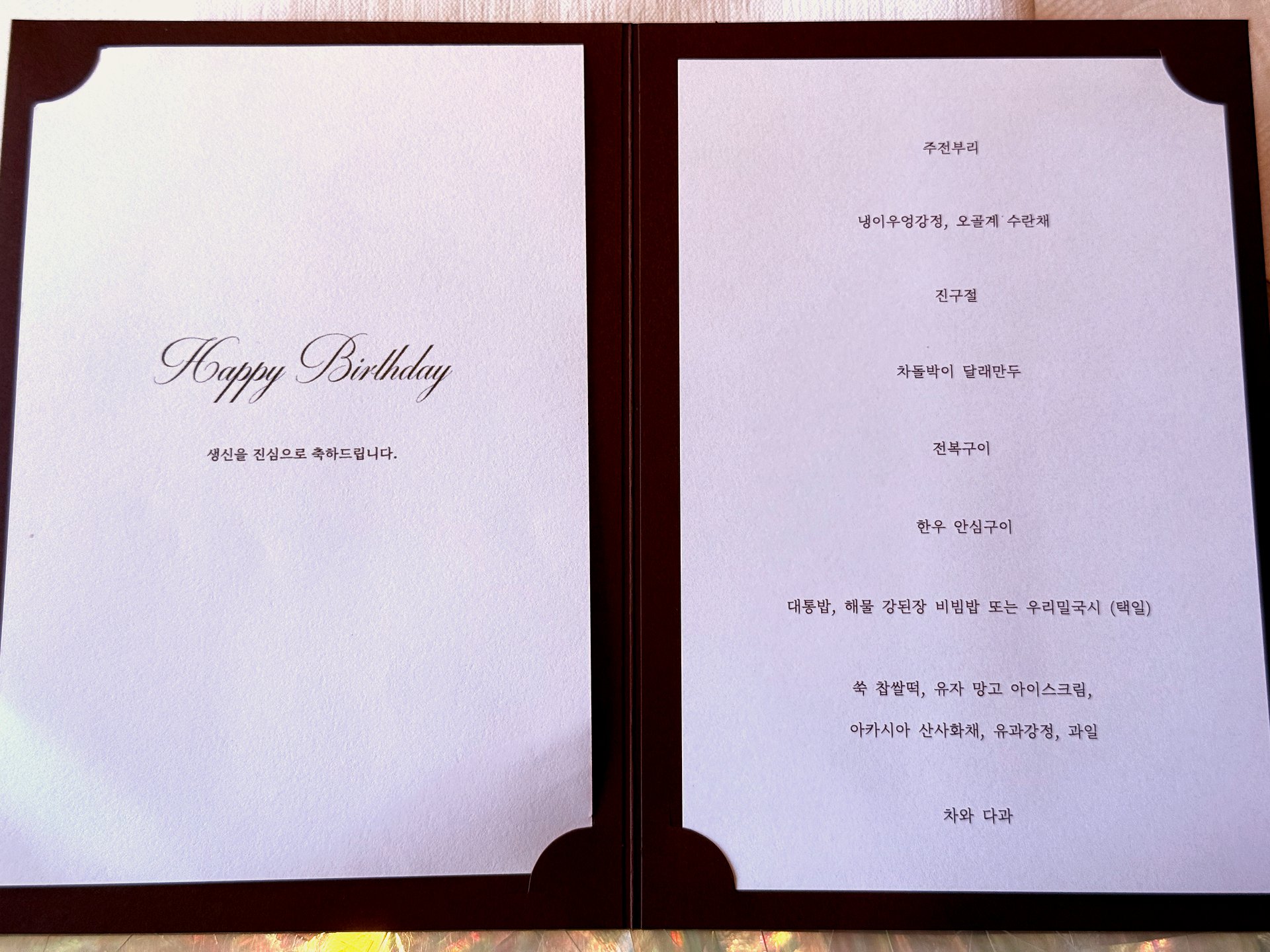
- 주전부리 (Welcome) — opening amuse
- 냉이우엉강정, 오골계 수란채 — crispy burdock with shepherd’s purse + ogolgye chicken salad
- 진구절 (Jingujeol) — the nine-section gujeolpan, court-style
- 차돌박이 달래만두 — Hanwoo brisket and wild-chive dumplings in beef broth
- 전복구이 — grilled abalone
- 한우 안심구이 — grilled Hanwoo tenderloin on hot stone
- 대통밥 / 해물 강된장 비빔밥 / 우리밀국시 — choice of bamboo-steamed rice, seafood doenjang bibimbap, or Korean wheat noodles
- 쑥 찹쌀떡, 유자 망고 아이스크림, 산사화채 — dessert tableau
- 차와 다과 — Korean traditional tea with sweets
On the day we visited, the staff added a small Happy Birthday note to the menu card — a quiet, ungimmicky touch that’s typical of how the room handles celebrations. They will accommodate occasions if mentioned at booking, but it never feels staged.
Course 1 — 주전부리 (Welcome Amuse)
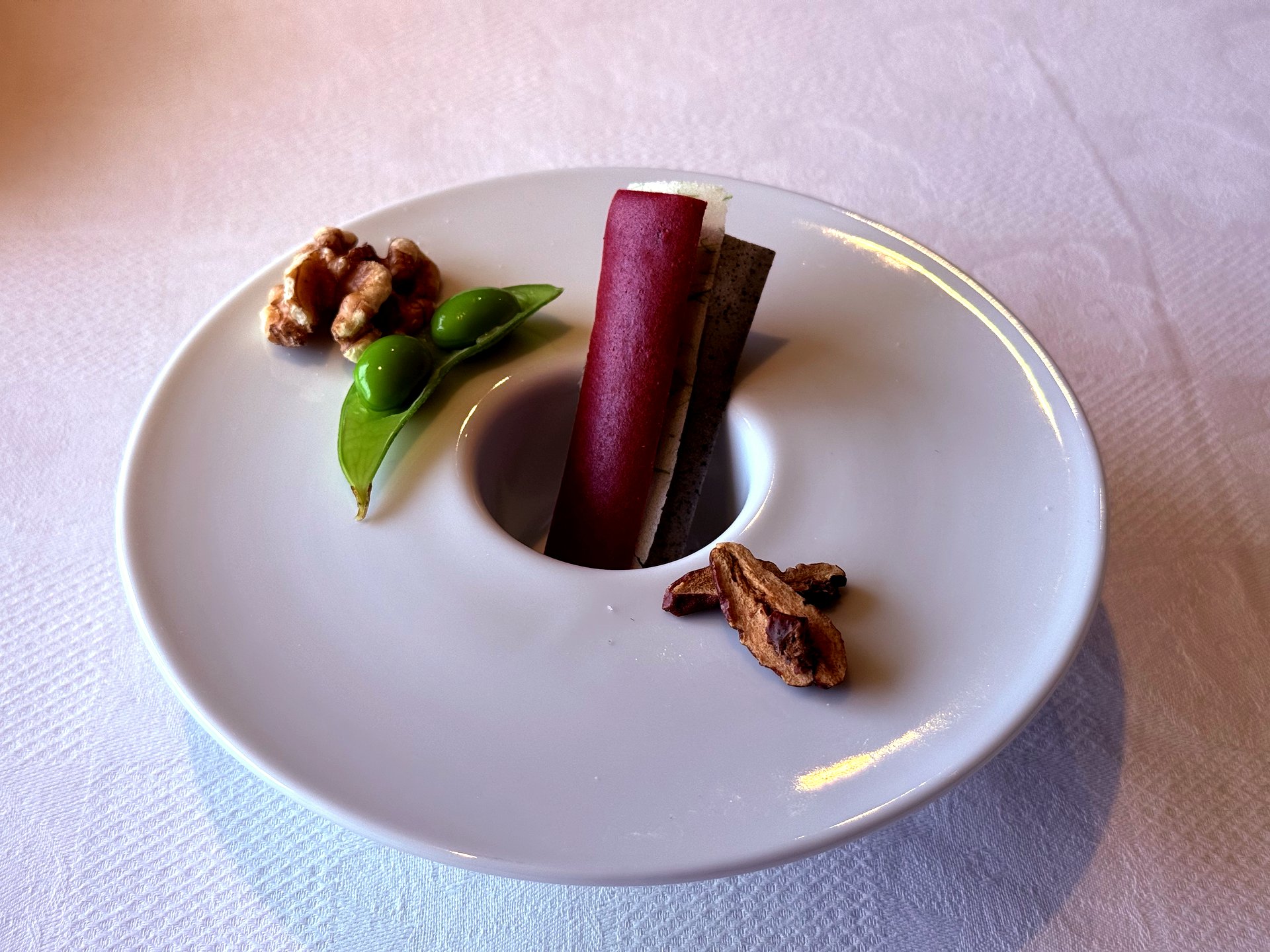
A small composition opens the meal: a candied walnut, two beads of edamame purée on a tea leaf, a rolled fruit sheet stacked with sesame brittle, and a dried persimmon-pecan bite. It’s a 30-second course but it sets the entire register — modest portions, layered textures, ingredients that announce Korean rather than mimicking Western tasting-menu conventions.
Course 2 — 냉이우엉강정, 오골계 수란채
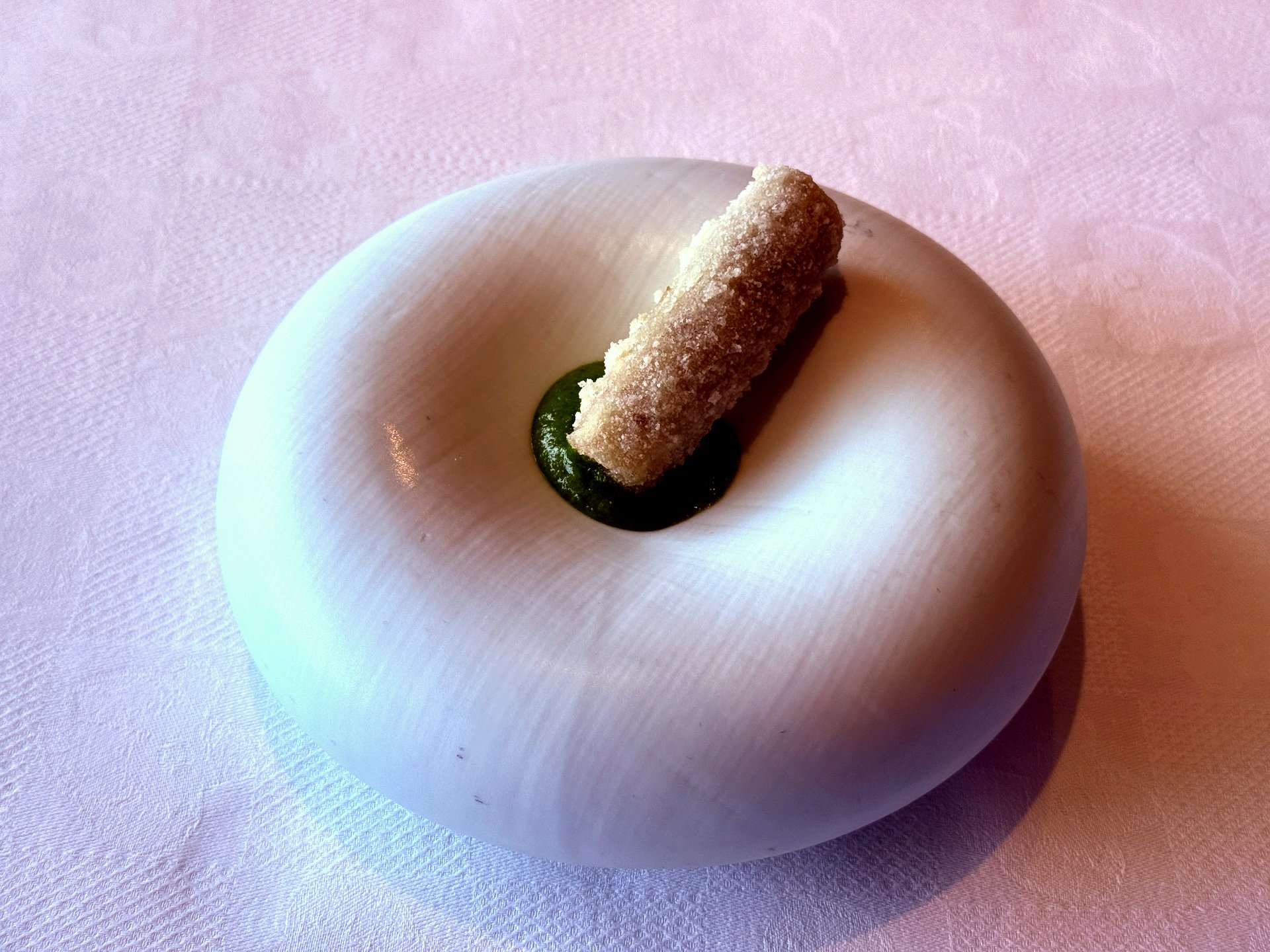
The second course splits into two small plates, each its own thought. First the crispy burdock root stuffed with shepherd’s purse (냉이우엉강정) — a single fried, glazed burdock log on a stone-shaped white plate, with a comma of pungent green shepherd’s-purse puree underneath. The textural play is the whole point: brittle crust, soft sweet root, sharp wild herb.
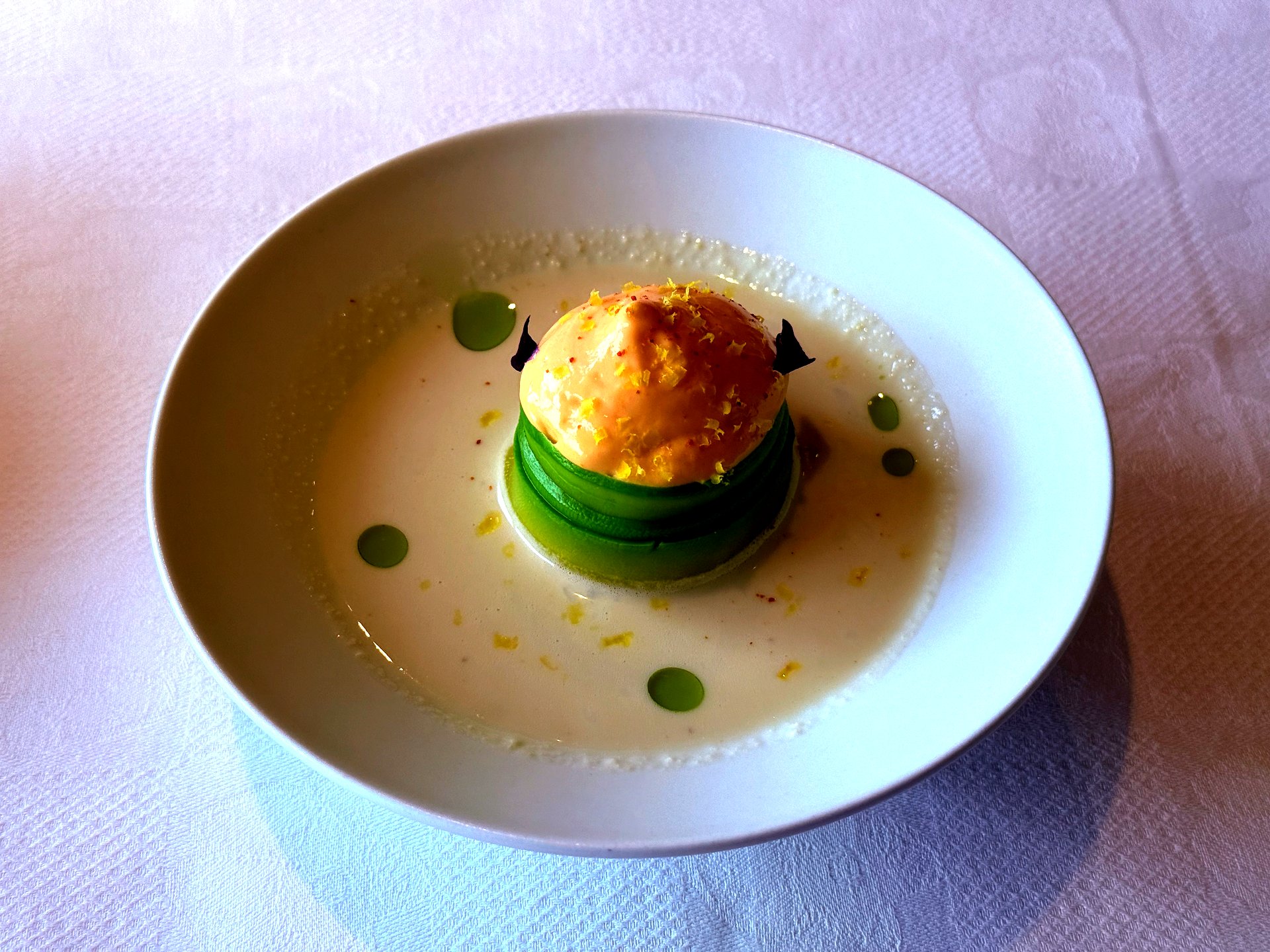
Then the ogolgye chicken salad (오골계 수란채). Ogolgye is Korea’s black-bone heritage chicken, considered a delicacy and traditionally used in tonic dishes; here it’s poached, shredded, and bound in a creamy citrus dressing, set on a ring of dropwort (미나리) in a clear yuja broth. The puddle around the perimeter is gentle. The chicken itself surprises — it has the deep umami of slow stock-cooking, lifted by the citrus.
Course 3 — 진구절 (Jingujeol, the Nine-Section Court Dish)
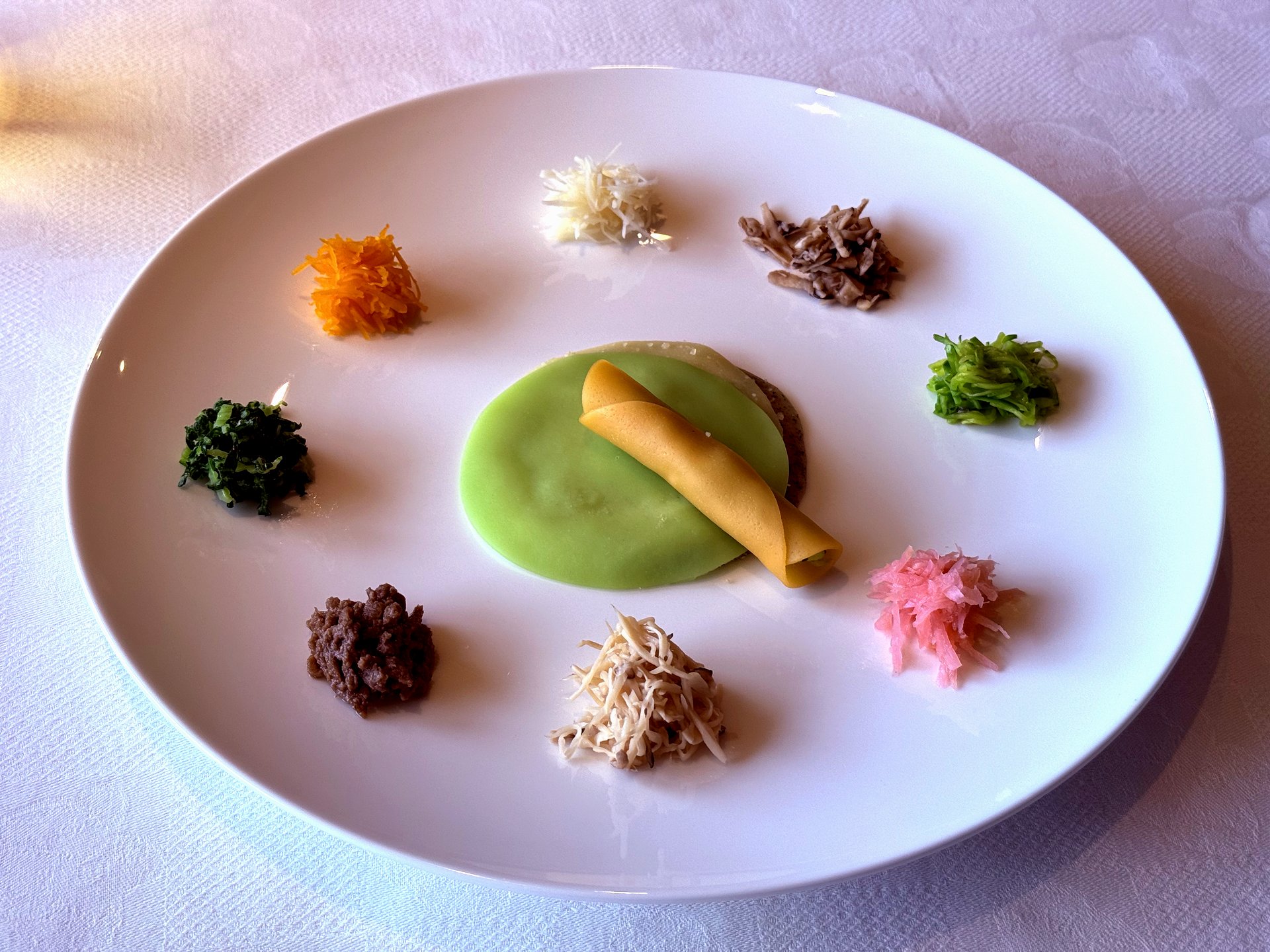
This is the centerpiece. 진구절 — the modern incarnation of the classic 구절판 (gujeolpan, “nine-section plate”). Court cuisine in 19th-century Korea served eight different finely-shredded ingredients arranged around a stack of thin crepes; the diner builds their own bite by wrapping a few selections in each crepe. Mugunghwa’s version is one of the most carefully composed plates we’ve seen.
Around the green center sauce: julienned daikon (orange), julienned cucumber (green), wild greens (dark green), ground beef (brown), enoki mushroom strands, pickled radish strands (pink), more crisp shreds, and other prepared garnishes — each presented as a small mound so you can see exactly what you’re building with. Two slim wheat crepes wait in the center. You roll one, fill it, eat it. Then build the next with completely different ratios. It is the kind of dish that rewards slow eating.
Course 4 — 차돌박이 달래만두 (Beef Brisket & Wild Chive Dumplings)
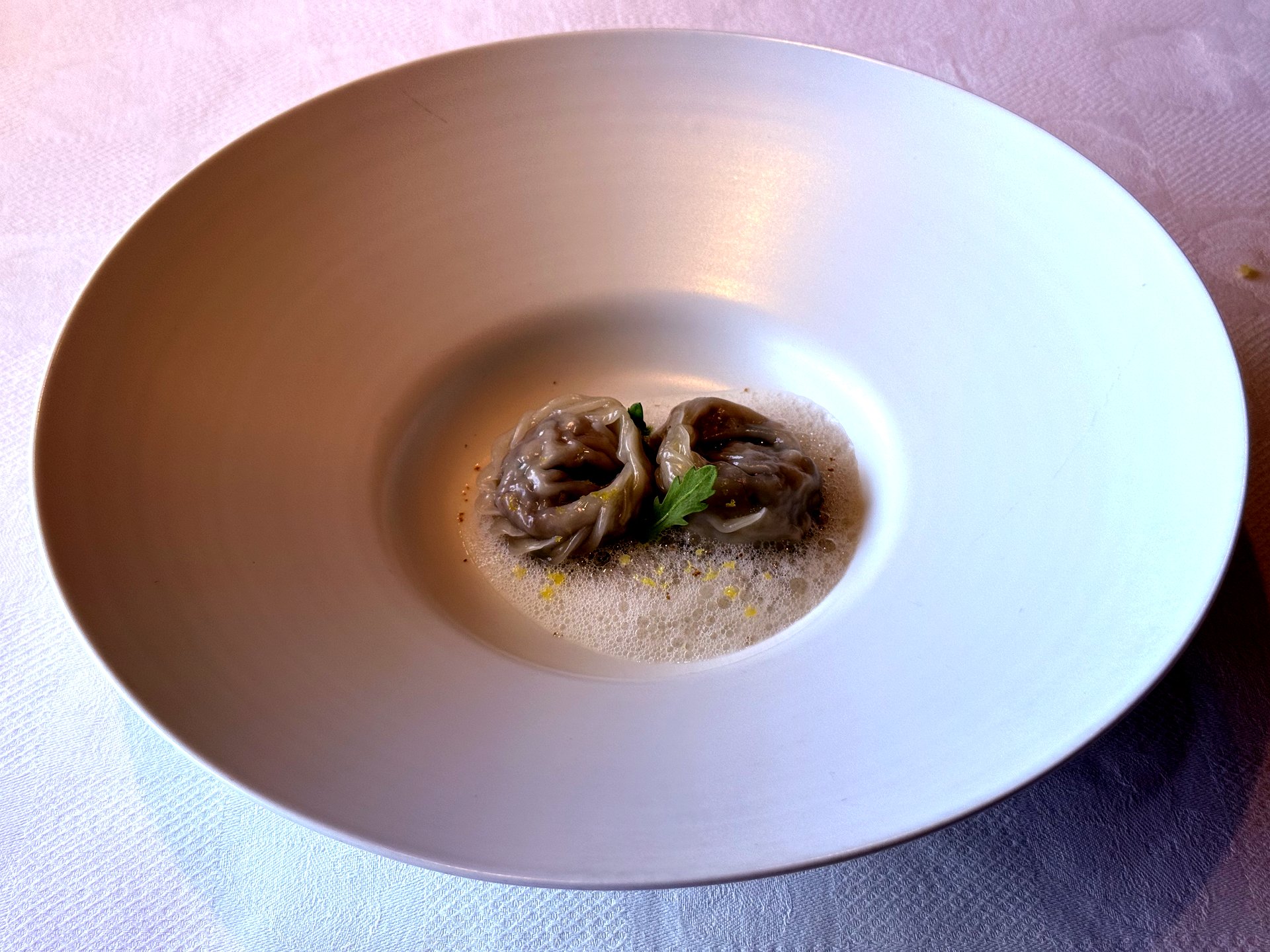
Two small mandu (Korean dumplings) sit in a clear, foam-topped beef broth. The filling is chadolbagi (차돌박이 — beef brisket point, the marbled corner) and dallae (달래 — wild Korean chive). The broth is clean, the foam is airy, the dumplings yield to a chopstick. What lifts this beyond standard Korean mandu is the beef quality — Hanwoo brisket has a sweetness fresh imported beef doesn’t quite reach — and the precise wild-chive note that finishes each bite. A quiet, deep-flavored course.
Course 5 — 전복구이 (Grilled Abalone)
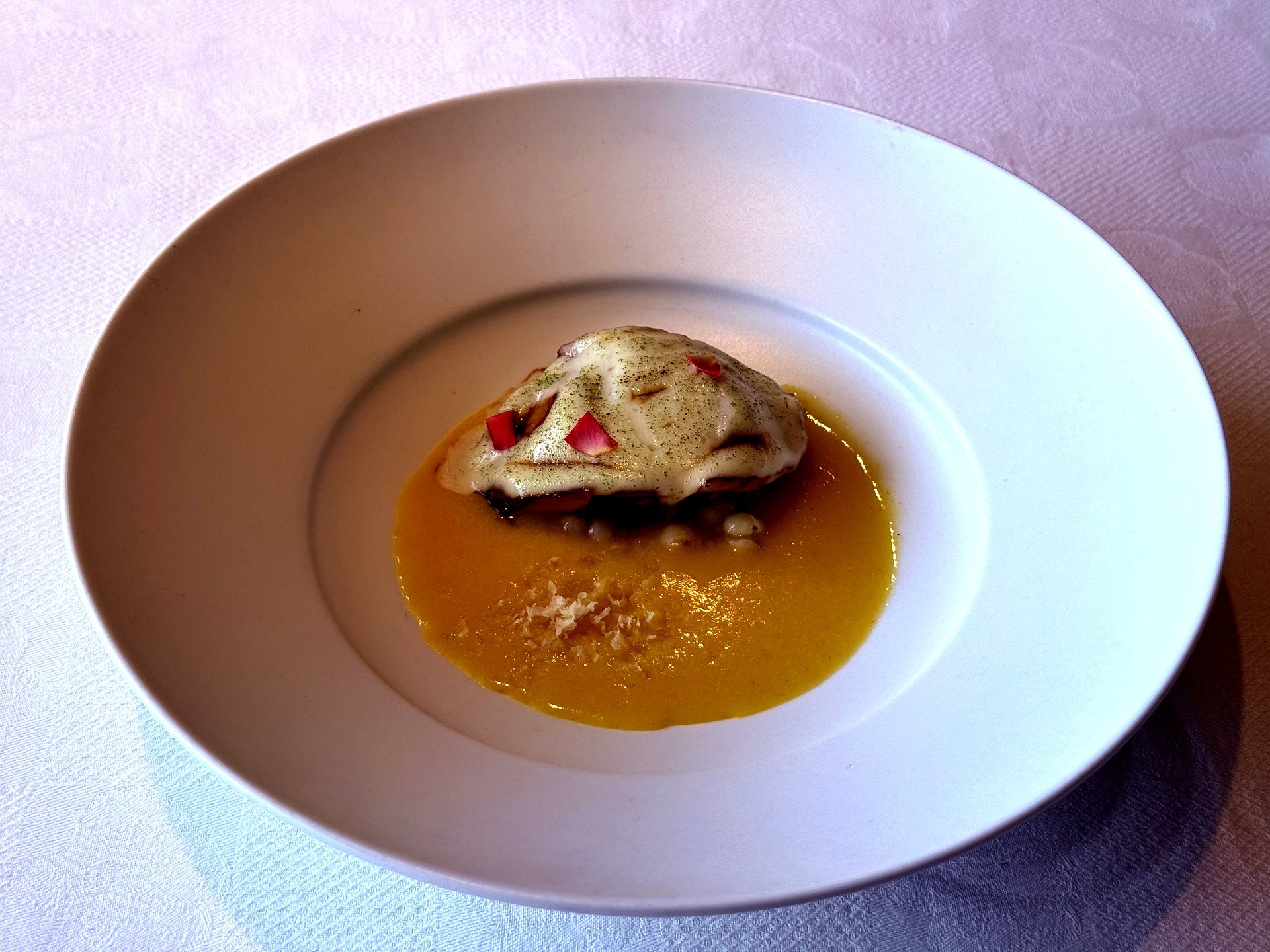
A whole grilled jeonbok (abalone), butterflied and finished with a thin saffron-tinted butter sauce, a dollop of cream sauce on top, and tiny diced red pepper. The textures of properly cooked abalone — slightly chewy, almost like calamari but richer — pair with the buttery sauce in a way that reads almost French until you taste the soy-based depth underneath. This is the most Western-feeling course of the night and it sits comfortably in the middle of the meal.
Course 6 — 한우 안심구이 (Grilled Hanwoo Tenderloin)
The protein headline. Four medallions of Hanwoo tenderloin grilled to a soft medium-rare, arrayed on a hot black stone slab. Above the meat: pickled garlic, dried persimmon, candied stone-leaf, a pinch of mineral salt. The cut is from the most expensive part of the most expensive grade of Korean beef. The grill marks are not for show; the meat actually has the deep crust and yielding center that proper hot-stone cooking gives.
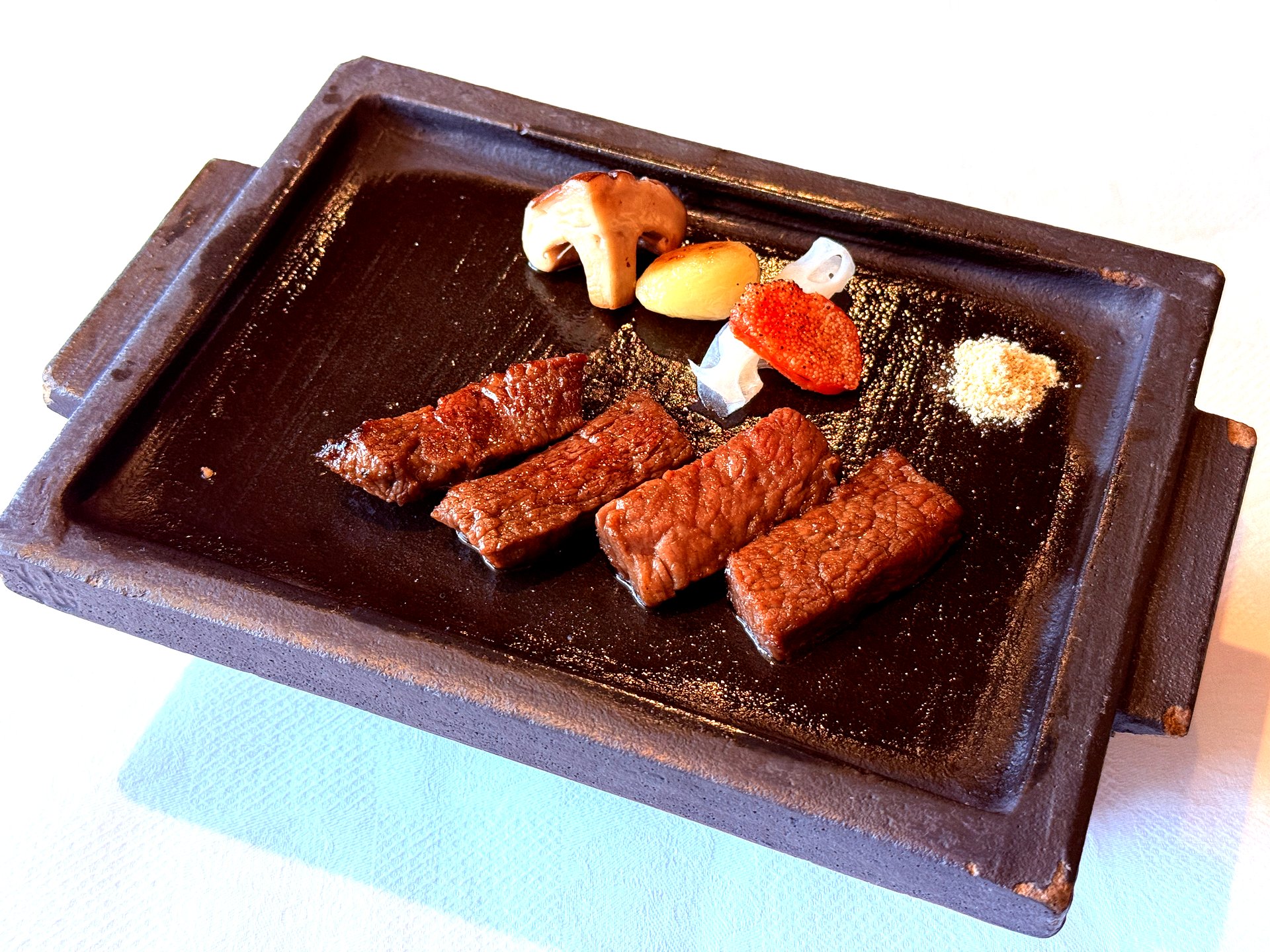
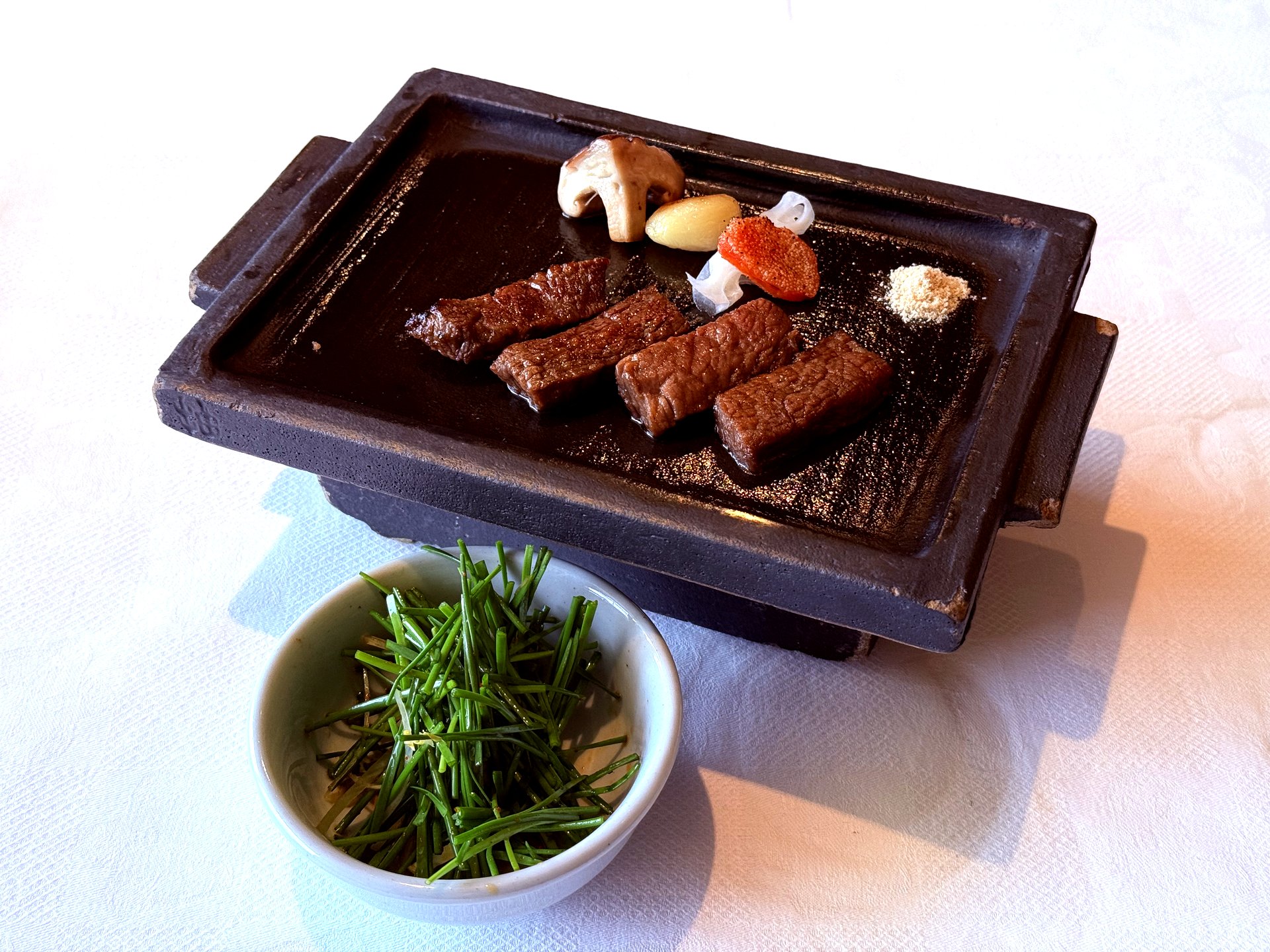
Served on the side: a small bowl of finely-sliced raw chives. Pick up a slice of beef with chopsticks, dip it into the chives, optionally pick up a pickled garlic or a flake of salt, and eat. The chive’s sharpness cuts the marbling fat. It’s the most balanced bite of beef I’ve had in Seoul this year.
Course 7 — Carbohydrate Choice (Choose One)
The kitchen offers three options to close the savory section: 대통밥 (rice steamed in a hollow bamboo, served with the bamboo cap intact), 해물 강된장 비빔밥 (seafood soybean-paste bibimbap), or 우리밀국시 (Korean wheat-flour noodles in clear broth). Each is a complete small dish in its own right. We didn’t photograph this one — you’re too busy eating it by this point of the meal — but all three are well-regarded by regulars. The bamboo rice is the most theatrical option; the bibimbap is the most flavor-dense; the noodles are the lightest landing.
Course 8 — Dessert Tableau
Korean fine-dining dessert programs vary hugely; Mugunghwa’s is layered. First, a composed plate:
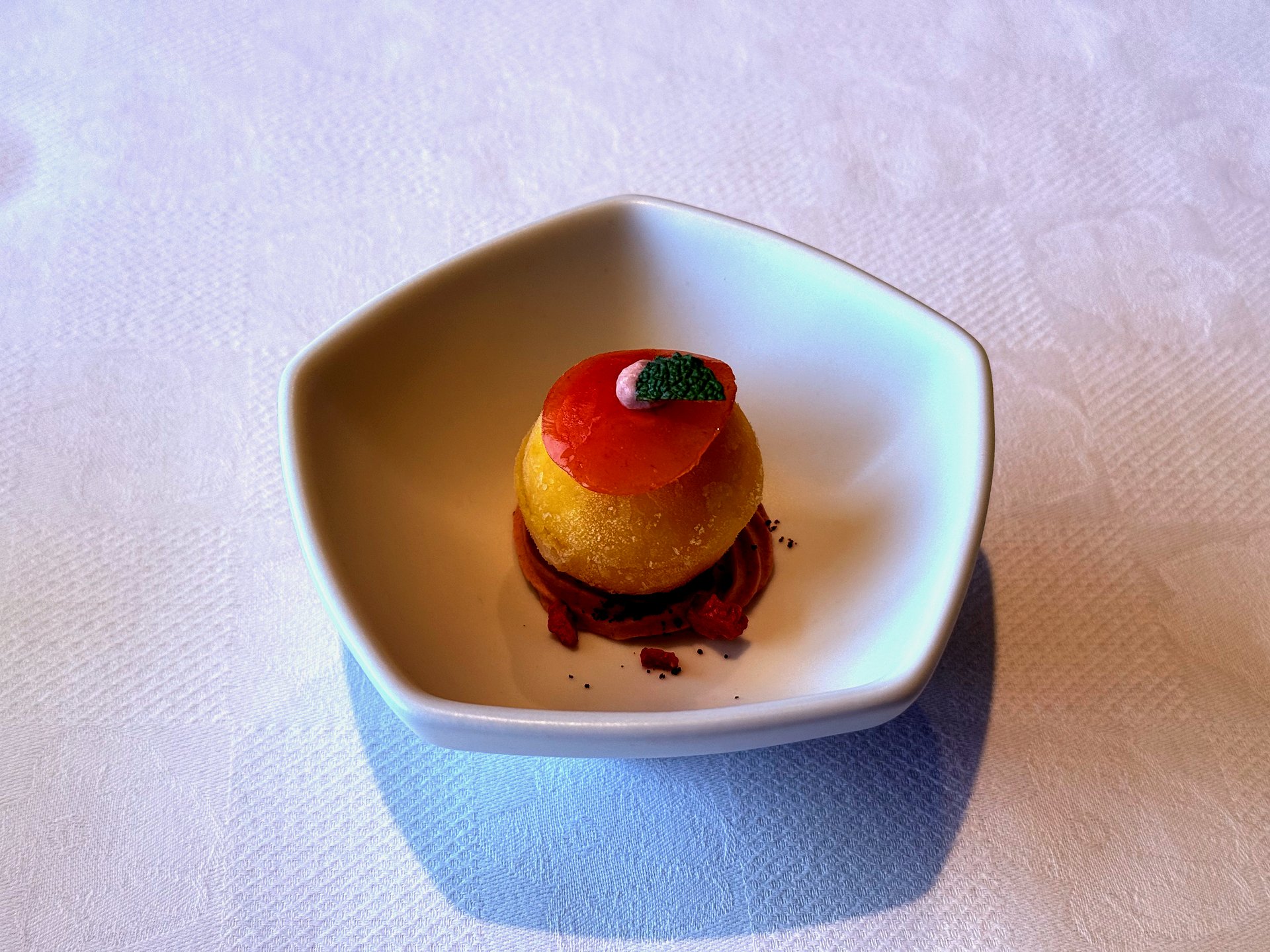
A dome of yuja-mango ice cream with a thin sheet of red ginseng wafer, set on a piped ribbon of dark chocolate-strawberry cream. Beneath, crumble. The yuja gives it that distinctive Korean citrus brightness — closer to grapefruit than to ordinary mango — and the wafer adds a faint medicinal-ginseng register without being aggressive about it.
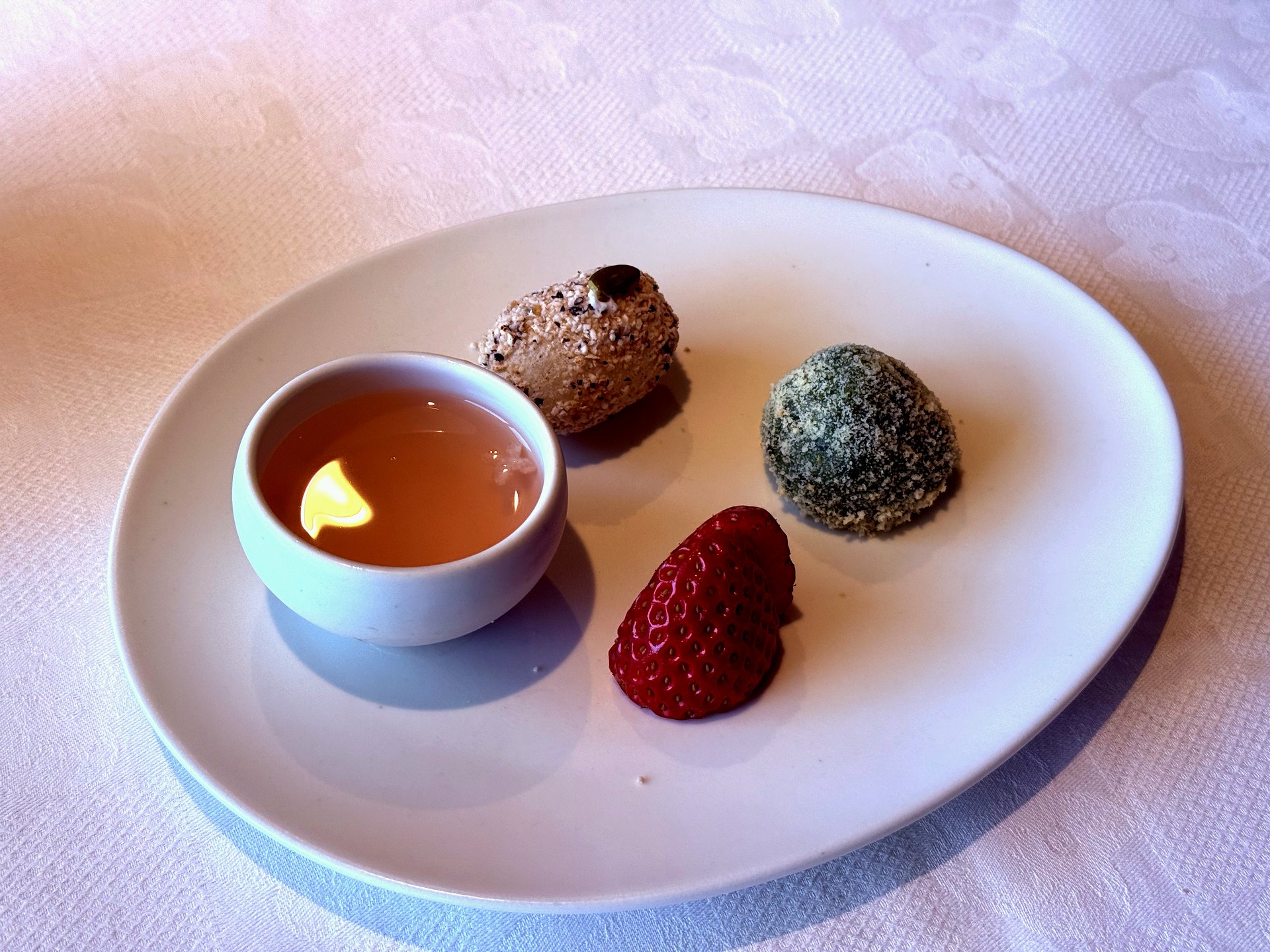
Then a tray with traditional tea, a mugwort rice cake (쑥 찹쌀떡) coated in green tea powder, a sesame-pumpkin ball, and a fresh strawberry. The mugwort cake is the standout — chewy in the way good Korean rice cake is supposed to be, with the mild bitter herbal note that gives it its name. Eat in three bites with sips of warm acacia tea between.
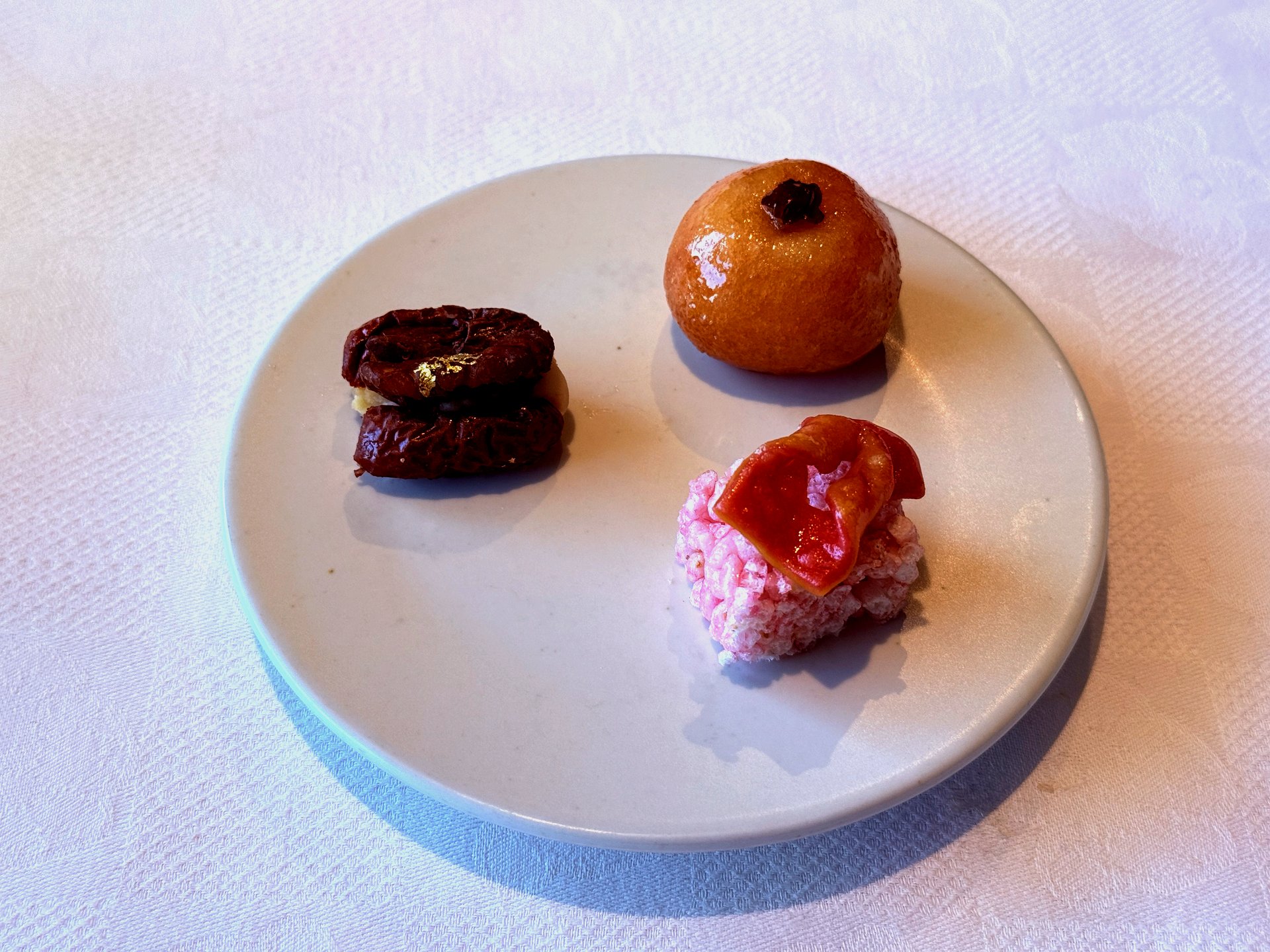
Finally, the petit fours arrive: yugwa rice-puff bites stuck together with red strawberry syrup, a glazed jujube-honey bun, and a fig sandwich pressed flat with a small flake of gold leaf. The progression is intentional — each one slightly less sweet than the last — so the palate cools as the meal ends.
The Verdict
Mugunghwa is the rare Korean fine-dining room where every plate tastes like it was made by someone who actively loves Korean cooking, rather than someone borrowing Korean ingredients for a French tasting-menu structure. The hansik vocabulary is intact — gujeolpan, jeotgal-style accents, mandu, Hanwoo, mugwort, yugwa — but the plating, pacing, and ingredient sourcing are all at international fine-dining level. The price (₩190,000 ($129 USD) / person) is high by Seoul standards but matches what you’d pay for a comparable two-Michelin-star European tasting menu, and the Korean-ness of every course is what makes it worth the spend.
Best for: celebrations, hosting foreign visitors who want to see “what Korean cuisine can actually do” at its highest level, or an anniversary dinner where you want zero ambiguity about quality.
For Seoul fine-dining alternatives, the The Place handles reliable Italian. For traditional Korean home-style at the other end of the spectrum, see Matkkalson or Jumak Boribap.
| 🍽️ Food | 4.5 | |
| 💰 Value | 3.5 | |
| 🌏 Foreigner-friendly | 4.5 | |
| 📍 Access | 4.5 |
| Best for | anniversary, hosting foreign visitors, milestone celebrations |
| Order this | Geumgang nine-course tasting (₩190,000 / $129) |