- YORI (요리) — Vienna’s best modern Korean restaurant, 3 minutes from Schwedenplatz U1/U4 interchange, with a sunny Danube-side terrace, partitioned dining booths, and a Korean expat clientele that signals authenticity.
- Garlic gangjeong chicken €10 ($11) — the must-try · kimchi-jjigae €22 ($24) · bulgogi baekban €23.50 ($26) · dolsot bibimbap €21.50 ($24) · tofu-kimchi €22.50 ($25) · Jinro Chamisul soju ₩ on the rocks.
- The kind of Korean-overseas restaurant where you forget you’re in Europe — until the waiter switches to perfect German. Cards OK, English service, 10% tip is standard. Visited 2026.
Visited: 2026 · Where: YORI, Marc-Aurel-Straße area, 1010 Wien (Innere Stadt), Austria — 3 min from Schwedenplatz U1/U4 · What I ordered: garlic gangjeong chicken (€10), kimchi-jjigae set (€22), bulgogi-baekban (€23.50), Jinro Chamisul soju · How I paid: Out of pocket (내돈내산 / not sponsored, no PR invite)
I visited YORI on a Vienna evening — the Korean restaurant 3 minutes from Schwedenplatz. I ordered the garlic gangjeong chicken first as the must-try, then I tried the kimchi-jjigae set and the bulgogi-baekban. I noticed the two tables next to mine were Korean tourists ordering in Korean, and the third table was an Austrian-Korean expat with German-speaking friends. My visit confirmed YORI passes the locals-eat-here test that I have been using to filter authentic Korean abroad.
My favorite was the garlic chicken — it cracks like proper Korean fried chicken should, glossy and shatter-crisp. I found the kimchi-jjigae the closest thing to a Seoul lunch you can get in Austria. I was reminded that the multilingual Korean/English/German menu and the photo-of-every-dish layout make YORI the right pick for a mixed-language group visiting Vienna for the first time.
On Marc-Aurel-Straße, three blocks from Vienna’s Schwedenplatz U1/U4 metro interchange, there’s a Korean restaurant called YORI (요리) — Korean for “cooking” — that, on a sunny May afternoon in 2026, was the closest thing to a Seoul lunch you could get in Austria. The garlic gangjeong chicken cracks like Korean fried chicken should. The kimchi-jjigae is fermented sour like a Korean grandmother’s. The bulgogi-baekban is the homesick-Korean-expat lunch order. This is the international Korean restaurant that Korean travelers tell each other about.
| 📍 Where | Marc-Aurel-Straße area, 1010 Wien (Inner Stadt), Austria — 3 min walk from Schwedenplatz |
| 🚇 Metro | Schwedenplatz (U1 / U4), Exit Rotenturmstraße — 3 min walk · also accessible by trams 1/2/D |
| 🕒 Hours | Lunch 12:00–15:00 · Dinner 17:30–22:30 · seven days · check Google for holidays |
| 💰 Price | €20–€35 ($22–$38 USD) per person · entrées €8–€13 ($9–$14) · mains €21–€31 ($23–$34) · barbecue tableside €31–€50 |
| 📖 Menus | Bilingual menu book — Korean / English / German. Photo of every dish. Vegan/vegetarian section. |
| 💳 Cards | All major cards · Visa / Mastercard / AMEX / Maestro · contactless OK |
| 💶 Tip | 10% standard in Vienna (round up to whole € at minimum) · paid in cash to the server, or written into the card total before signing |
| 📞 Reservation | Recommended for dinner and weekend lunch · book through Google or the restaurant directly · terrace seats (May–Sept) need booking |
Cultural anchor for travelers: 한식 (Hansik) is Korean food. 한식당 (Hansikdang) is a Korean restaurant. Outside Korea, the bar for “authentic Hansik” depends entirely on whether Koreans actually go there. YORI passes that test on a Vienna evening — the next two tables over were Korean tourists ordering in Korean, and the waiters answered back in Korean before switching to perfect English and then to perfect German. The menu, the kitchen technique, and the temperature of the kimchi-jjigae stone pot all match the Seoul standard. This is the rare Korean restaurant outside Korea that hits both authenticity and accessibility.
The Spot — On Schwedenplatz, Vienna’s Crossroads
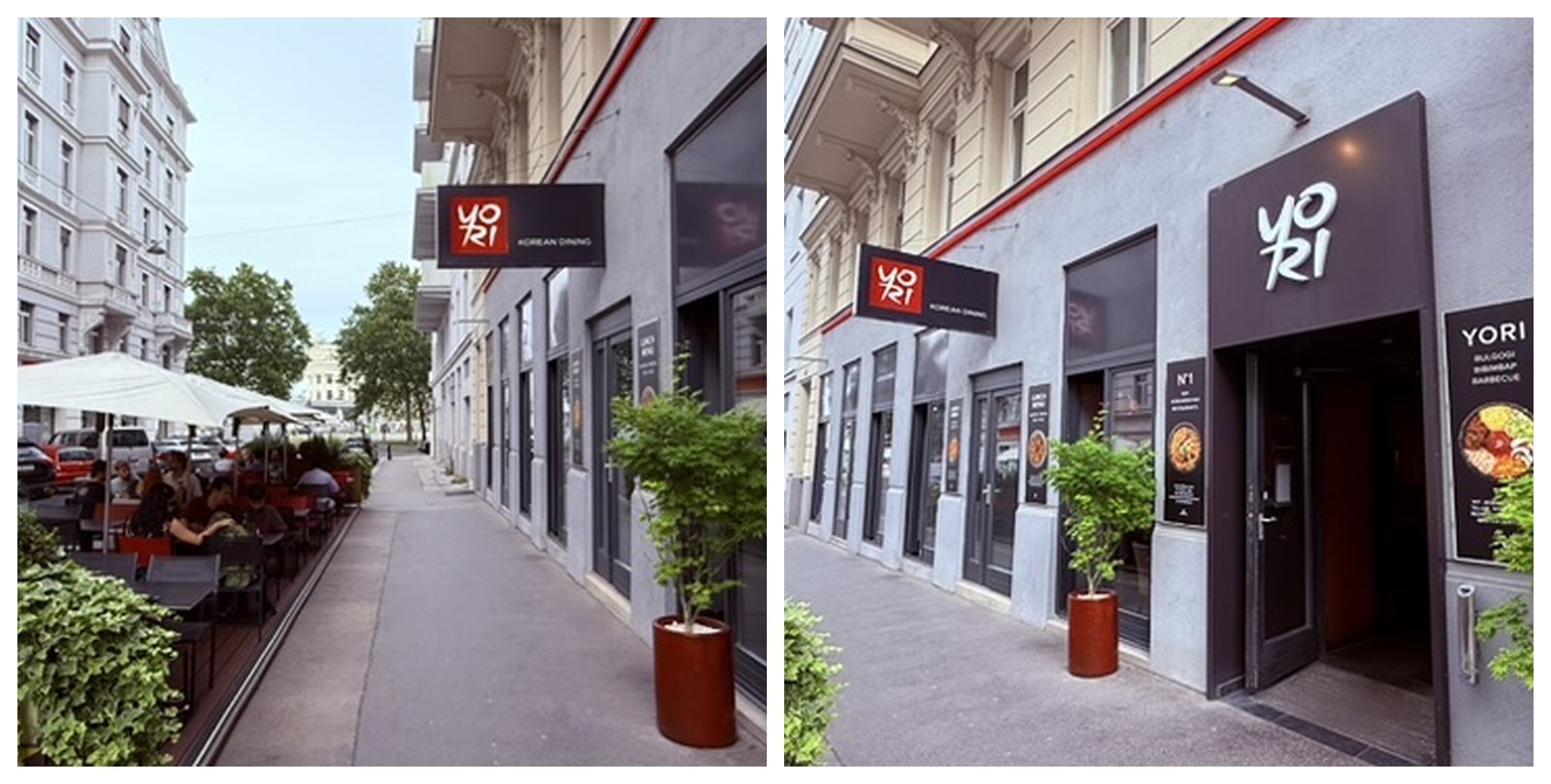
Schwedenplatz is Vienna’s central interchange — where the U1 (red) and U4 (green) metro lines meet, where the Danube Canal curves through the Inner Stadt, where trams 1, 2, and D all stop. Three minutes walk from the metro exit, past the Donaukanal, YORI sits on a quiet side street with a full outdoor terrace under white umbrellas — the kind of all-day Vienna terrace where you eat lunch and stay for two coffees.
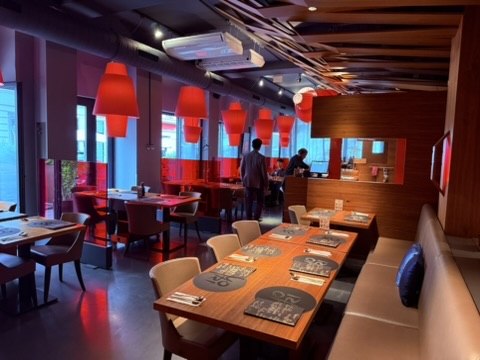
Inside, the room is sleek and intentional — wooden tables, beige cushioned bench-seating, warm red pendant lamps over each booth, and a wood-clad ceiling with diagonal beam motifs. Glass partitions separate sections of the room, so larger groups feel private and smaller tables feel held. It’s the kind of modern-Korean-restaurant interior that’s become standard in Seoul, transplanted whole into Vienna.
The Menu — A Full Korean Restaurant, Not a Korean-BBQ-Only Place
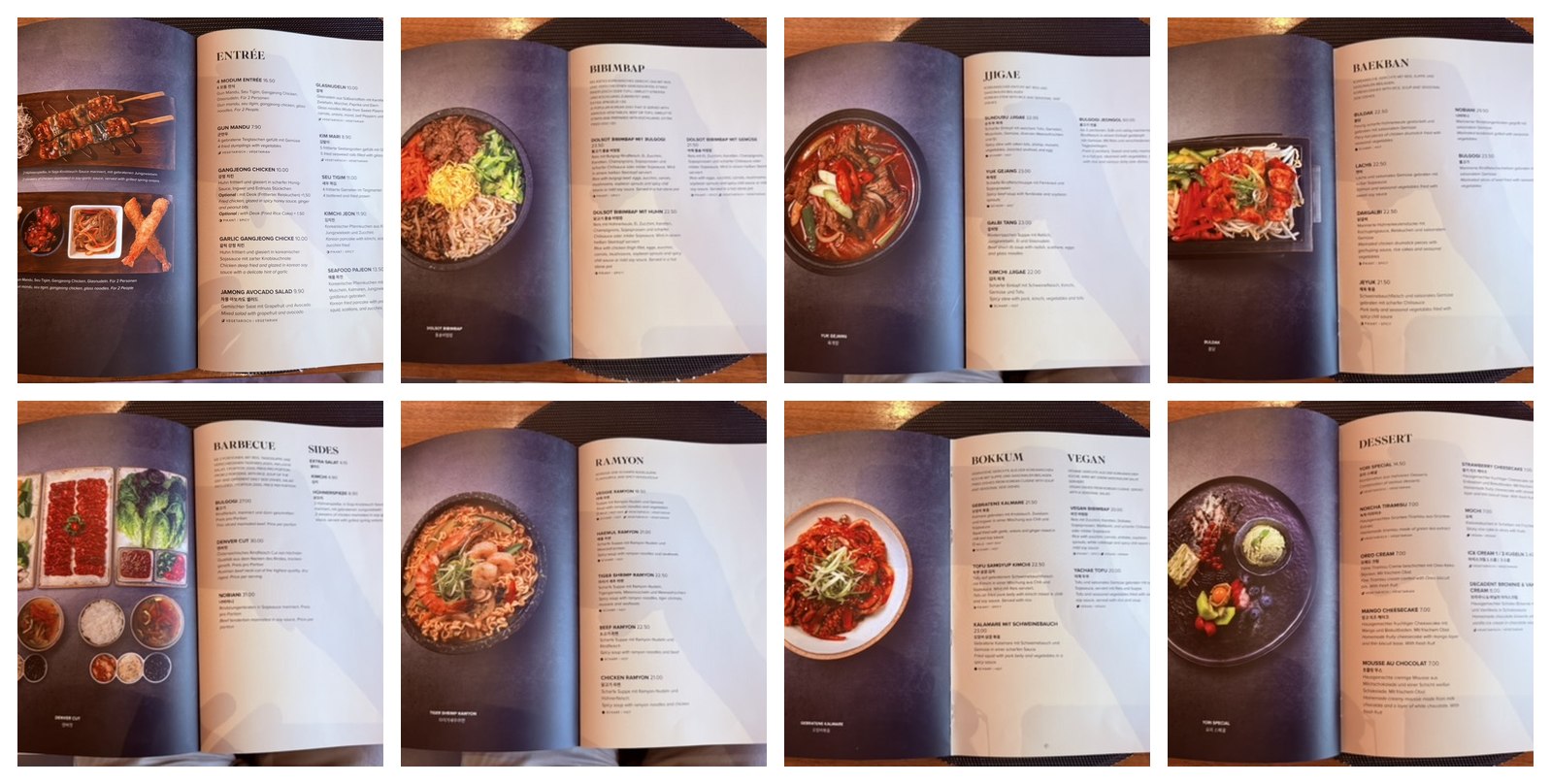
What makes YORI stand out among European Korean restaurants is that it does the full Korean menu — not just barbecue, not just ramyon, but the full sequence: entrées, jjigae stews, baekban set meals, dolsot bibimbap, stir-fries, table barbecue, ramyon, vegan options, and a proper dessert section. The bilingual menu book is the size of a wine list, with a photo of every dish and prices in three languages.
📋 Menu Highlights — Korean / English / Price (€) / USD
| Korean / English | € / $ USD |
| ENTRÉE | |
| 갈릭 강정 치킨 ★ — Garlic Gangjeong Chicken | €10.00 ($11) |
| 강정 치킨 — Gangjeong Chicken (soy-honey) | €10.00 ($11) |
| 군만두 — Gun Mandu (fried dumplings) | €7.90 ($9) |
| 김치전 — Kimchi Jeon (kimchi pancake) | €11.90 ($13) |
| 해물 파전 — Seafood Pajeon | €13.50 ($15) |
| JJIGAE (Stews) | |
| 김치찌개 ★ — Kimchi Jjigae | €22.00 ($24) |
| 순두부찌개 — Sundubu Jjigae | €22.00 ($24) |
| 육개장 — Yukgejang (spicy beef soup) | €23.00 ($25) |
| 갈비탕 — Galbi Tang (short-rib soup) | €23.00 ($25) |
| BAEKBAN (Set Meals — rice + soup + 3 banchan) | |
| 불고기 백반 ★ — Bulgogi Baekban | €23.50 ($26) |
| 제육 백반 — Jeyuk (spicy pork) | €21.50 ($24) |
| 불닭 백반 — Buldak (spicy chicken) | €22.50 ($25) |
| 너비아니 — Nobiani (tenderloin) | €29.00 ($32) |
| BIBIMBAP | |
| 돌솥 비빔밥 (불고기) ★ — Dolsot Bibimbap mit Bulgogi | €21.50 ($24) |
| 돌솥 비빔밥 (야채) — Vegan Bibimbap | €20.00 ($22) |
| 돌솥 비빔밥 (닭) — Dolsot Bibimbap mit Hühn | €22.50 ($25) |
| STIR-FRY (Bokkum) | |
| 두부 김치 ★ — Tofu Sangchu Kimchi (with pork belly) | €22.50 ($25) |
| 오징어 볶음 — Gebratenes Kalmar (stir-fried squid) | €21.50 ($24) |
| BARBECUE (Tableside) | |
| 불고기 — Bulgogi (marinated) | €31.00 ($34) |
| 너비아니 — Nobiani (tenderloin) | €31.00 ($34) |
| 덴버 컷 — Denver Cut (dry-aged Austrian beef neck) | €50.00 ($55) |
| RAMYON | |
| 호랑이 새우 라면 — Tiger Shrimp Ramyon | €22.50 ($25) |
| 소고기 라면 — Beef Ramyon | €22.50 ($25) |
| 야채 라면 — Veggie Ramyon | €18.50 ($20) |
★ = ordered & reviewed below. USD conversion at ~€1 = $1.10 (2026). Baekban sets are 1-person, served with rice + miso/clear soup + 3 banchan dishes. Barbecue plates are 2-person sharing portions.
Reading the menu, two practical notes for visitors: (1) the “baekban (백반)” section is the value play — a single-person fixed meal of meat + rice + soup + 3 banchan for €21–€29, which is what locals order at lunchtime in Korea. (2) the “tableside barbecue” is a 2-person sharing portion — order it if you have a group and want the grill-at-your-table experience.
불고기 백반 (Bulgogi Baekban) — The Homesick Korean Order
The 불고기 백반 (Bulgogi Baekban, €23.50 / $26) is what Koreans in Vienna order. A sizzling cast-iron sketcher arrives on a wooden trivet, piled with thinly-sliced beef marinated in soy-pear-garlic-sesame, grilled with onions, carrots, mushrooms and a finish of scallions, served alongside a covered stainless rice bowl, a clear soybean-sprout soup in a blue ceramic bowl, and a 3-bowl banchan tray (pickled daikon, sesame-cucumber salad, kimchi).
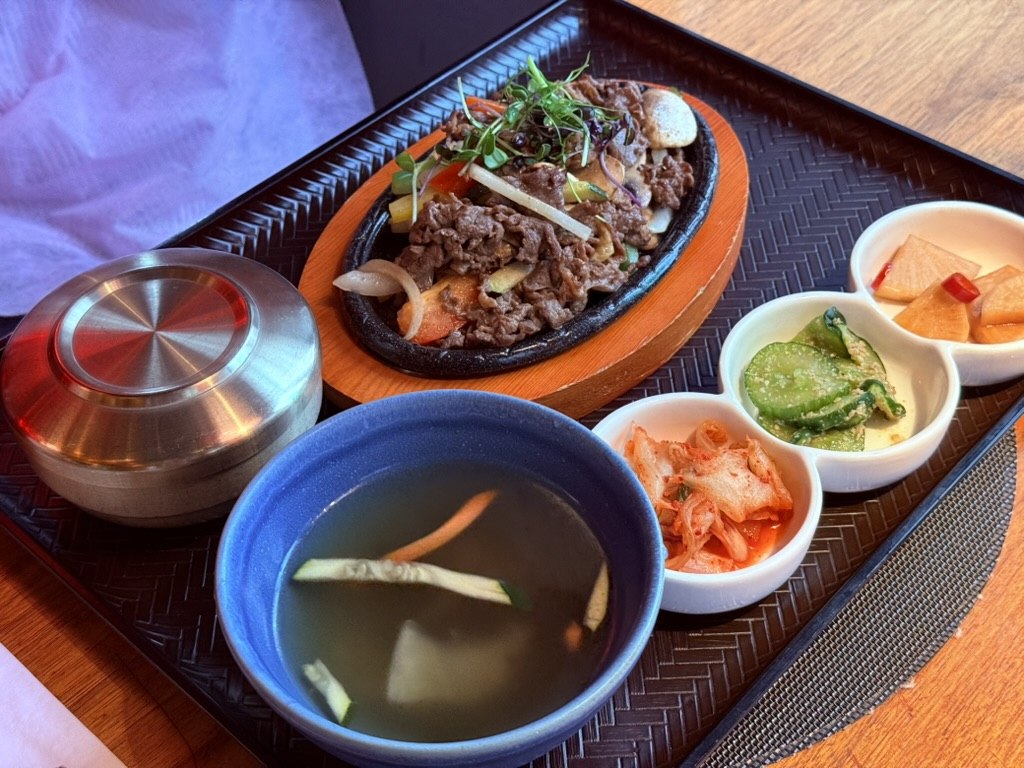
The bulgogi marinade is sweet first, garlic-savory second, with a clean pear-juice background — the classic Korean palace-style preparation. The beef itself is the right grade — not gristly, not over-marbled. Eat it the Korean way: a bite of beef, a spoonful of rice, a sip of the clear soup to reset, a small pinch of kimchi or pickled radish, repeat. The banchan is house-made — the kimchi is actually fermented (not factory-packaged), the cucumber salad is dressed in real sesame oil and gochugaru.
갈릭 강정 치킨 (Garlic Gangjeong Chicken) — The Must-Try
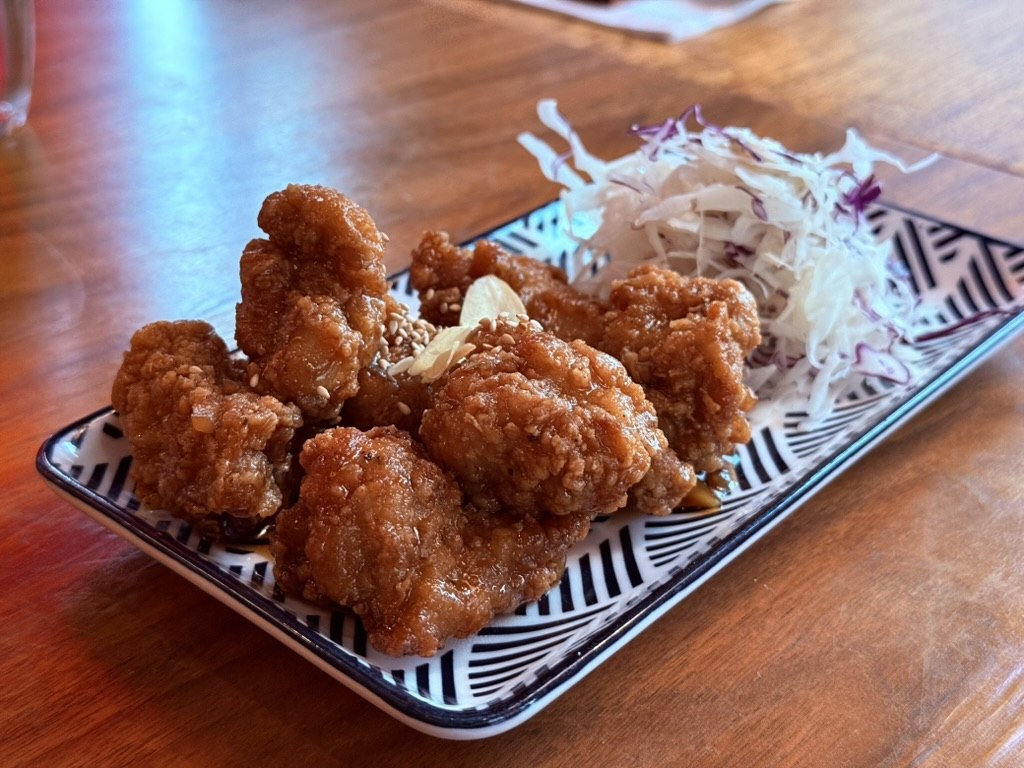
If you order one thing, order this. 갈릭 강정 치킨 (Garlic Gangjeong Chicken, €10.00 / $11) — listed under entrées but capable of being a meal — is YORI’s Korean-fried-chicken move. 닭강정 (dakgangjeong) is the sticky-glaze school of Korean fried chicken: double-fried until the crust is shatter-crisp, then tossed in a glaze that varies by shop. The garlic variant skips the bright-red gochujang sauce that Western diners know and goes with a clear soy-honey-garlic glaze, finished with thin slices of fried garlic chips and a snow of toasted sesame seeds.
See the hero photo at the top of this post — that’s exactly what arrives at your table. The chicken pieces are bone-out thigh chunks, glazed all the way around, glossy under the restaurant lights. The crust holds for the entire meal — even half an hour after the plate arrives, the last piece is still crunchy. Pop one whole, bite, taste sweet-then-garlicky-then-sesame finish, repeat until the plate is empty. Easily the best Korean fried chicken I’ve had in Europe.
불고기 돌솥비빔밥 (Bulgogi Dolsot Bibimbap) — The Showpiece
돌솥비빔밥 (dolsot-bibimbap, €21.50 / $24) is the show-off Korean dish — rice + topping ingredients served in a 500°C hot stone bowl that crisps the rice at the bottom into 누룽지 (nurungji), the prized golden rice crust. Every diner gets a wooden spoon to scrape it free at the end.
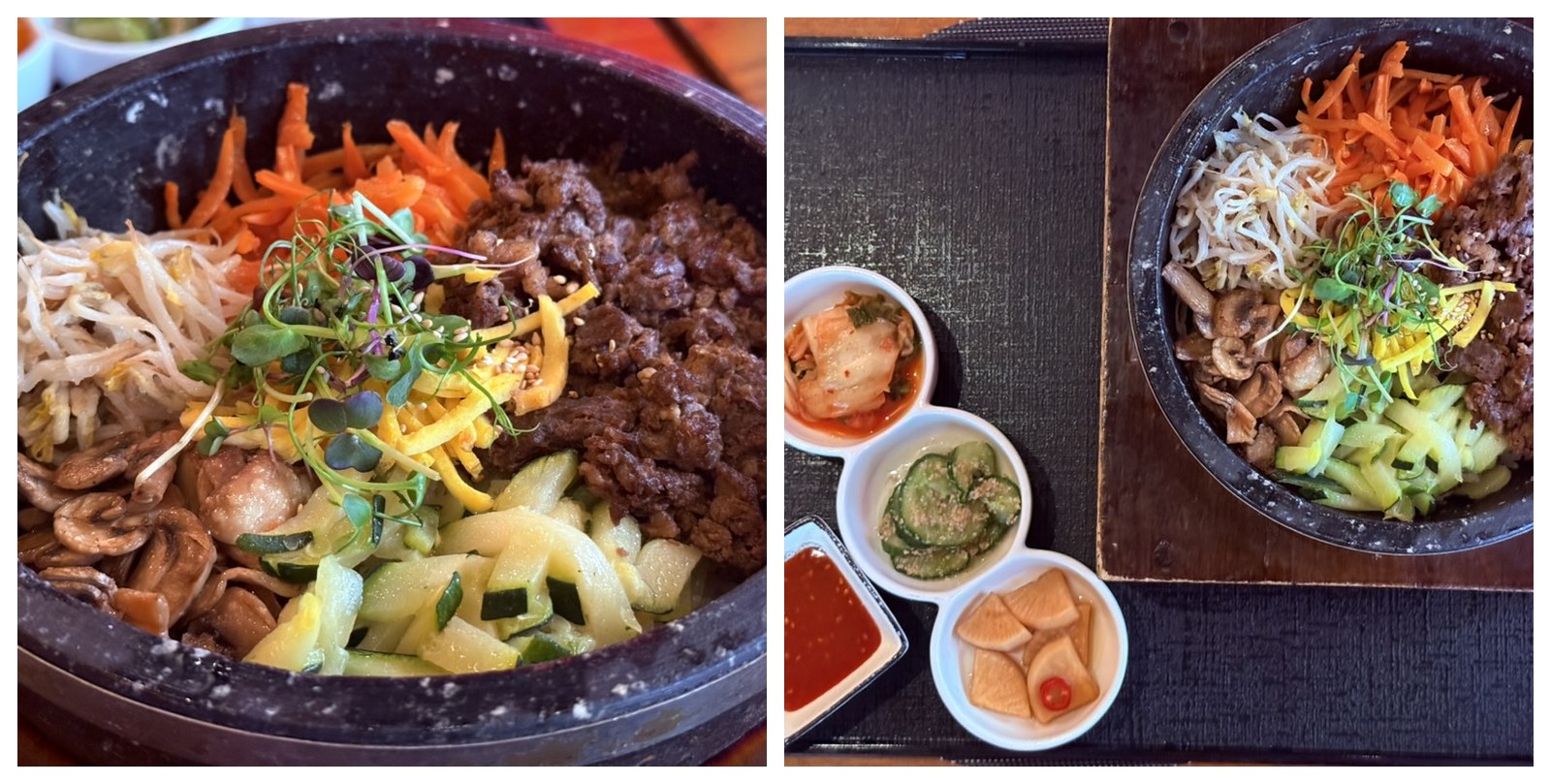
YORI’s version comes in a black stone bowl, arranged by ingredient: blanched bean sprouts (콩나물), julienned carrots, sautéed mushrooms, cucumber, egg-yolk-yellow shreds, marinated bulgogi beef, sesame and microgreens. A side bowl of gochujang sauce arrives separately — add as much or as little as you want. Stir everything thoroughly with the spoon — the stone bowl is still cooking the bottom rice while you eat, so by minute 5 you’ll have the gold-crisp nurungji forming. The crust is the point.
김치찌개 (Kimchi Jjigae) — Comfort Food, Done Right
김치찌개 (Kimchi Jjigae, €22.00 / $24) is the most basic Korean lunch — a spicy red stew of aged kimchi + tofu + pork belly + onion + scallion + gochugaru, simmered in a stone pot until everything melds. It’s what Koreans eat once a week minimum. YORI’s version is kitchen-correct: the kimchi is aged-sour, the broth is the right shade of orange-red, the tofu cubes have absorbed the broth.
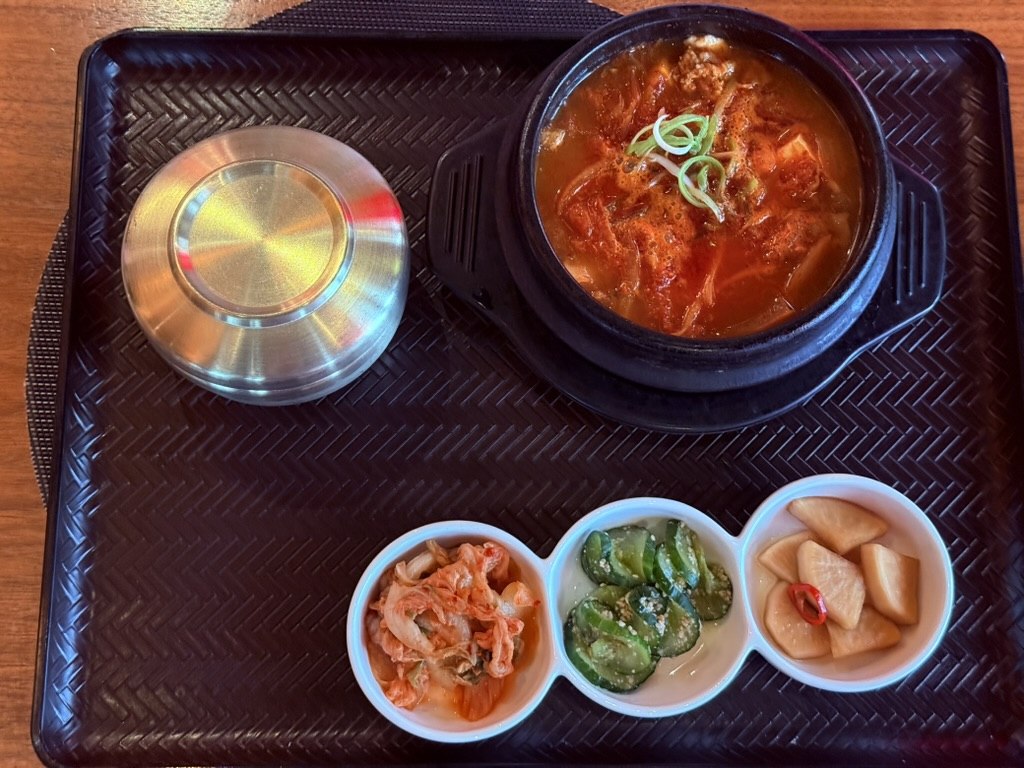
Eat it Korean-style: spoon a bit of jjigae onto a spoonful of rice, eat from the spoon (not the bowl), alternate with banchan. Or, the Korean expat move, pour the rice directly into the leftover jjigae broth at the end — the rice soaks up everything, the bottom of the stone pot crisps the rice, and the meal ends as a quiet, satisfying second course.
두부김치 (Dubu-Kimchi) — The Drinking Food
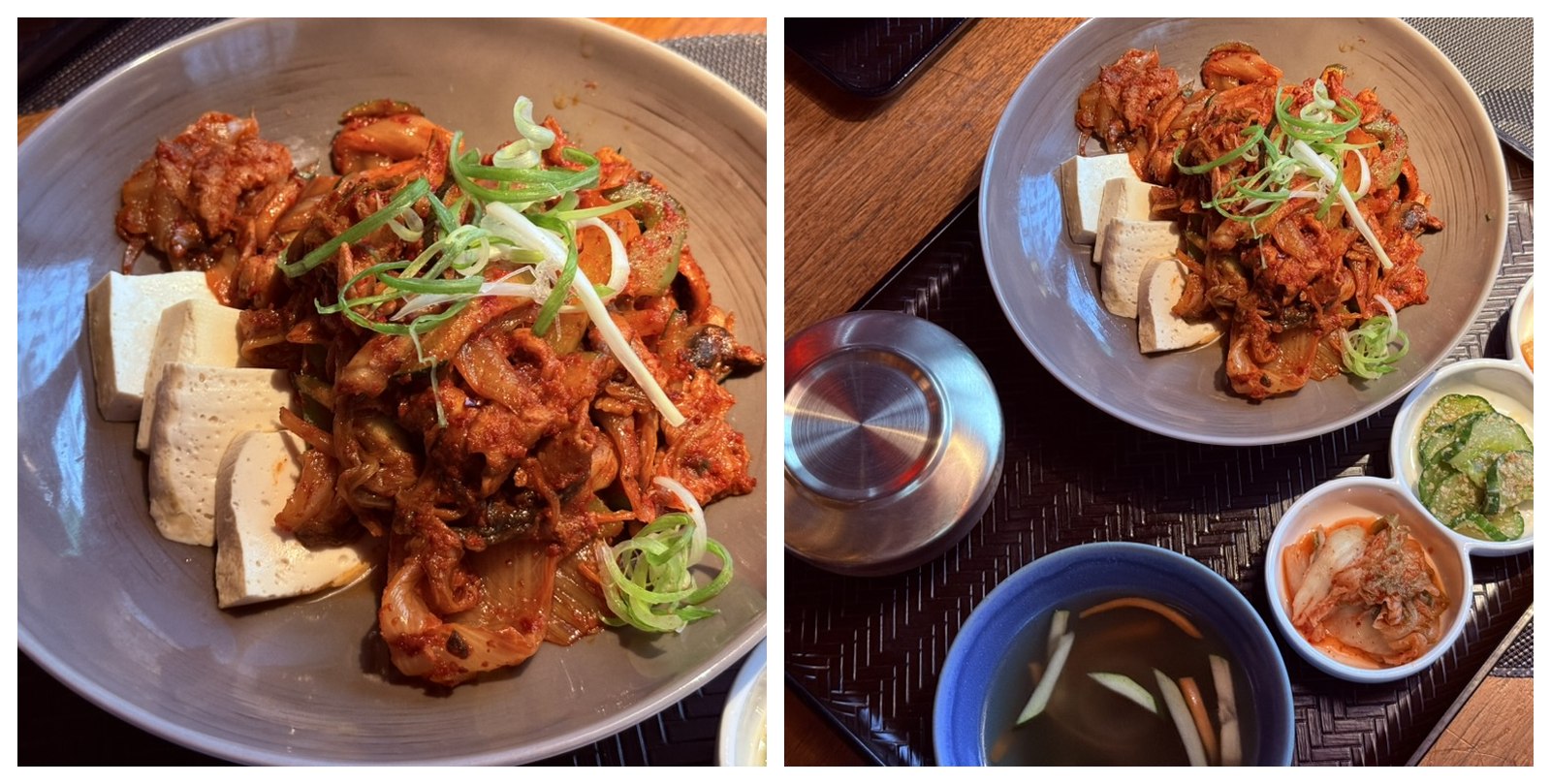
두부김치 (dubu-kimchi, €22.50 / $25) is Korea’s great drinking food — steamed plain tofu, sliced thick, served with stir-fried kimchi + pork belly. The contrast is the entire point. The tofu is mild, milky, almost sweet. The kimchi-pork stir-fry is hot, sour, fatty, deeply spiced. You eat them together — a slice of plain tofu, a chopstick of the kimchi-pork on top, one bite — and the cold-creamy-soft-against-hot-spicy-fatty combination is one of the great Korean food pairings, designed specifically to drink soju with.
진로 참이슬 — The Right Drink
You should drink 진로 참이슬 (Jinro Chamisul) with this meal. It’s the most-sold Korean soju brand globally, the green bottle you see in every Korean restaurant, drinking-pop song, and movie. Clear, slightly sweet, 16.5% ABV, served cold in small shot glasses. The order is: open the bottle, pour into both glasses (with two hands if pouring for someone older — Korean drinking etiquette), clink, drink. Repeat until the bottle is empty. Soju + dubu-kimchi + garlic gangjeong = the classic Korean drinking trio.
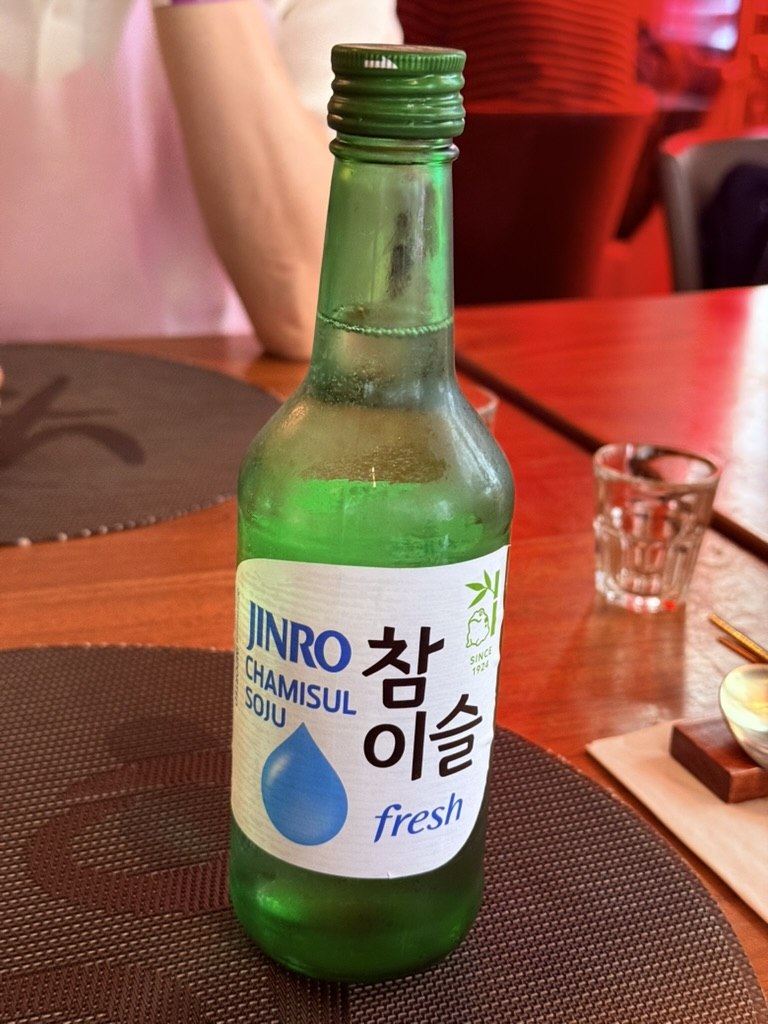
YORI sells the standard 360ml bottle in the €8–€10 ($9–$11) range — fair Vienna pricing. They also carry 막걸리 (makgeolli, milky rice wine) and a handful of Korean and German beers. The wine list is short but functional.
Practical Notes for Vienna Travelers
- Tipping: 10% is standard in Vienna restaurants. Round up to whole euros for casual, do 10% for table service. Korean visitors used to no-tipping at home — yes, here you tip.
- Cards: all major cards accepted, including AMEX and contactless. You don’t need cash.
- Reservations: strongly recommended for dinner, especially weekends. Book the terrace if you’re visiting May–September.
- From the airport: CAT (City Airport Train) to Wien Mitte, then U4 one stop to Schwedenplatz. Total ~25 minutes from VIE to YORI’s door.
- Pair it with: the Donaukanal (Danube Canal) walking path is 2 minutes away — perfect 15-min stroll before or after dinner. Stephansplatz and the cathedral are 5 minutes south.
- Compared to Korea: for the homeland reference points, Daedo Sikdang in Mapo is the bulgogi benchmark, Jumak Boribap is the baekban benchmark, and for cafe culture Gwajabang in Yeonnam.
The Verdict
YORI is the proof that Korean food has officially arrived in Vienna — not as exotic fusion, not as Westernized “K-BBQ-only” — but as the full Korean menu, done with the right technique, in a setting that respects the food. The garlic gangjeong chicken is the showstopper. The kimchi-jjigae is the kitchen-test pass. The bulgogi-baekban is the homesick-Korean-expat order. The terrace is the Vienna-summer-lunch order. The Jinro soju is the right drink. The multilingual menu, the kind staff, and the U1/U4 access make it foreigner-trivial. 3 min from Schwedenplatz. Order the garlic chicken, the kimchi-jjigae, the bulgogi-baekban, a bottle of soju to share. Strong recommendation — Vienna’s best Korean.
| 🍽️ Food | 5.0 | |
| 💰 Value | 4.0 | |
| 🌏 Foreigner-friendly | 5.0 | |
| 📍 Access | 5.0 |
| Best for | Vienna stopover Korean fix · Korean expat homesickness · birthday or group dinner · summer terrace lunch |
| Order this | 갈릭 강정 치킨 (Garlic Gangjeong Chicken) · 김치찌개 · 두부김치 · 불고기 백반 · 불고기 돌솥비빔밥 · 진로 참이슬 소주 |