- Baesan Imsu (배산임수) is a Gangnam fusion-hansik room that builds Korean ingredients with contemporary Italian technique — burrata with spring fruit, Seocheon-seaweed capellini, Hanwoo tartare with perilla-seed pesto.
- The catch: mandatory wine bottle per table pushes the all-in to ₩200,000+ ($136+) per person — this is occasion dining, not a casual dinner.
- I went here for a milestone work celebration in spring 2026, and the vegetable course alone changed how I think about Korean fusion.
배산임수 (Baesan Imsu) is one of the more interesting things to happen to Korean cuisine in Gangnam lately.
The name literally means “mountain at the back, water in front” — the classical Korean siting principle for an auspicious dwelling. The food follows the same idea: rooted in Korean tradition, but built up with the kind of technique you’d find in a contemporary Italian dining room. I came here in April 2026 for a milestone work dinner, and the vegetable course alone changed how I think about Korean fusion.
Think spring fruit with burrata. Cuttlefish capellini with Seocheon seaweed sauce. Hanwoo tartare with house-pickled jangajji and crispy tomato chips. The menu is reset every season; the version we ate (April–May, spring) was unusually thoughtful.
| 📍 Where | 5F, Samseong-dong, Gangnam-gu, Seoul — between COEX and Bongeunsa Temple |
| 🚇 Subway | Bongeunsa Station (Line 9) Exit 1, ~5 min walk · or Samseong Station (Line 2) Exit 6, ~8 min |
| 🕒 Hours | Lunch 12:00–15:00 · Dinner 18:00–22:00 · closed Sundays (confirm at booking) |
| 💰 Price | A-la-carte ₩25,000 ($17 USD)–₩45,000 ($31 USD) per dish · mandatory 1 wine bottle/table (₩100,000 ($68 USD)+) · expect ₩200,000 ($136 USD) per person all-in |
| 📖 English menu | Yes — full English menu, staff speak conversational English |
| 💳 Cards | All major international cards (Visa / Mastercard / AMEX) |
| 📞 Reservation | Essential — book via Catch Table or Naver Booking 1+ week ahead |
| 🍷 House policy | 1 wine bottle per table required — plan for it |
The Spot — 5th Floor, Samseong-dong (Gangnam)
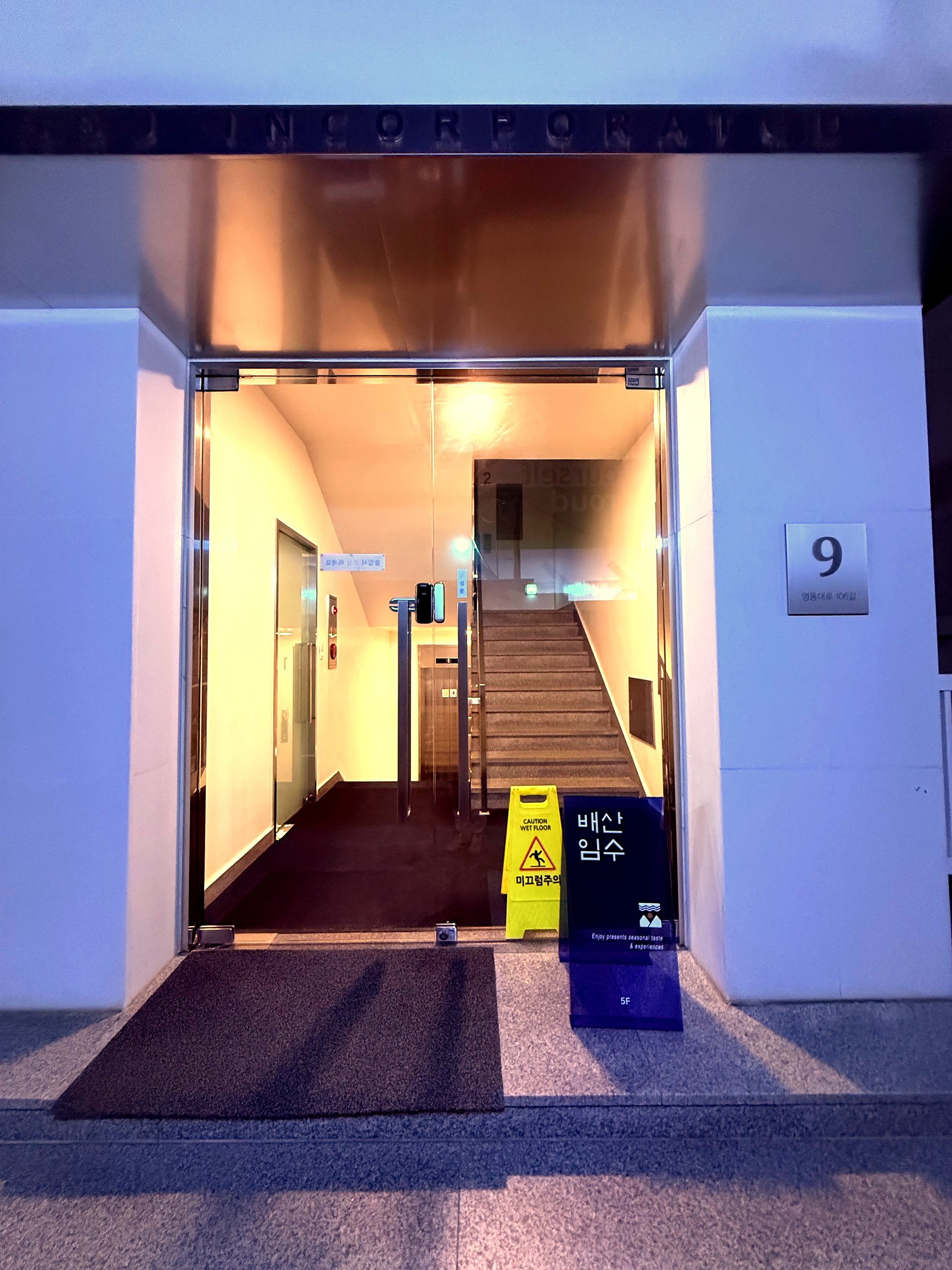
Baesan Imsu sits on the 5th floor of a quiet office-tower-adjacent building in Samseong-dong (삼성동), the strip of Gangnam between COEX and Bongeunsa Temple. The address is intentionally low-key — there’s no street signage screaming at you from the road. You go up the elevator, the doors open onto a clean white minimalist landing, and the restaurant entrance is right there.
The Catch — Wine Is Required
Here’s the one rule you need to know before booking: every table must order at least one bottle of wine. This is not a suggestion — it’s the house policy. The wine list runs from about ₩100,000 ($68 USD) at the entry level up past ₩200,000 ($136 USD) for the better bottles, which means the practical cost of a meal here for two people is closer to ₩200,000 ($136 USD)+ before food. Plan accordingly.
The wine list itself is well-curated for Korean-fusion food — they lean toward bright whites and lighter reds that pair with the seasonal vegetable program. The sommelier-on-call will guide you if you don’t want to choose blind. If you’re visiting for a celebration or hosting, this works. If you’re looking for a cheap dinner, this isn’t it.
The Menu — Seasonal, Three Categories
The menu is organized into three Chinese-character categories that double as a manifesto:
- 菜 (Vegetable) — the section that announces what kind of restaurant this is
- 魚 (Seafood) — clean, technique-forward, lots of Seocheon (서천) sourcing for spring
- 肉 (Meat) — Hanwoo (Korean beef), heritage pork, no-antibiotic chicken
Plus a Reservation-Only sub-section for the more dramatic items: live Seocheon blue crab (서천 봄 꽃게), clam steam, seasonal solbap. We ordered across all three categories.
菜 — Vegetable
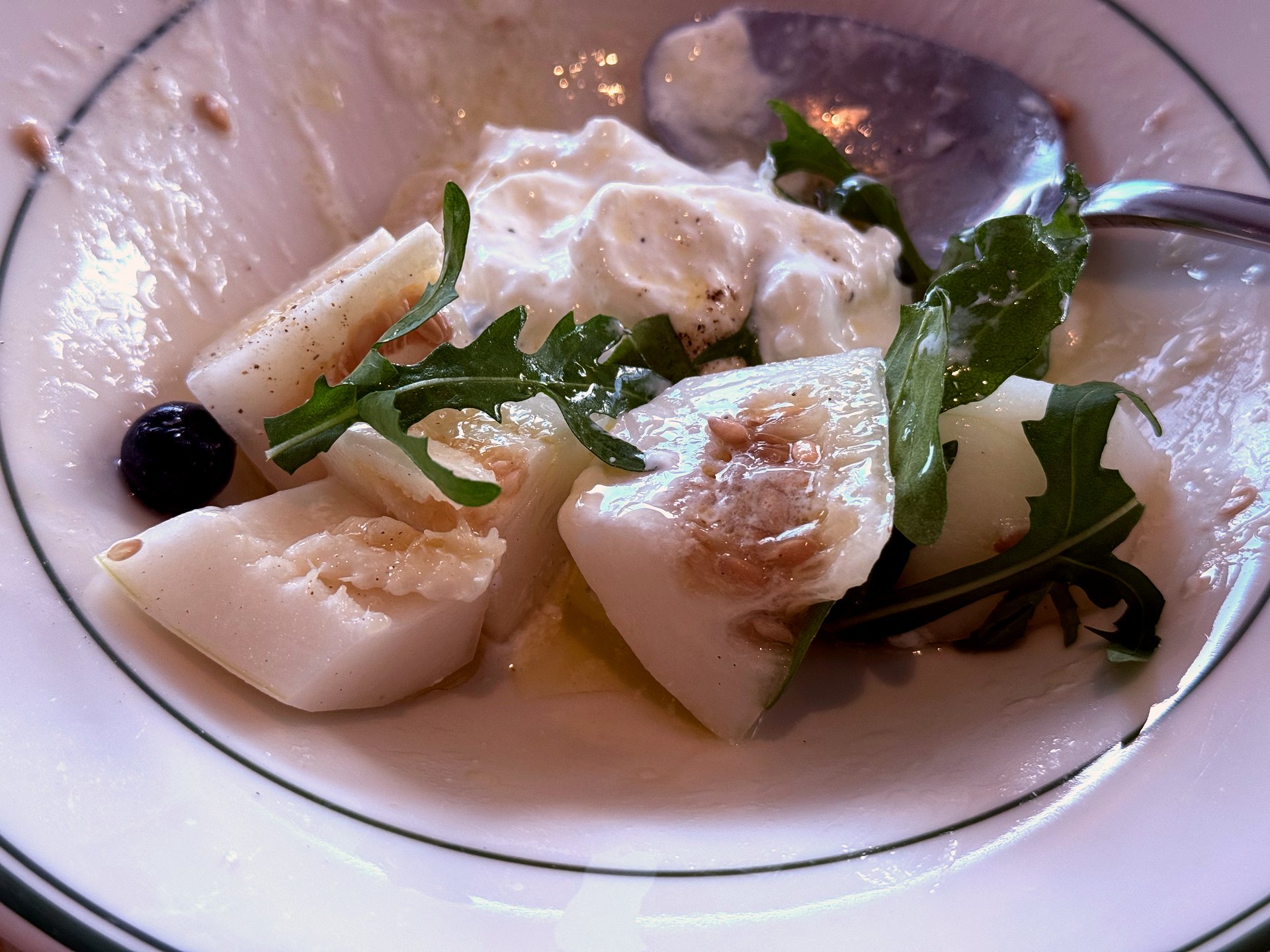
Spring Fruit & Burrata (봄 열매와 부라타) — ₩28,000 ($19 USD)
The opener that sets the tone. Spring fruits (looks like sliced melon and a poached pear), a few arugula leaves, a small mound of fresh burrata, a single blueberry, a slick of good olive oil and pepper. No baguette in this serving though the menu lists it (the kitchen may adjust). The burrata is genuinely fresh — that creamy molten-center texture is hard to fake — and the fruit is sliced thin enough to pick up cleanly with cheese.
This kind of dish appears at many fusion places and gets bungled when the cheese is from a tub or the fruit is too sweet. Baesan Imsu doesn’t bungle it.
Spring Namul Jeon (봄 나물전) — ₩25,000 ($17 USD) (gluten-free)
This is the dish that explains the restaurant’s thesis. A traditional Korean 나물전 (vegetable pancake) — wild greens and shredded potato bound with egg, pan-fried until the edges are crisp — but with two upgrades: it’s gluten-free (no wheat flour), and the top gets a generous shower of grated hard cheese before serving.
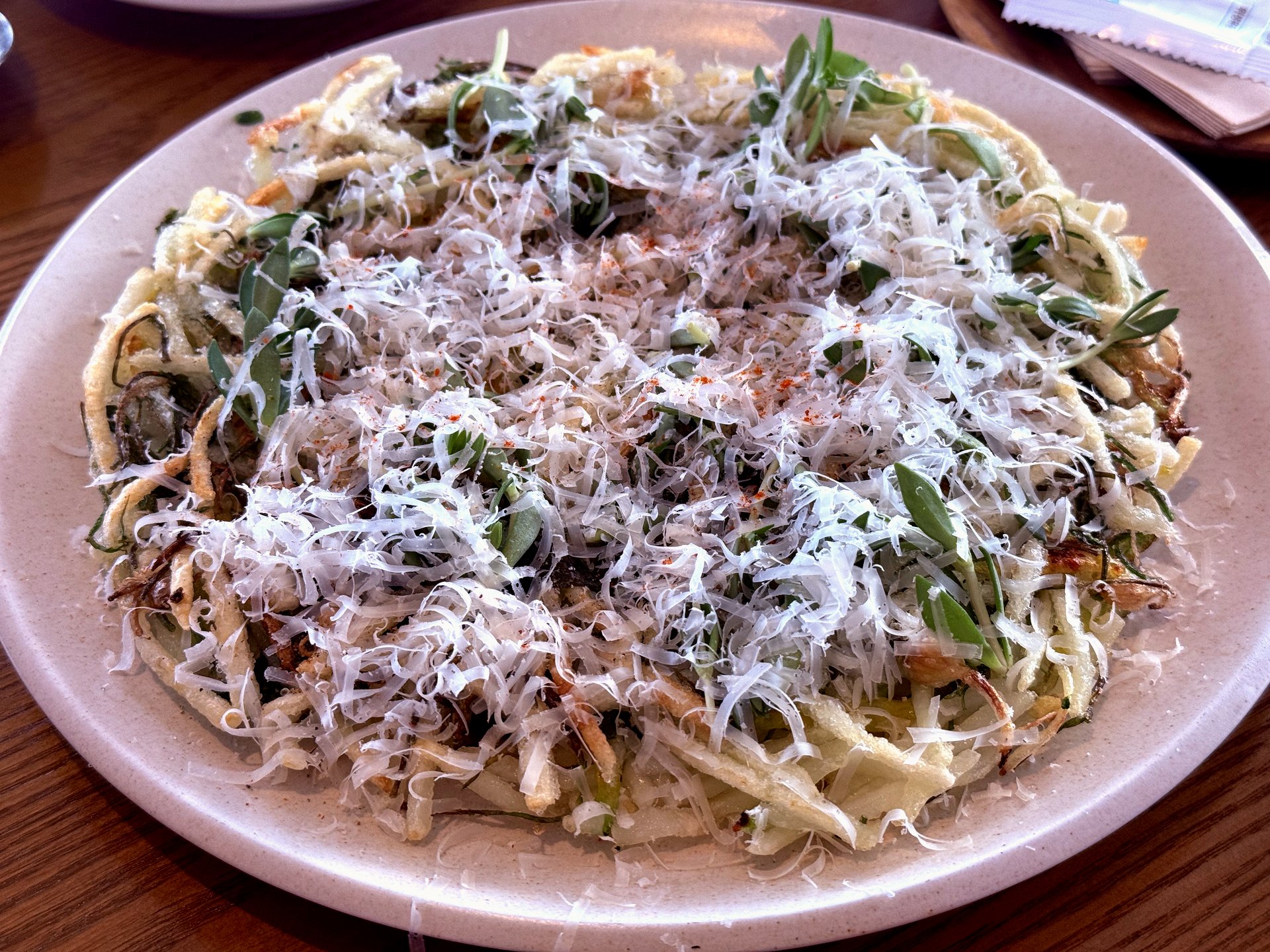
The cheese melts just enough from the residual heat to anchor the herbs onto the pancake without overwhelming the wild-green flavors underneath. It’s the most photographable plate of jeon I’ve seen and also one of the best — the technique is clearly Korean, the finishing move is Italian, and the result is its own thing.
Roasted Spring Vegetables (구운 봄 야채) — ₩25,000 ($17 USD)
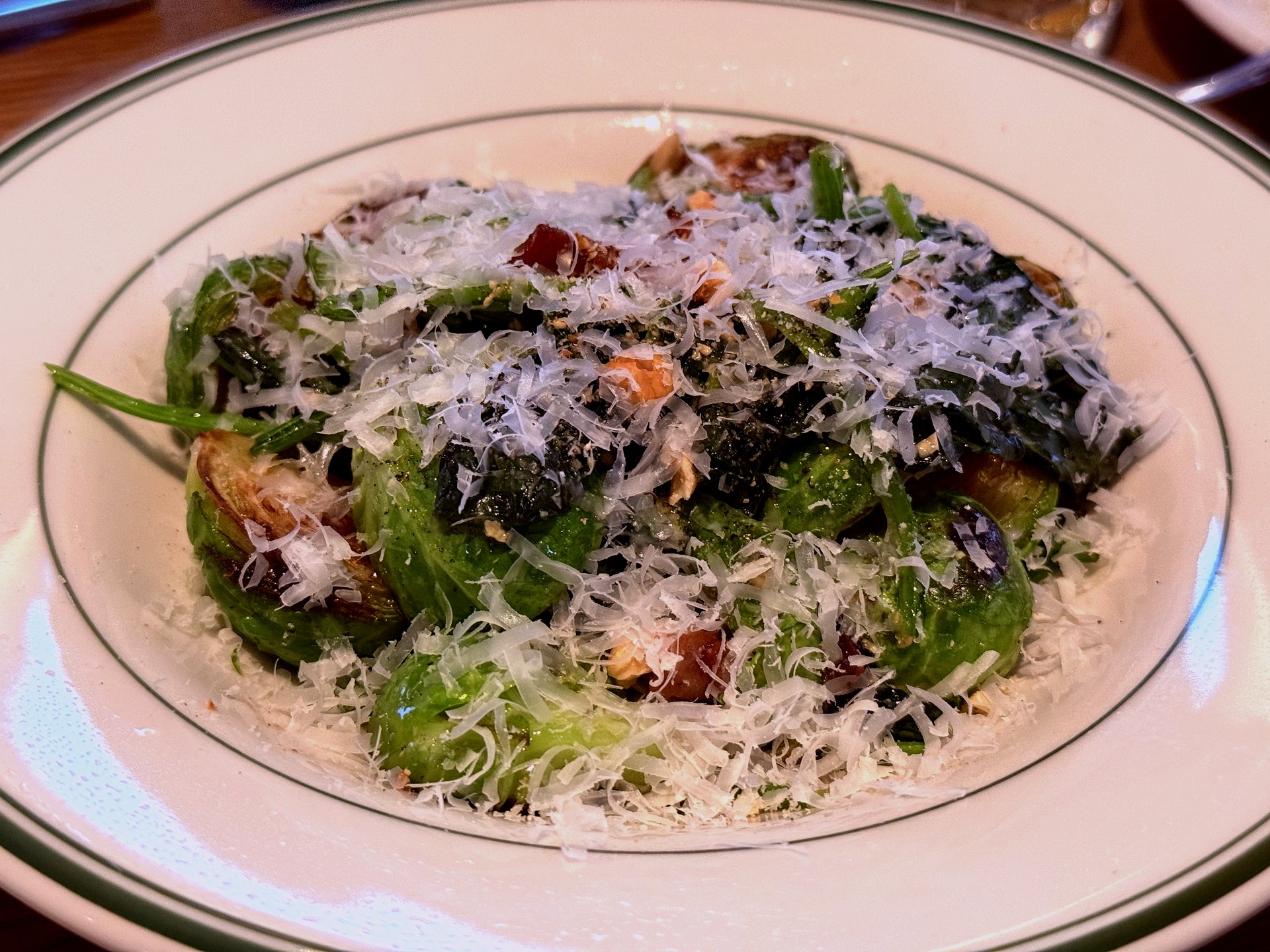
Brussels sprouts, broccolini, baby spring vegetables, and pieces of properly-rendered bacon, all roasted hot and finished with grated cheese and pepper. The brussels are nicely charred on the cut side, the broccolini is still bright. This is essentially a high-end Italian roasted-vegetable plate, and it works as the brighter, sharper counterpoint to the namul pancake.
魚 — Seafood
Cuttlefish Capellini (갑 오징어 국수) — ₩38,000 ($26 USD)
The most ambitious dish on the page. Capellini (the thinnest spaghetti) tossed with a sauce built from Seocheon laver (서천 김) — the dark briny seaweed sheet that’s usually crumbled on Korean rice — plus thinly-sliced poached gap ojingeo (cuttlefish), shredded perilla and shiso leaves on top.
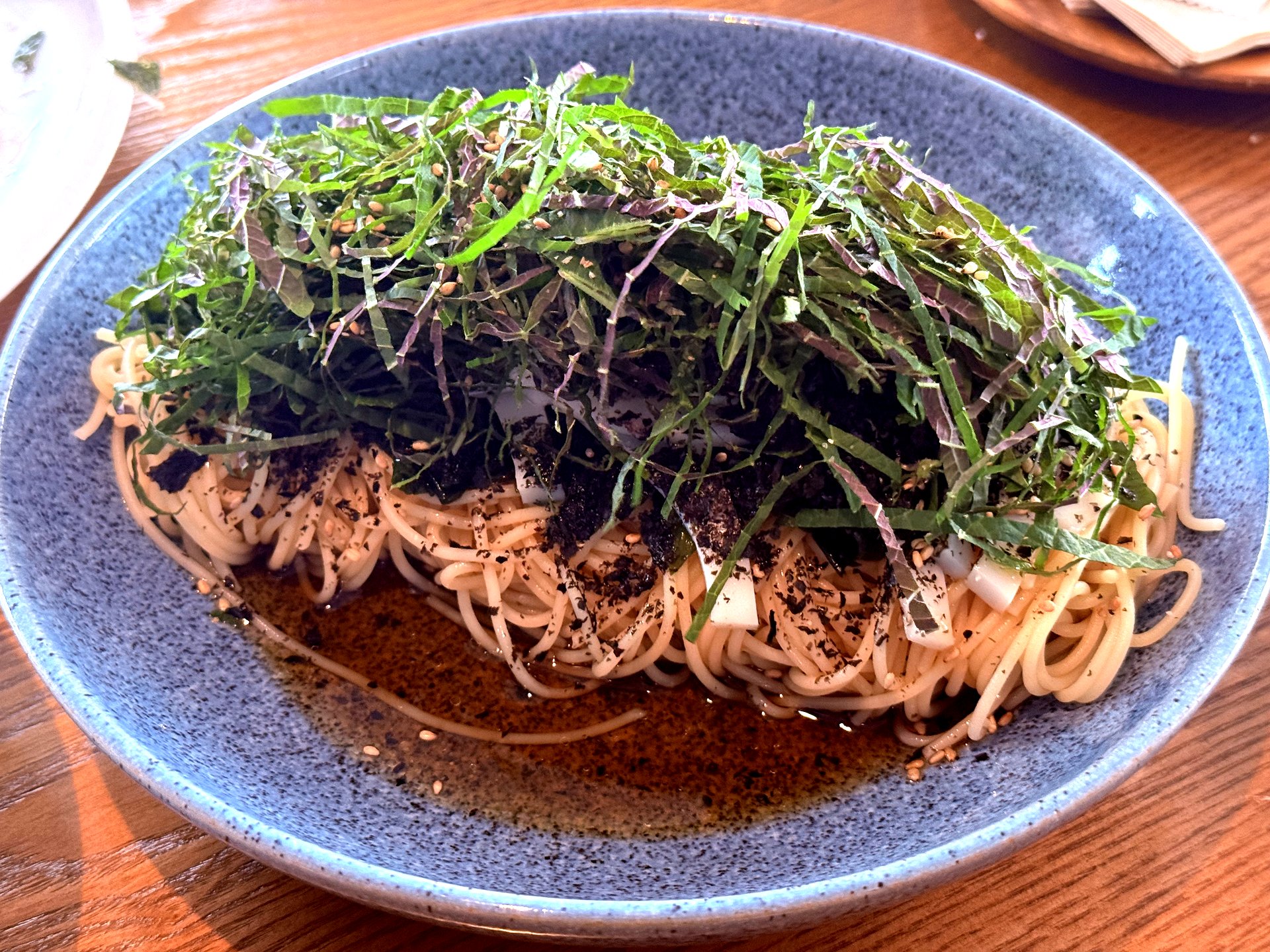
Mix it together and the seaweed turns the noodles a deep umami color, the cuttlefish slices reveal themselves, and you taste the marriage clearly: capellini for the texture, gim for the savory depth, perilla for the brightness, cuttlefish for the mineral chew.
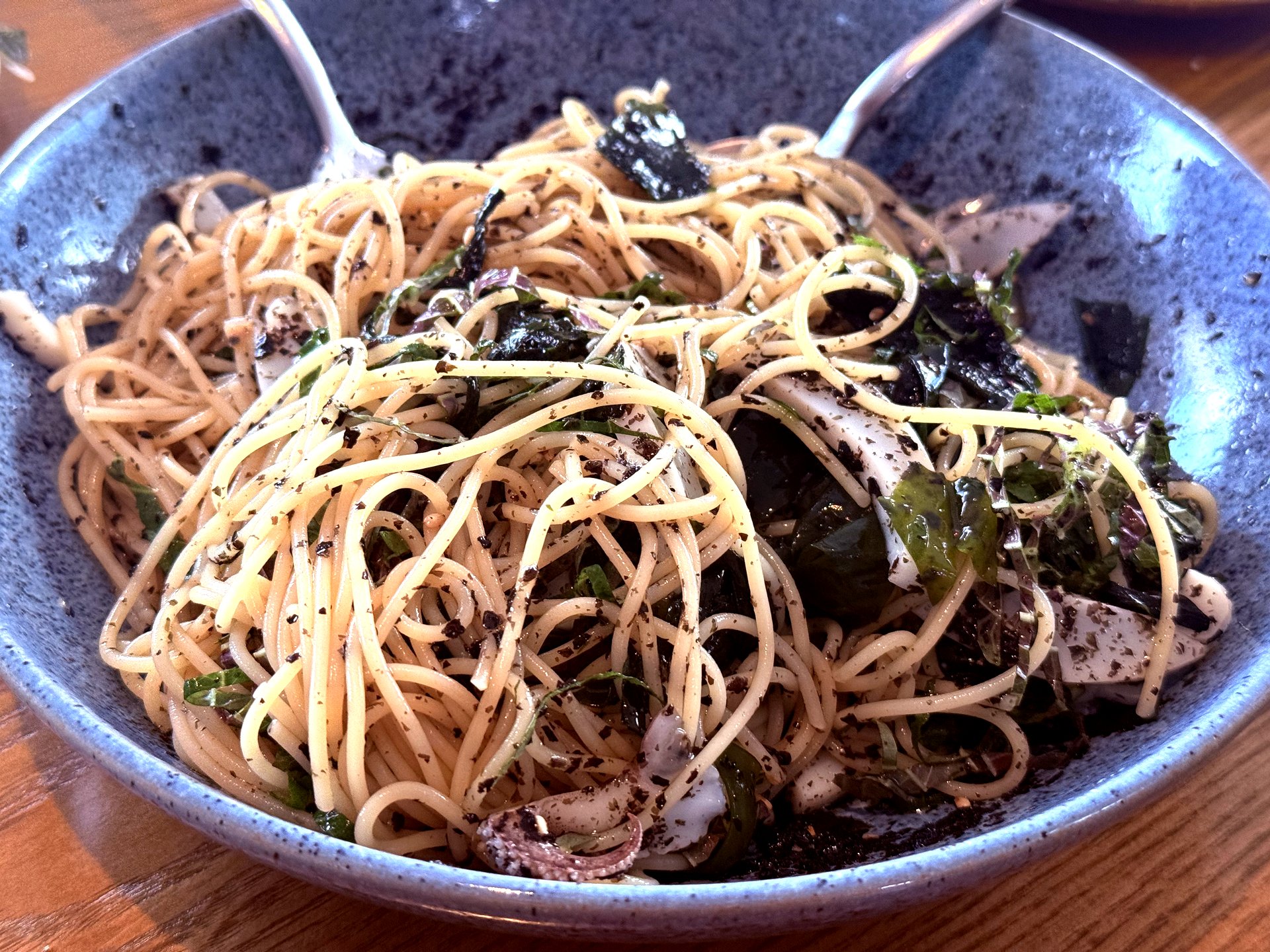
It is the dish that most clearly says this kitchen knows what it’s doing in both traditions. Italian pasta methodology applied to Korean ocean ingredients. Strong recommendation.
Spring Webfoot Octopus (봄 쭈꾸미) — ₩45,000 ($31 USD) (March–April only)
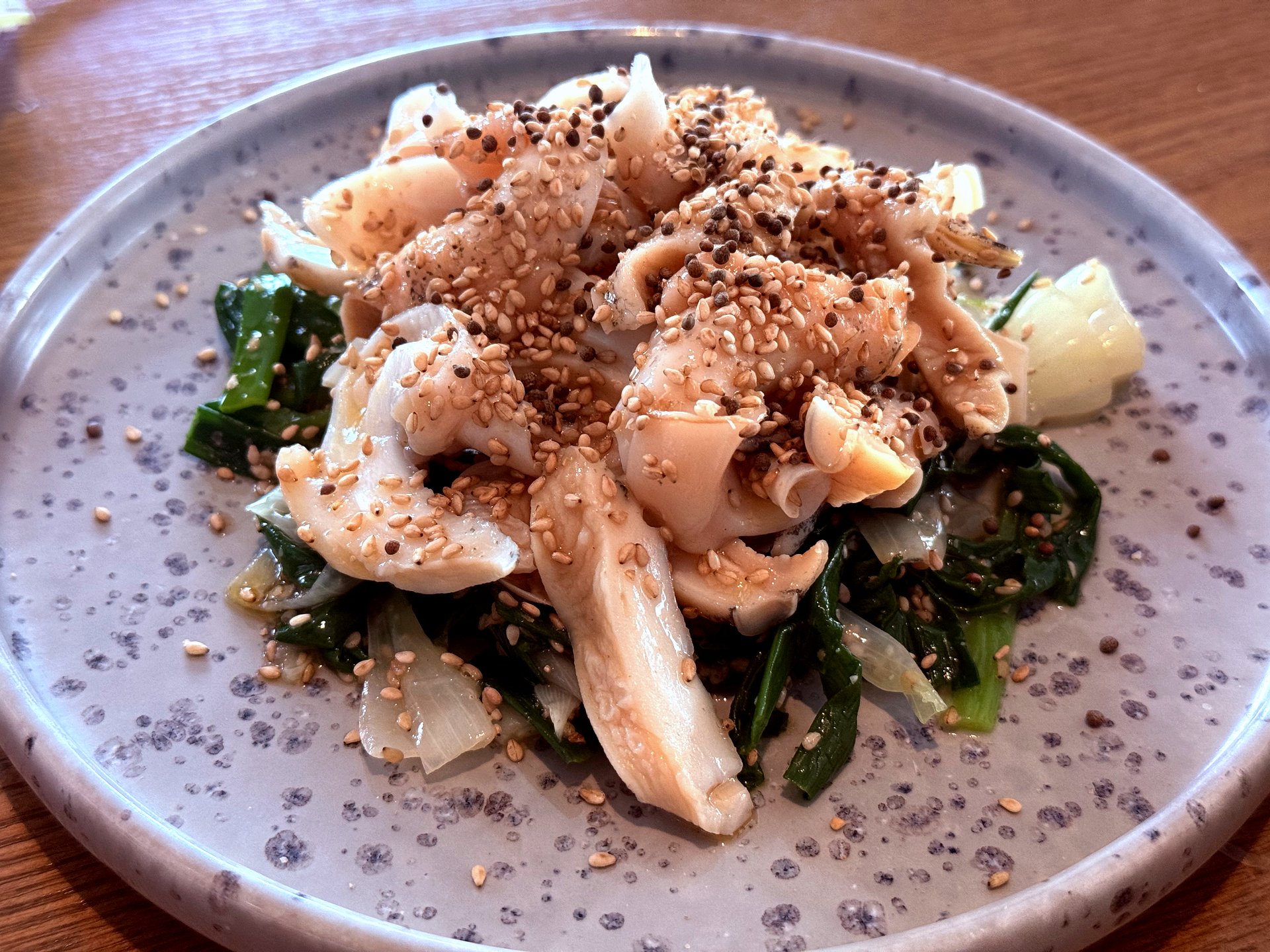
Briefly poached jjukkumi (spring webfoot octopus, in season March-April) on a bed of dressed Korean spring greens (namul), finished with sesame and a ponzu dressing. The texture is the headline — the chef has cooked the octopus exactly to the point where it’s tender but still has the squeaky resistance that good seafood has. The ponzu is clean and acidic enough to lift everything without dominating.
If you’re visiting in spring (March or April), order this. The menu rotates seasonally and this exact dish will not be on the menu year-round.
肉 — Meat
Hanwoo Tartare (한우 타르타르) — ₩30,000 ($20 USD)
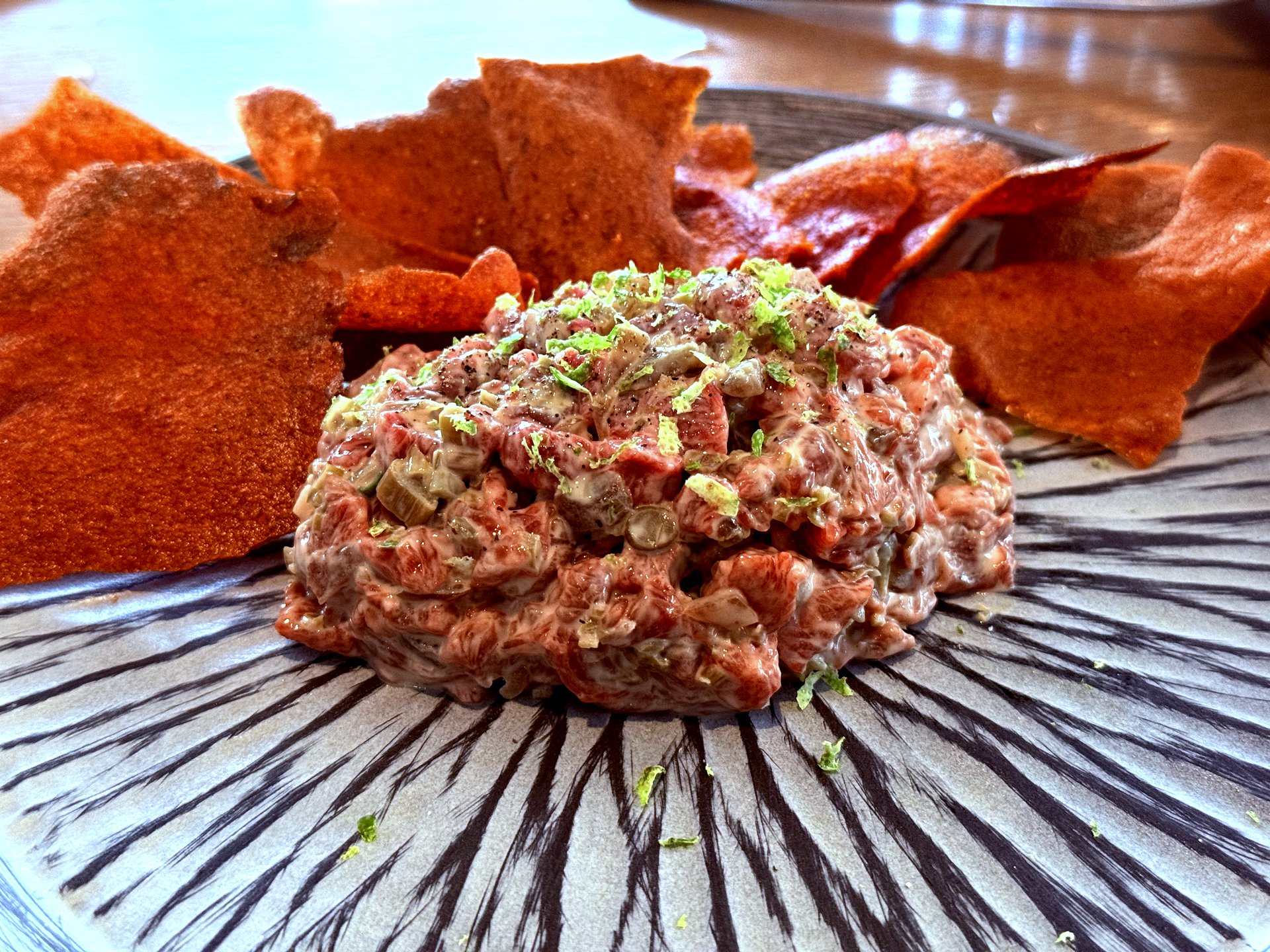
Beef tartare done with intention. Premium Hanwoo (Korean beef), hand-chopped, dressed with the house’s own jangajji (장아찌, fermented vegetable pickle), perilla-seed pesto (들기름 페스토), and a tiny grating of fresh lime zest. The accompaniment is crispy tomato chips — paper-thin tomato slices dehydrated until they’re translucent — that you use to scoop the tartare.
Three things make this work: the beef is properly cold and not bleeding, the perilla-seed pesto adds a nutty Korean-specific depth you can’t get from olive oil, and the tomato chip is genuinely crunchy in a way that holds up under the wet tartare. One of the smarter Korean fusion plates in Seoul right now.
Doenjang Chicken Thigh Maekjeok (된장 닭 다리살 맥적) — ₩38,000 ($26 USD)
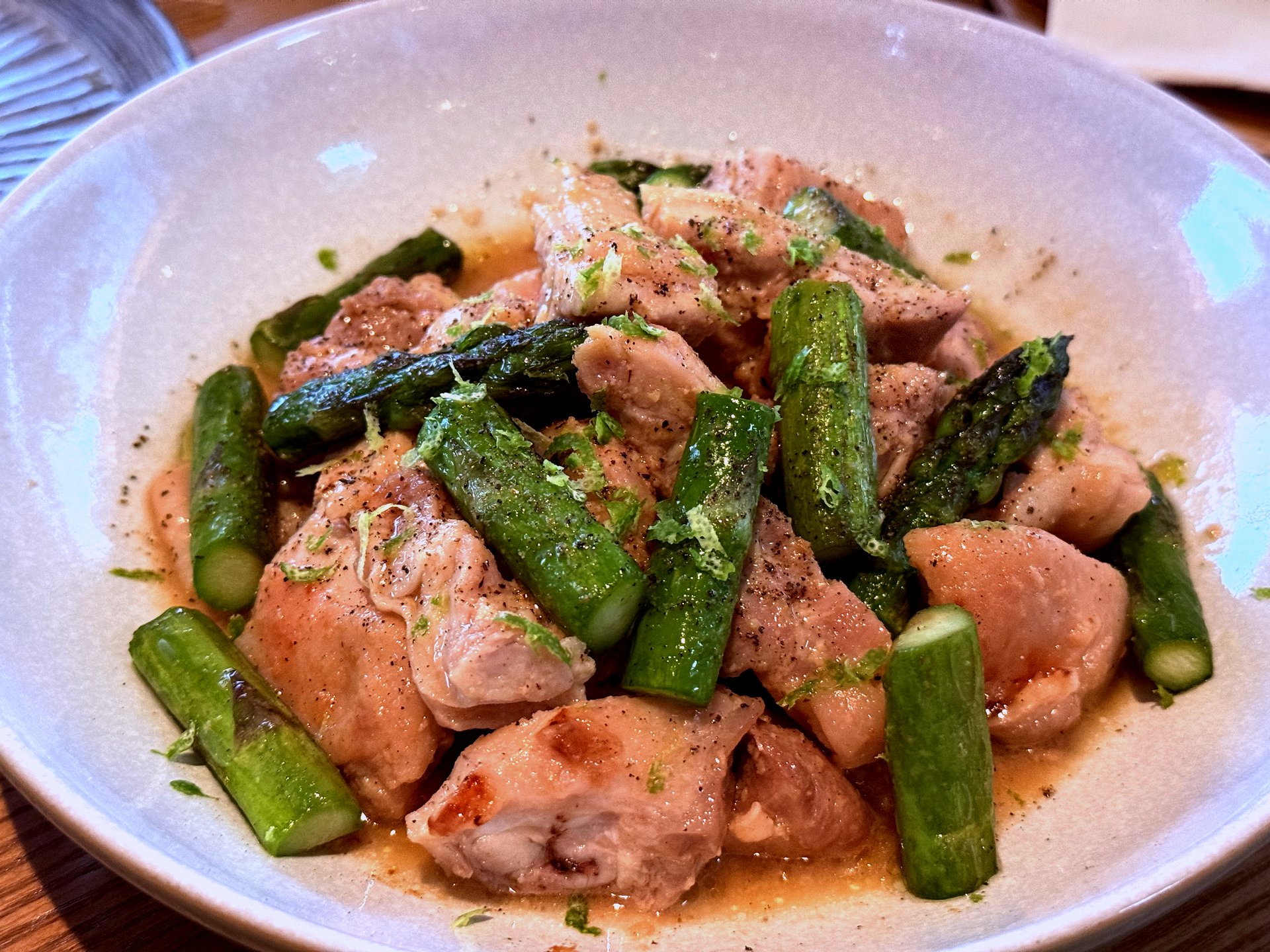
Maekjeok (맥적) is a name borrowed from Korean royal court cuisine for marinated grilled meat. This version uses antibiotic-free chicken thigh, marinated in doenjang (fermented soybean paste) for depth, finished alongside crisp asparagus. The chicken comes out tender, the marinade caramelizes in the cooking, and the asparagus is grilled enough to give that bright vegetal note that cuts through the rich soy ferment.
It’s the most “Korean home cooking” of the meat dishes — a doenjang marinade you might find at a grandmother’s house — but the chicken sourcing and the technique elevate it. A satisfying anchor for the meal.
Other Menu Items We Didn’t Order (For Future Reference)
- 菜: 알 감자 튀김 ₩19 (fried baby potatoes with zhran + sriracha mayo), 치즈와 견과류 ₩19
- 魚: 자숙멸치 ₩11 (anchovy in olive oil), 서천 백합 ₩40 (clam soup), 봄 솥밥 ₩45
- 魚 (Reservation only): 서천 봄 꽃게 MP (spring blue crab), 백합 찜 MP
- 肉: 난축맛돈 스테이크 ₩38 (heritage pork shoulder with 8-year aged plum sauce), 한우스지 마파두부 ₩32, 아롱사태 수육 ₩45
The Verdict
Baesan Imsu is one of the more carefully built dining rooms in Gangnam right now. Every plate is doing two things at once — Korean ingredient sourcing and Italian/European technique — and most of the dishes resolve the tension cleanly rather than just stacking the two. The vegetable section is the strongest in town for its category. The cuttlefish capellini is the most original pasta dish on a Seoul menu we’ve had this year. The tartare is the best fusion-tartare in the city.
The catches: mandatory wine bottle per table drives the all-in price up to roughly ₩200,000 ($136 USD) per person, which puts this in occasion-dining territory rather than casual dinner. And the menu rotates fully every season, so plan to visit knowing the exact dishes you order won’t be on the menu six months later.
Best for: anniversaries, hosting visiting friends who like food, work celebration dinners. For a similarly serious Korean fine-dining anchor with traditional rather than fusion technique, see Mugunghwa at Lotte Hotel. For a Western mall-anchored alternative in Yeongdeungpo, The Place.
| 🍽️ Food | 5.0 | |
| 💰 Value | 3.5 | |
| 🌏 Foreigner-friendly | 5.0 | |
| 📍 Access | 5.0 |
| Best for | anniversaries, milestone work dinners, hosting visiting friends who like food |
| Order this | Cuttlefish Capellini, Spring Namul Jeon, Hanwoo Tartare |