⏱ 8 min read · 📍 Foodieseoul · 🇰🇷 By a Korean local for travelers
- Run by retired and active haenyeo (women divers) from the Dodu fishing cooperative.
- Order 회덮밥 (sashimi rice bowl) + 성게미역국 (sea urchin seaweed soup) + grilled mackerel.
- Five minutes from Jeju Airport — the perfect first meal off the plane.
You just landed in Jeju. Your phone says it’s 4:30 PM, your flight had peanuts, and you have exactly one decision to make: where do you eat first?
So why is the answer a tiny fishing-village seafood place run by retired women divers, five minutes from the airport? Someone please explain.
(The Korean grandparents at the next table eating four banchan and not making eye contact with each other also have no answer. They do not seem to need one.)
I’ll admit it — I’m a snob about Jeju seafood. Specifically, I notice when “fresh” actually means “thawed yesterday from a Busan freezer,” when the side dishes taste like they came from a central kitchen in Seoul, and when the place charges tourist prices for what locals get for half.
Most “Jeju seafood near the airport” places fail at least two of those.
What I check at any Jeju seafood spot:
- Whether the haenyeo (해녀, women divers) actually work the place — not just decoration on the wall
- Whether the banchan tastes like Jeju, not like Seoul franchise food
- Whether locals are actually eating there, not only tour buses
Dodu Haenyeo’s House (도두해녀의집) passes all three. The name haenyeo (해녀) literally means “sea woman” — Jeju’s iconic free-divers who harvest seafood by breath alone, no oxygen tank. UNESCO put them on the Intangible Cultural Heritage list in 2016. This restaurant is run by retired and active haenyeo from the Dodu fishing cooperative. It is exactly what the sign says.
I have been here multiple times, and I keep ordering the same three things: 회덮밥 (hoedeopbap, sashimi rice bowl), 양념고등어구이 (yangnyeom godeungeo gui, marinated grilled mackerel), and 성게미역국 (seongge miyeokguk, sea urchin seaweed soup). Here is why.
| Korean name | 도두해녀의집 (Dodu Haenyeo’s House) |
| Neighborhood | Dodu-dong, Jeju City — closest fishing village to Jeju International Airport |
| From the airport | 5-minute drive (~3 km), no subway in Jeju |
| Price range | ₩₩ — ₩15,000–30,000 per person (~$10–$20 USD) |
| English menu | Limited — bring Papago. Photos on the menu help. |
| Foreign cards | Visa/Mastercard accepted |
| Hours | Lunch and dinner daily (check Naver Map for current hours) |
| Reservations | Walk-in. Lunch can fill up — arrive 11:30 or after 1:30. |
| Map | Google Maps · Naver Map |
My mother used to talk about haenyeo the way some people talk about firefighters — with a slightly embarrassing amount of awe. They free-dive 10 meters down on a single breath, no scuba gear, well into their seventies. (My back hurts when I bend down to put on socks.) Most haenyeo restaurants in Jeju are owned by ex-divers who cook what they used to catch, and the difference between a real one and a tourist version is something you can taste in the first spoonful of miyeokguk.
Dodu Haenyeo’s House is the real version. The grandmothers in aprons in the back are the ones who actually went down and got it.
The Spot — Dodu-dong
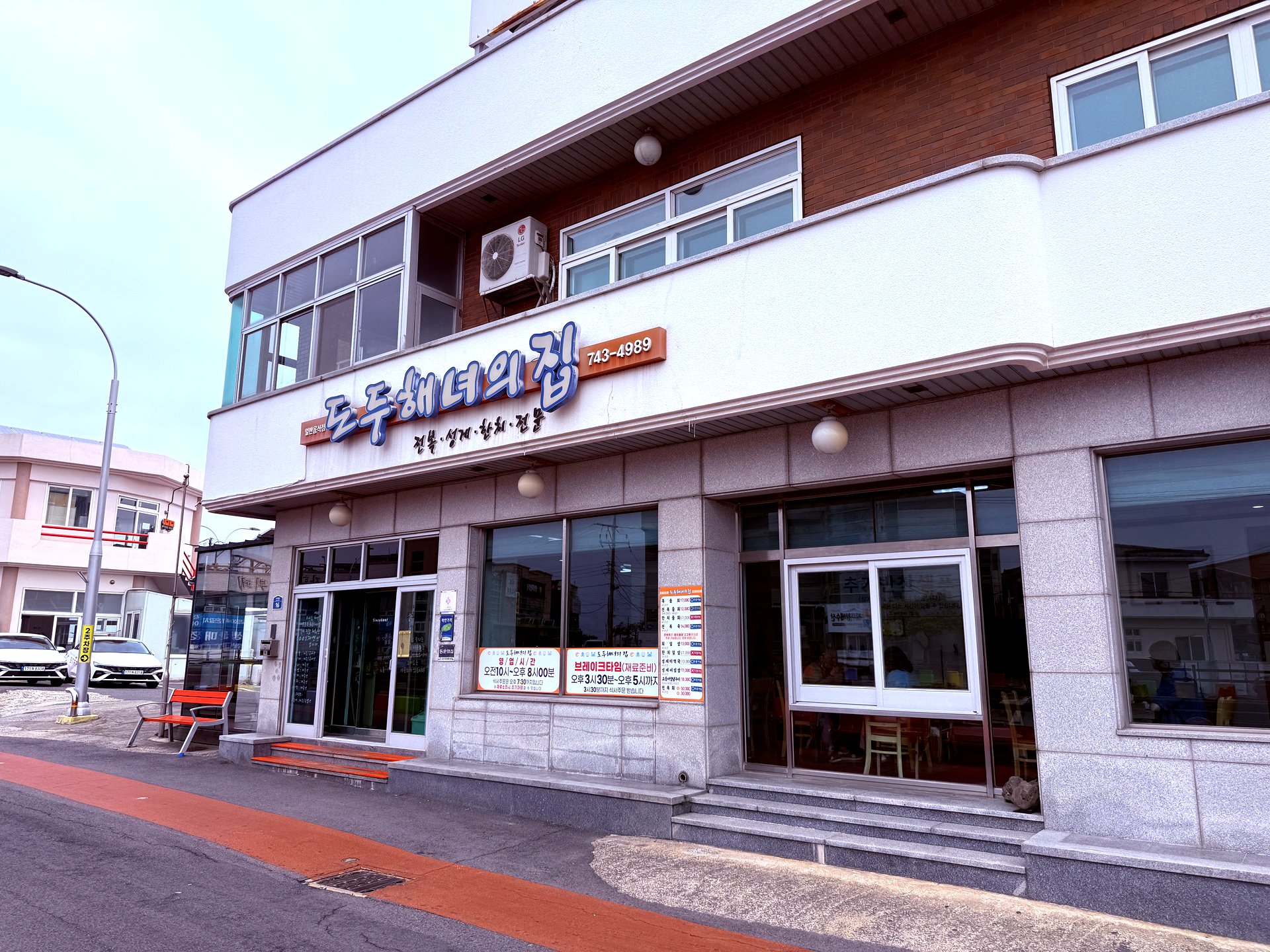
Dodu (도두동) is a small coastal neighborhood on Jeju City’s northwest edge — the closest fishing village to the airport, which is why locals bring out-of-town friends here for first or last meals on the island.
The restaurant is unassuming: a corner building with 해녀의집 (Haenyeo’s House — haenyeo refers to the iconic Jeju women free-divers) on the signage, with 전복ㆍ성게ㆍ해삼ㆍ멍게 (abalone, sea urchin, sea cucumber, sea pineapple) underneath.
That last bit tells you exactly what this is: seafood pulled from cold Jeju waters, prepared simply.
📍 도두해녀의집 on Google Maps
📞 064-743-4989
The Menu — What to Order
The menu is fully Korean, so here is a cheat sheet:
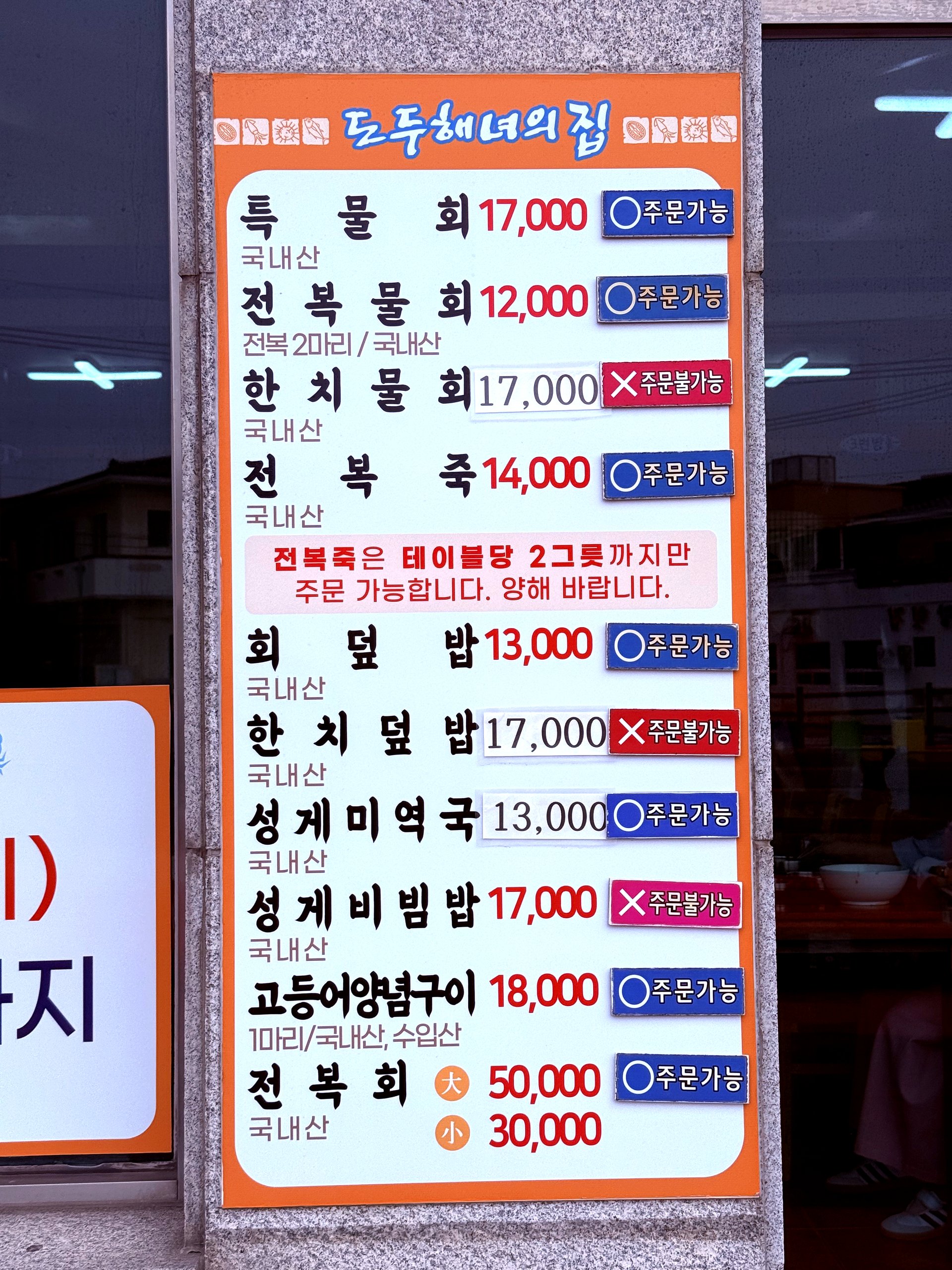
- 물회 (Mulhoe) ₩17,000 ($12 USD) — Cold raw fish soup, ice-cold and sweet-tangy. A Jeju summer staple.
- 한치물회 (Hanchi Mulhoe) ₩17,000 ($12 USD) — Same but with raw squid (hanchi, summer-season).
- 회덮밥 (Hoedeopbap) ₩13,000 ($8.8 USD) — Sashimi over rice with greens and gochujang. My pick.
- 성게미역국 (Seongge Miyeokguk) ₩17,000 ($12 USD) — Seaweed soup with sea urchin. Order this regardless.
- 성게비빔밥 (Seongge Bibimbap) ₩17,000 ($12 USD) — Sea urchin bibimbap.
- 양념고등어구이 (Yangnyeom Godeungeo Gui) ₩18,000 ($12 USD) — Marinated grilled mackerel. Their signature.
- 정식 (Jeongsik, set meal) ₩50,000 ($34 USD) / ₩30,000 ($20 USD) — Full course, two sizes.
If it is your first visit, the move is 회덮밥 + 성게미역국. Add 양념고등어구이 if there are two of you.
The Banchan — Don’t Sleep on These
Korean restaurants live and die by their banchan (side dishes), and Dodu’s are quietly excellent. Four little bowls show up before your main:
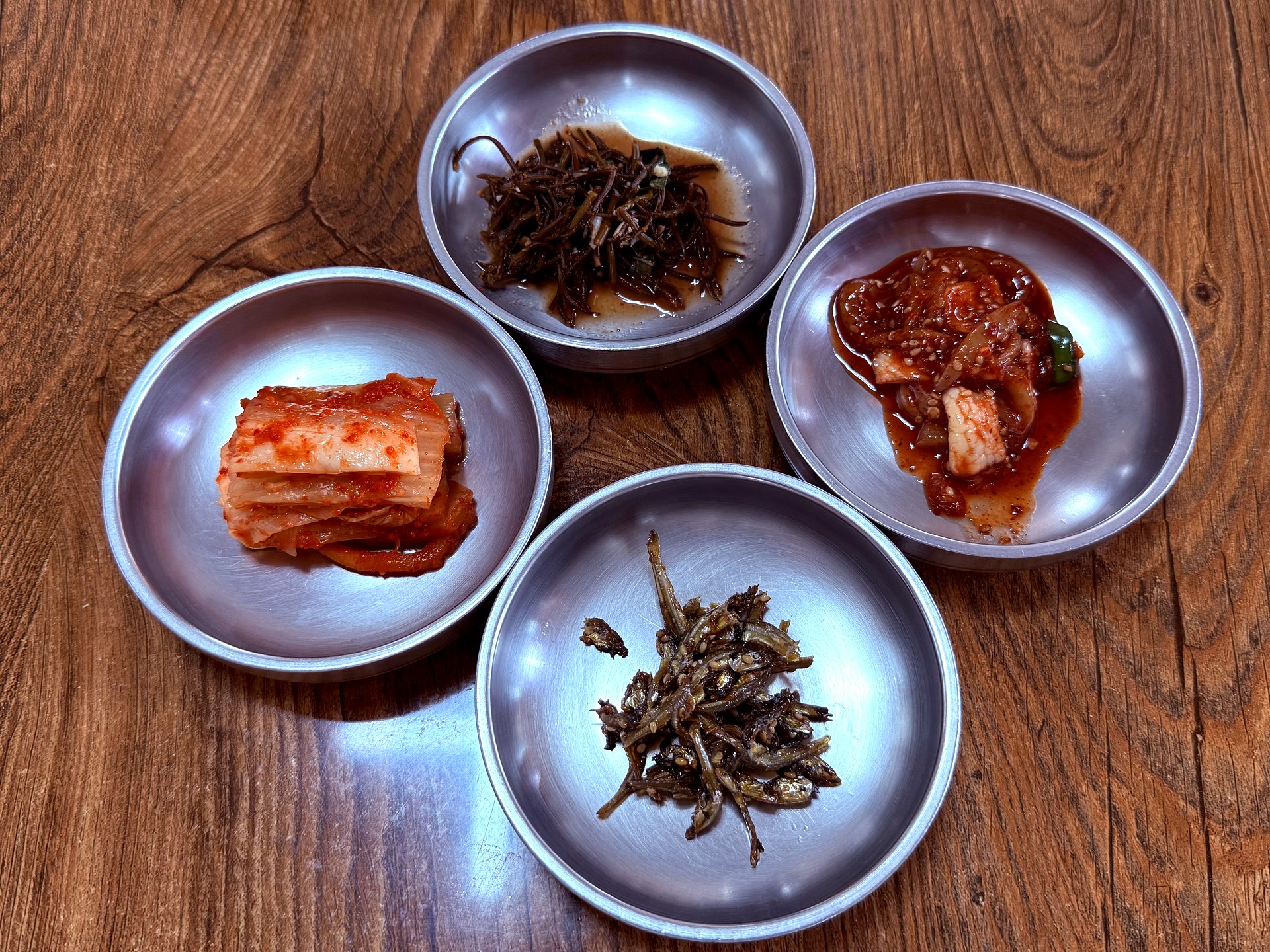
House Kimchi (김치)
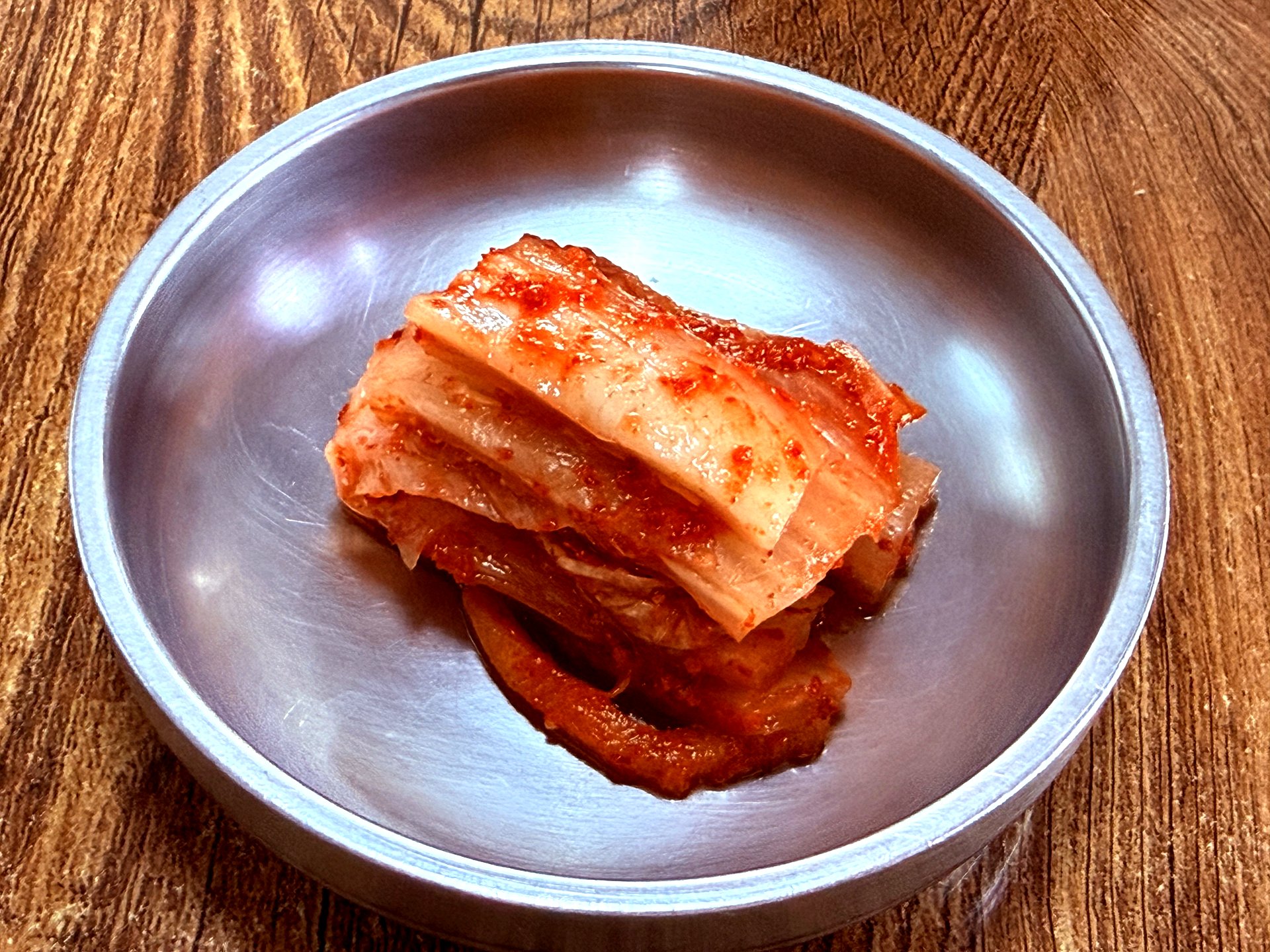
Fresh, balanced, not over-fermented — the kind of kimchi that disappears before you realize you have been eating it.
Myeolchi Bokkeum (멸치볶음)
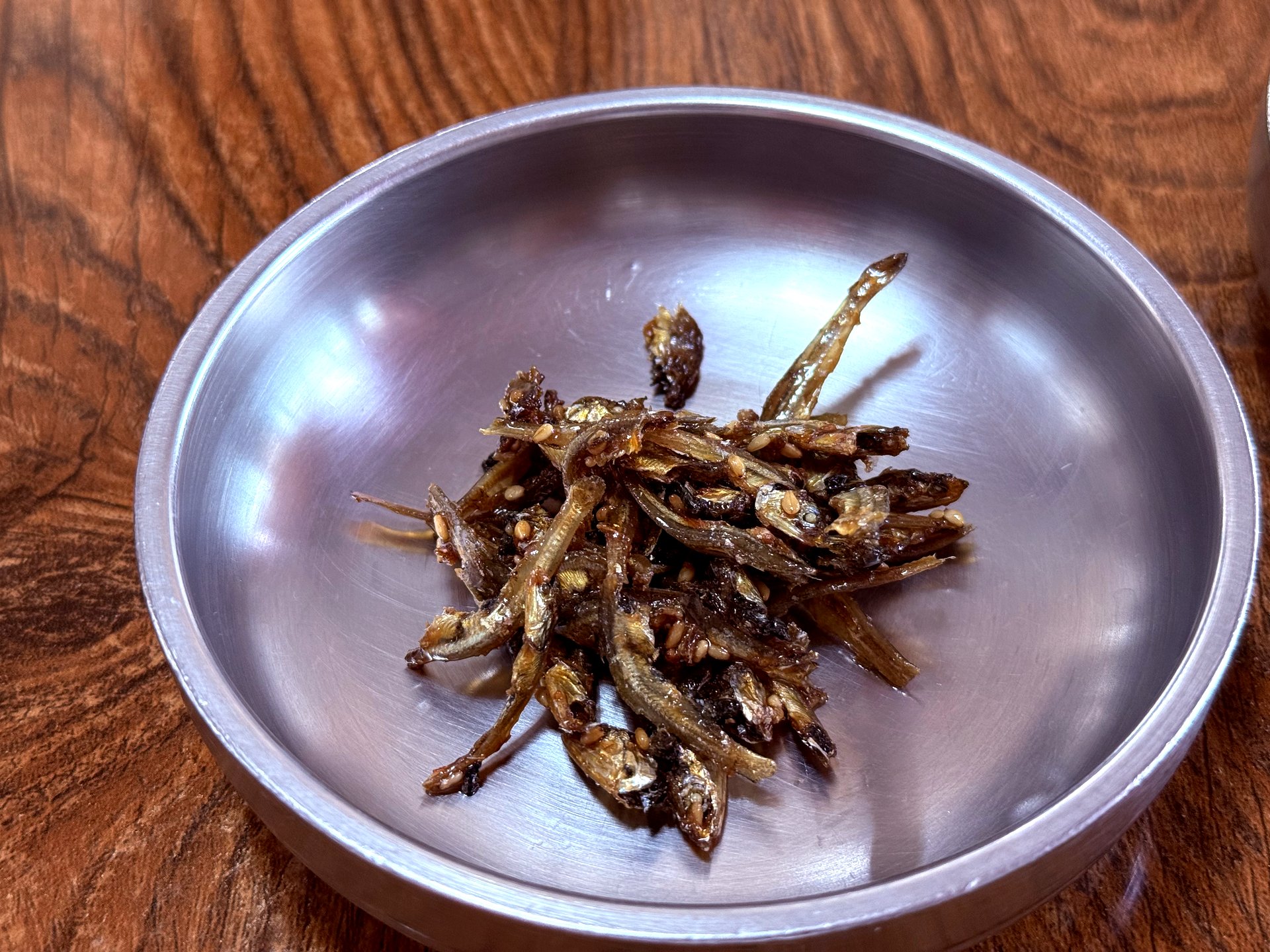
Sweet-savory stir-fried baby anchovies, glazed with a touch of soy and sesame. A texture lesson in one bite — crunchy outside, tender inside.
Tot Namul (톳무침) — A Jeju Specialty
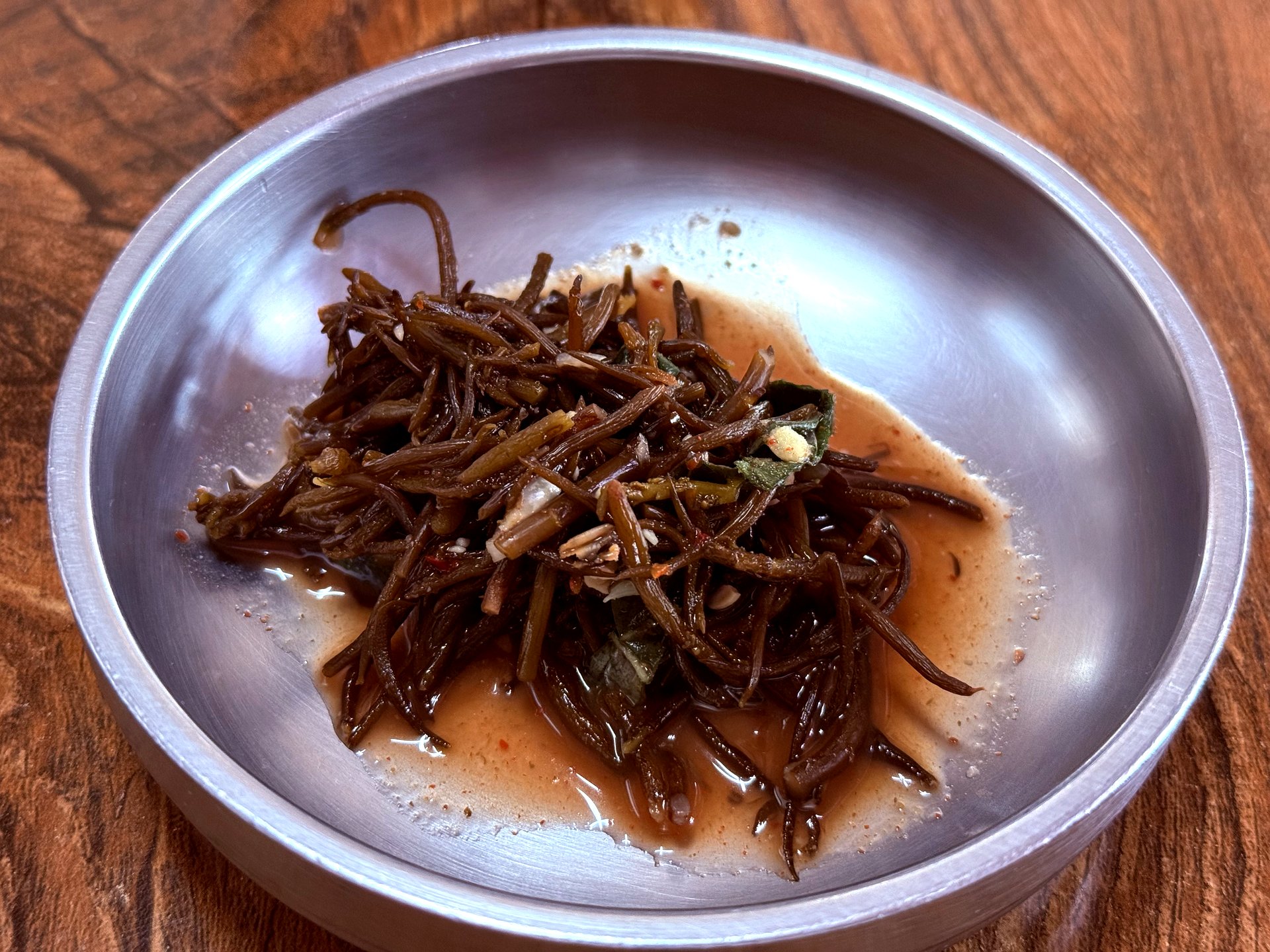
This one is special. 톳 (tot) is a wiry brown seaweed that grows along Jeju’s rocky coast. It is a regional specialty you almost never see on mainland Korean tables. Here it is lightly dressed with soy and sesame oil — earthy, briny, mineral-y. If you have never had it, this is your chance.
Ojingeo Jeotgal (오징어젓갈)
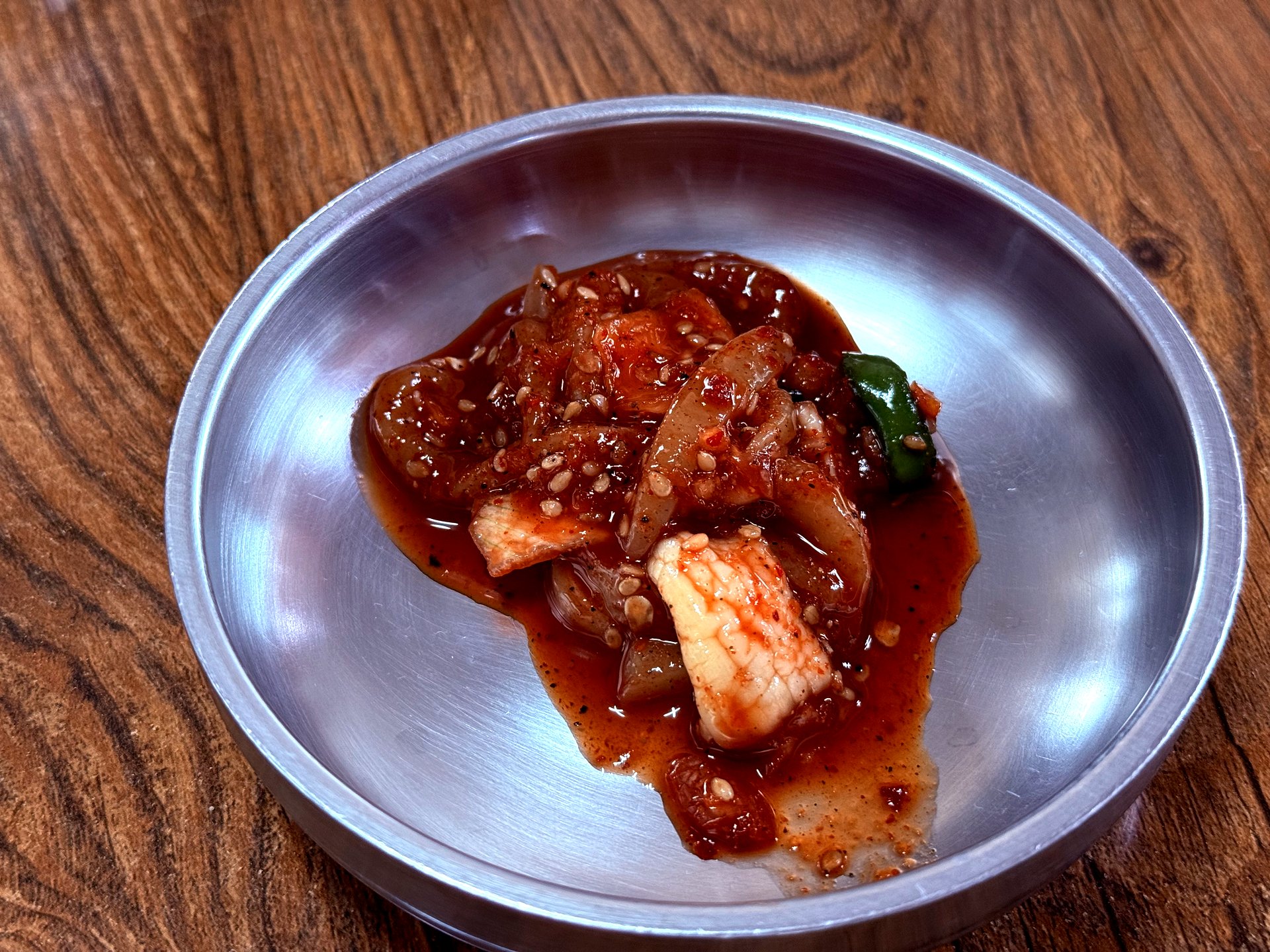
Fermented squid in sweet-spicy sauce. Strong flavor, tiny portion, and the most rice-destroying banchan on the table — one spoonful per bowl of rice and you are done.
Hoedeopbap (회덮밥) — Highlight #1
This is what I order every single time. Translucent slices of raw squid (hanchi) draped over a bed of shredded perilla leaves, cucumber, and rice. Look at this before you mix it:
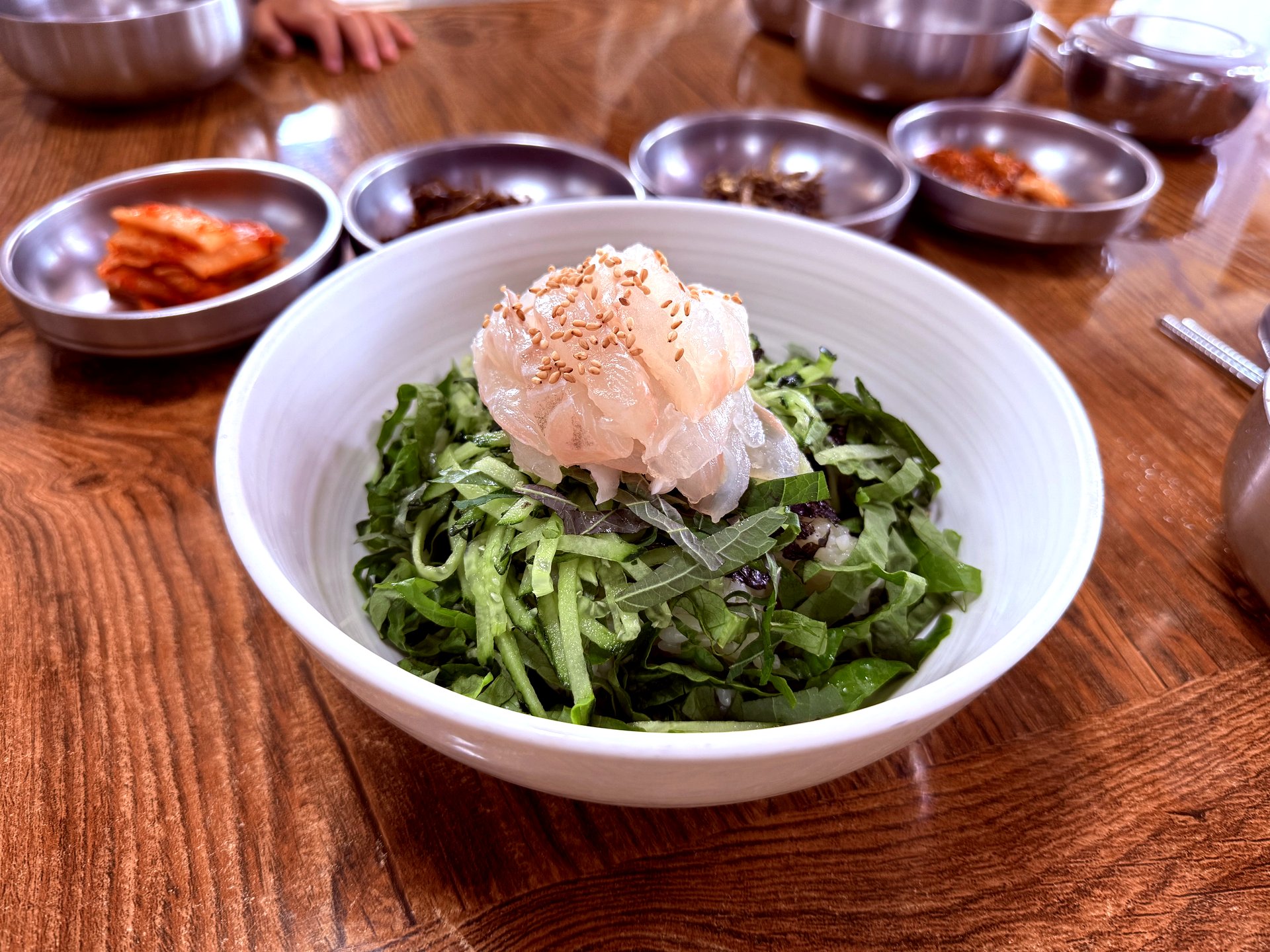
Squeeze the gochujang sauce on, mix it all together, and watch it transform into a glossy red bowl of textures — slippery squid, crisp greens, hot rice, all bound by sweet-sour-spicy gochujang.
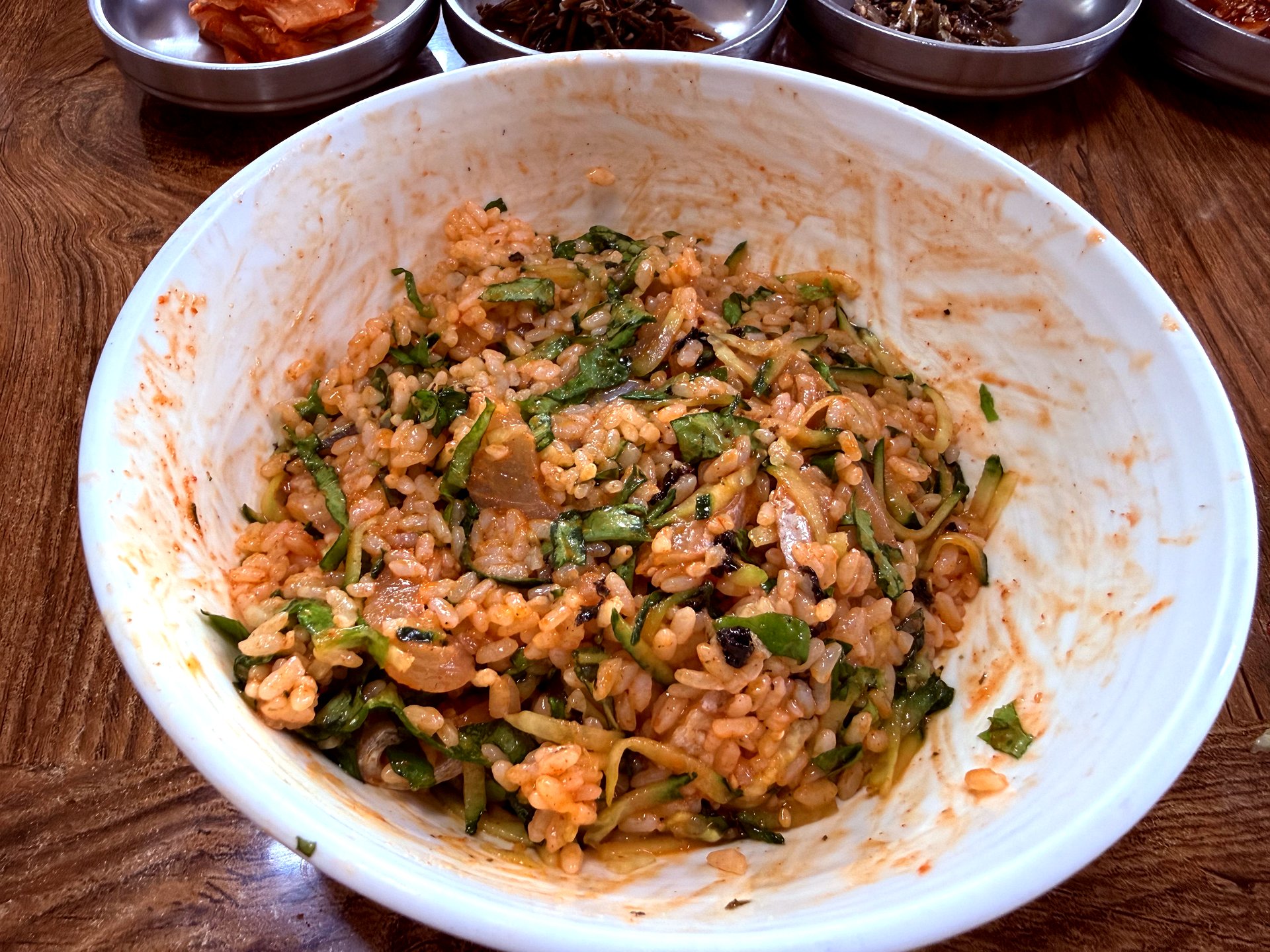
What I love about it is restraint. Nothing is overdressed. The squid is sliced so thin it almost dissolves on your tongue. The sauce is sharp but does not drown the seafood. It tastes like seasonal ingredients prepared by someone who has done this thousands of times.
Yangnyeom Godeungeo Gui (양념고등어구이) — Highlight #2
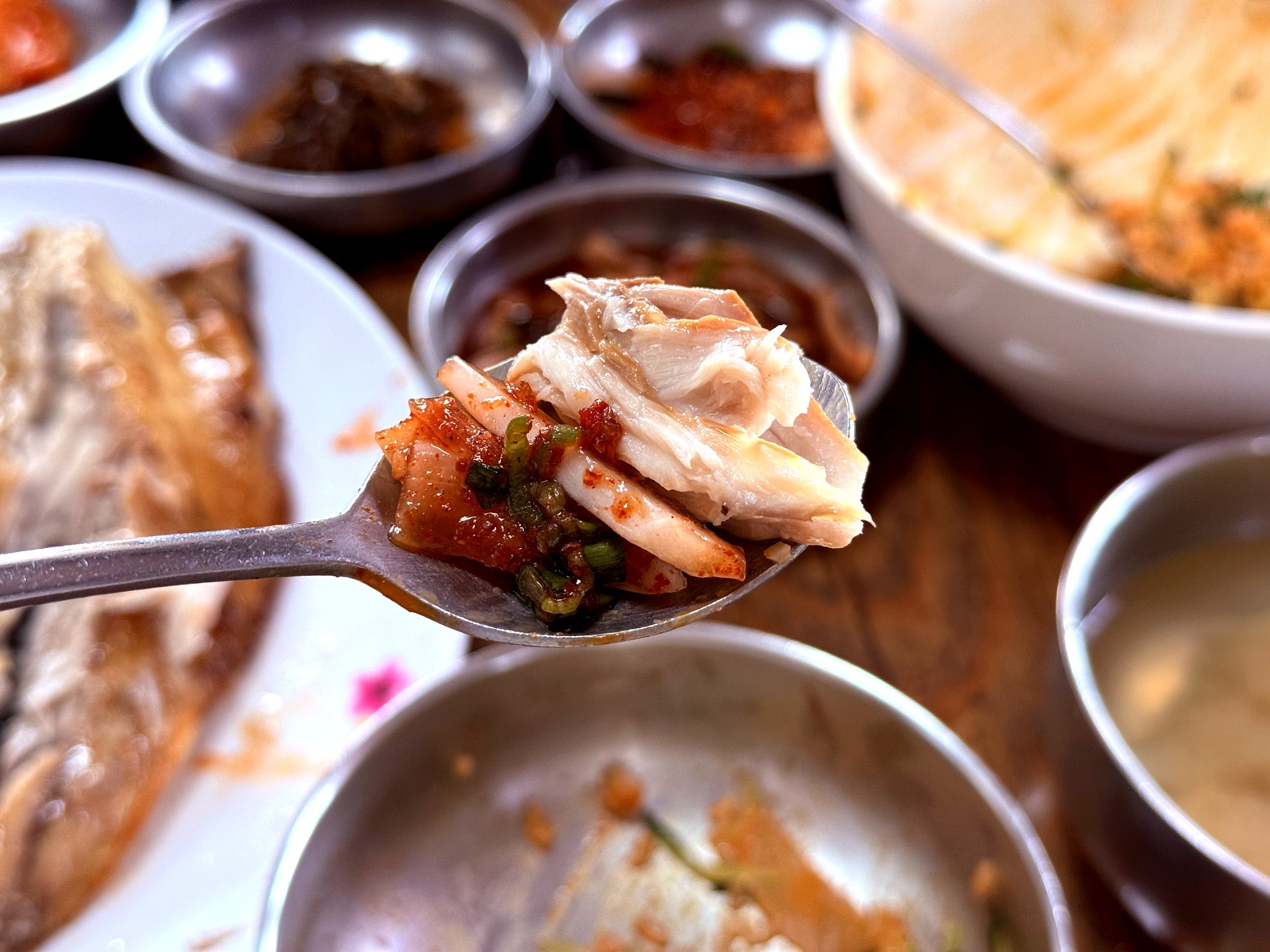
Mackerel is one of those fish people either love or politely refuse, and Dodu’s version converts skeptics. They take a thick, oily mackerel, butterfly it, and grill it over open flame — direct heat that crisps the skin and leaves the inside flaky and just-cooked.
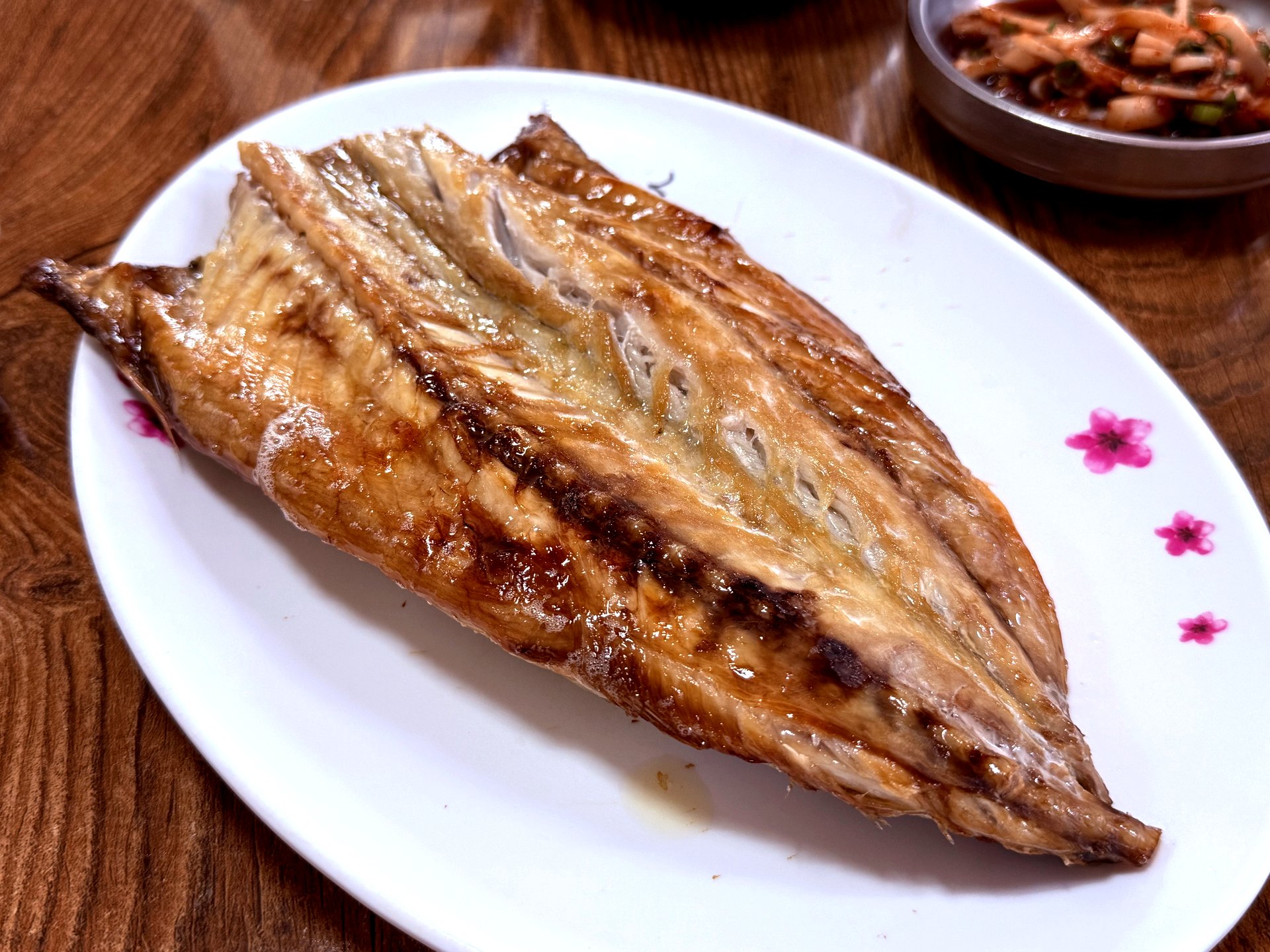
The magic is the soy-based sweet-savory sauce. Mackerel is naturally rich and oily; the sauce cuts through with garlicky, slightly-sweet umami.
Heads up for travelers with kids — the sauce is normally drizzled over the fish in the kitchen, but they will happily serve it on the side if you ask, so smaller eaters can try the plain grilled version first:
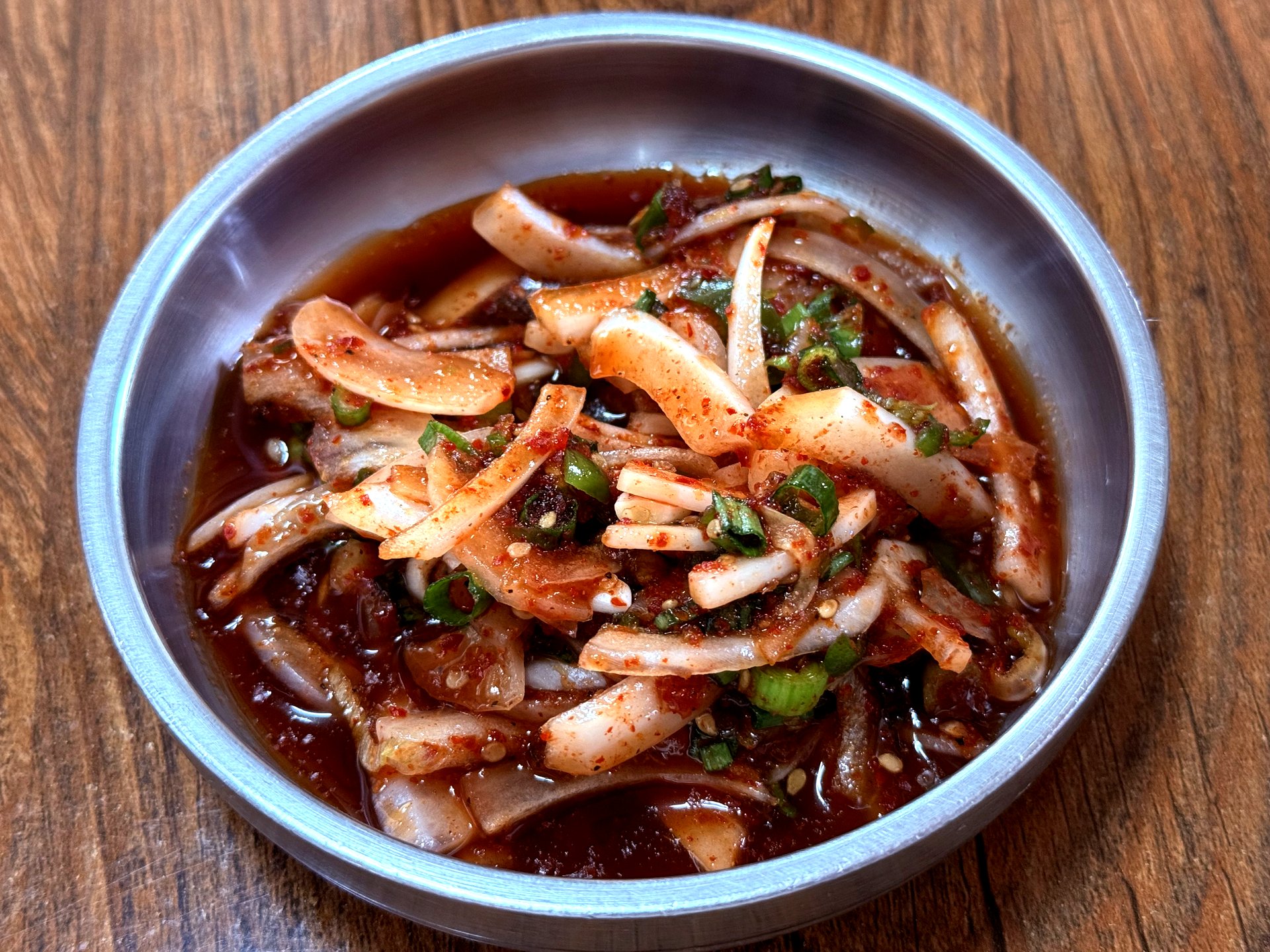
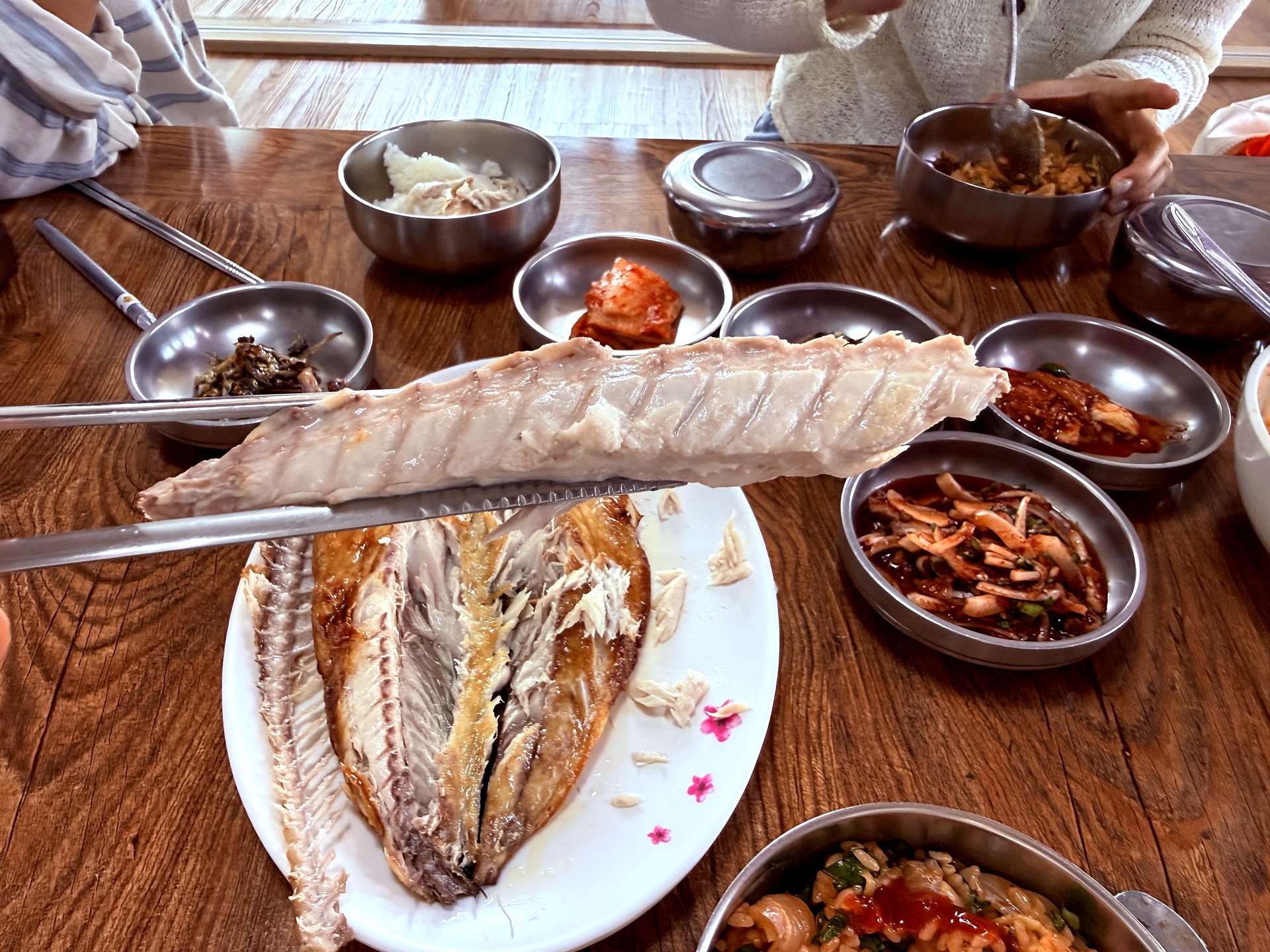
The flesh comes off in big, clean flakes. With a spoonful of rice and a piece of kimchi — that is the bite that earned this dish its highlight slot.
Seongge Miyeokguk (성게미역국) — Highlight #3
This looks deceptively normal — a bowl of seaweed soup, the same kind Korean kids grow up eating on their birthday. But this one has fresh sea urchin (성게, seongge) folded in.
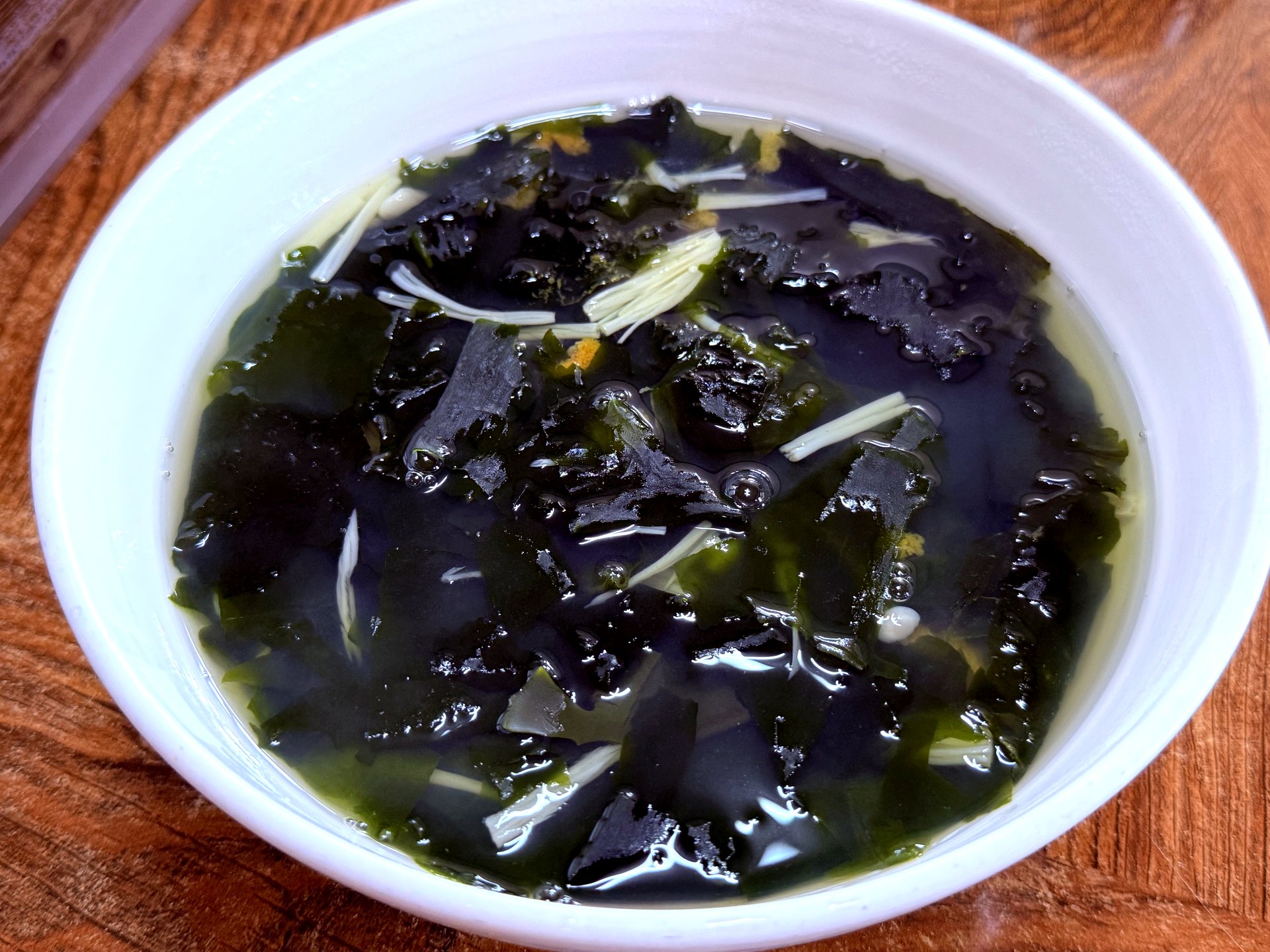
Sea urchin is a Jeju thing. The cold waters around the island produce some of Korea’s best uni, traditionally hand-harvested by haenyeo divers. When it goes into miyeokguk, the broth gains a deep, briny sweetness you cannot get anywhere else.
The seaweed softens, the urchin melts in, and you end up with a soup that is somehow both light and rich at the same time.
Pro tip: pour a spoonful of rice into the bowl. 밥말이 (bap-mari, rice-in-soup) is the local move — and it is the bite that ends the meal on a high note.
Practical Notes for Visitors
- Family-friendly? Yes — child-sized utensils on hand, kitchen accommodates sauce-on-the-side requests.
- Reservations? Walk-in. Busy at peak lunch (12-1pm) and dinner (6-7pm).
- Cards? Accepted.
- Solo dining? Easy — 회덮밥 or 성게미역국 alone is a perfect single meal.
- Getting there: 5-minute drive from Jeju International Airport (CJU), or about 15-min taxi from Jeju City Hall.
The Verdict
Dodu Haenyeo’s House is what I would call a “trip back” restaurant — the kind of place I plan future Jeju visits around, because the cooking is honest and the location makes it impossible to skip on either end of a trip.
It is not flashy. It is not Instagram-bait. It just does Jeju seafood the way Jeju seafood is supposed to be done.
Go. Land in Jeju, get a taxi or your rental car at the airport, and tell them 도두해녀의집. Order the 회덮밥 (sashimi rice bowl) for first-timers. Don’t share. Don’t pretend the seongge miyeokguk is just soup — it is the best argument for paying attention to broth that I have ever encountered.
P.S. Second visit is when you start ordering all three at once and pretending you’ll take leftovers home. (You won’t.)
| 🍽️ Food | 5.0 | |
| 💰 Value | 4.5 | |
| 🌏 Foreigner-friendly | 4.0 | |
| 📍 Access | 5.0 |
| Best for | First meal off the plane in Jeju, seafood lovers, anyone who wants real haenyeo cooking |
| Skip if | You don’t eat seafood, you’re rushing straight to the city, you can’t handle a Korean-only menu with photos |
| Order this | 회덮밥 (hoedeopbap) + 양념고등어구이 (yangnyeom godeungeo gui) + 성게미역국 (seongge miyeokguk) |
| Visited | April 2026 · multiple visits |
Been here? Tell me what you ordered — drop a comment below.
More from Foodieseoul
- Best Smash Burger in Mullae-dong (Yankees Burger)
- Best Donkkaseu in Jeju — Basak (바삭돈까스)
- Coffee Near Jeju Airport — Cafe Jinjeongseong
- Best Jeju Haejangguk — Eunhuine (해장국)
Planning a Jeju food trip? This is one stop in our bigger Jeju Local Food Guide — what (and where) to eat in Jeju, with all our Jeju picks, honest prices, and a map.