⏱ 8 min read · 📍 Foodieseoul · 🇰🇷 By a Korean local for travelers
- Cult-favorite Jeju donkkaseu spot — the name itself means “crispy” in Korean.
- Order the anshim donkkaseu set (tenderloin) — crust shatters like crème brûlée.
- Worth the drive for one of the best donkkaseu on the island, locals included.
If you ask a Jeju local where to get the best donkkaseu, you will hear the same name twice in a row.
So why is the island’s most cult-favorite pork cutlet hiding in a side street with no English sign and a line that starts forming at 11:30? Someone please explain.
(The grandmother eating a full set lunch alone at the next table also has no answer. She does not seem to care.)
I’ll admit it — I’m a snob about donkkaseu. Specifically, I notice when the breading is more than 4mm thick, when the pork is overcooked into shoe leather, and when the sauce comes from a bottle nobody is hiding. Most “donkkaseu places” in Korea fail at least two of those.
What I check at any donkkaseu spot in Korea:
- Breading thickness — thin, lacquered crust, not bread armor
- Pork temperature — pink center, no shoe leather
- Sauce — homemade or at least lying about it convincingly
Basak Donkkaseu (바삭돈까스) passes all three. Basak (바삭) literally means “crispy” in Korean — onomatopoeia, the sound the cutlet makes when you cut it. The shop is named after a sound. The cutlet, somehow, lives up to its own onomatopoeia.
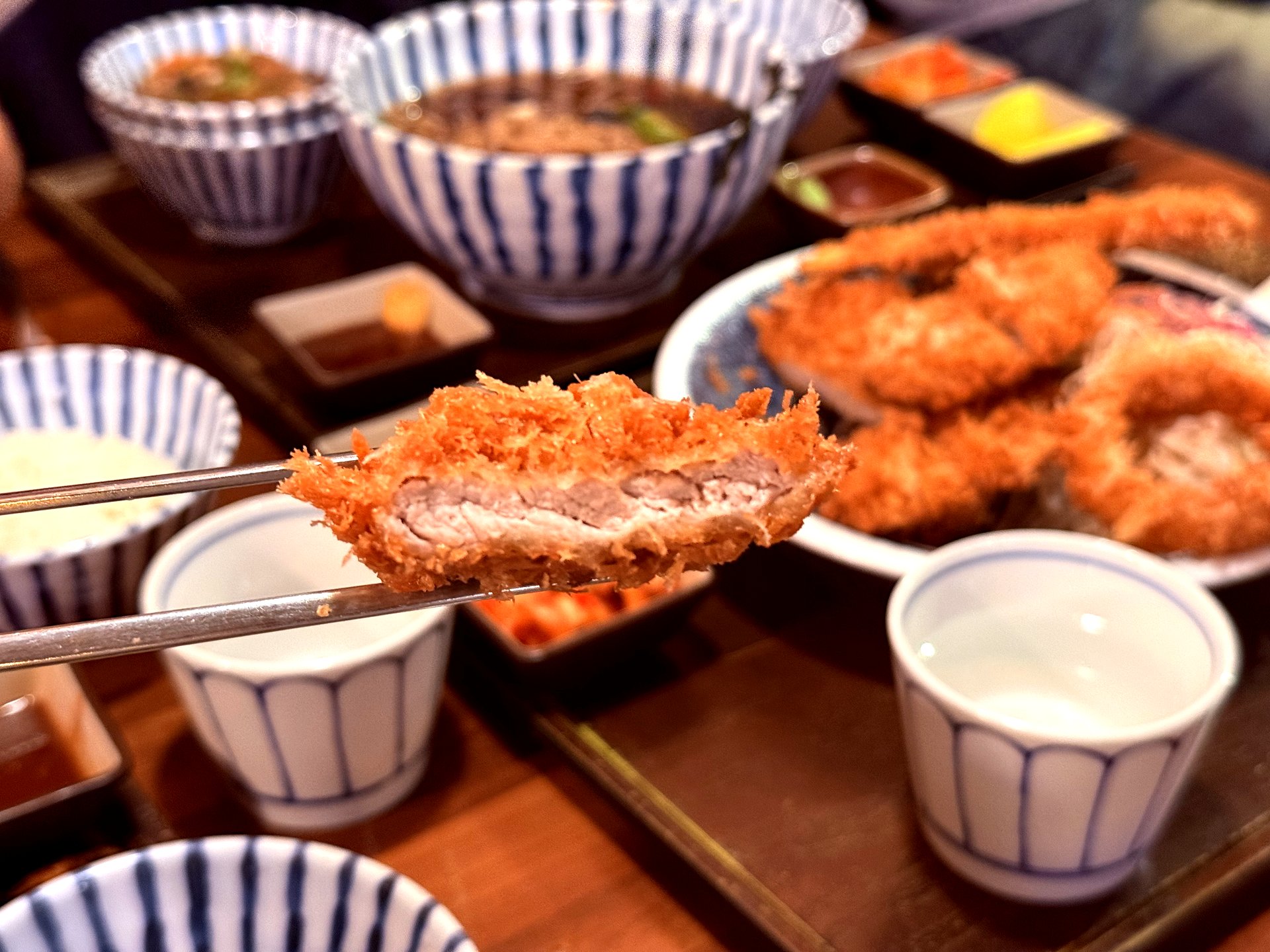
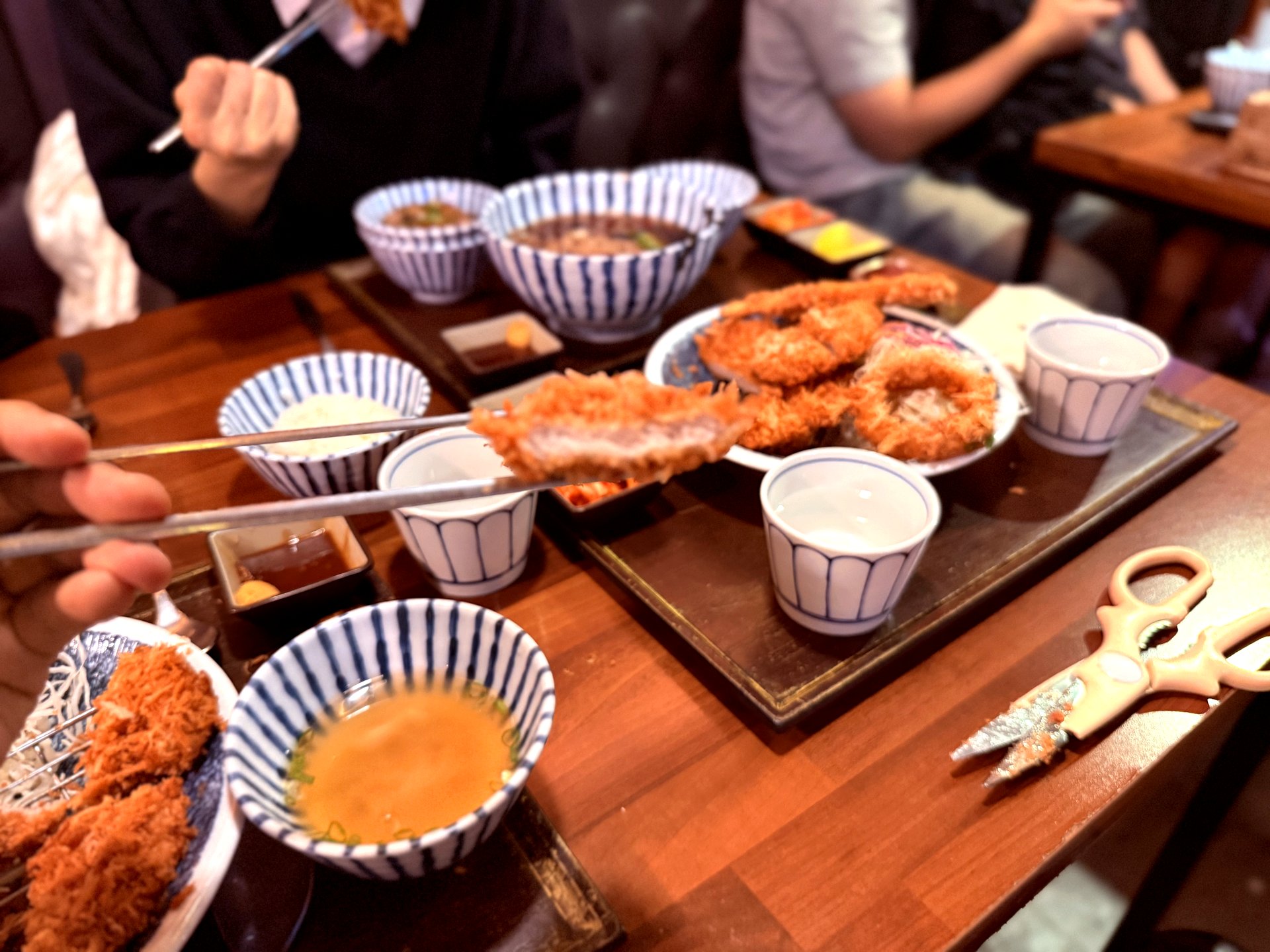
The crust shatters like the lid of a crème brûlée when the knife goes in, and the pink pork inside lets out a small sigh of steam. I am not exaggerating. I tried.
I have been here multiple times. The verdict has not changed: clean fresh oil, breadcrumbs that crackle when you cut into them, pork that stays tender and pink inside. Basics done right — no gimmicks, no fusion experiments, just very good pork cutlet at honest pricing.
Quick Info
| Korean name | 바삭돈까스 |
| Location | Jeju City (제주시), Gwawon-buk-gil 4, Deokyang Building |
| 📍 Map | View on Google Maps |
| Price | ₩₩ — about ₩11,000 ($7.5 USD)–14,000 per person |
| English menu | Limited (Korean menu, but staff can point at items) |
| Foreign cards | Yes |
| Reservations | Not accepted — walk-in only, prepare to wait |
| Parking | Public lot nearby (paid) |
| Best for | Lunch, donkkaseu fans, real local spot experience |
How to Get There
Basak Donkkaseu is in downtown Jeju City — about a 30–45 minute drive from Jeju International Airport (CJU). Jeju has no subway. Your options:
- Taxi: ~₩12,000–18,000 ($8–$12 USD) from the airport. The fastest option. Show the driver “바삭돈까스” on your phone.
- Bus: Several intra-city buses stop near downtown Jeju. Use Naver Map for live routes — Google Maps is unreliable for Jeju public transit.
- Rental car: Most Jeju visitors rent a car at the airport. Parking near the restaurant is street-side and tight at peak hours.
(Pro tip from Korean experience: in Jeju, taxis sometimes refuse short rides during peak tourist season. If that happens, just walk to the next intersection and try again. It is annoying. It is also fine.)
Donkkaseu in Korea has a specific lineage that is worth knowing before you eat.
My dad’s generation grew up on 경양식 (Western-style restaurant) donkkaseu — pork pounded thin, deep-fried, swimming in brown demi-glace sauce on an oval plate, eaten with a knife and fork while listening to ballads on cassette.
That style is still around (and excellent in its own right), but the modern Korean donkkaseu — thick-cut, Japanese-influenced, panko-crusted — is what places like Basak are doing. Same name, two different histories.
The Story: Why Donkkaseu Matters in Korea
Donkkaseu (돈까스) is Korea’s adopted comfort food.
Originally from Japanese tonkatsu, it crossed over decades ago and became something distinctly Korean — usually thinner, often pounded out wider than the plate, served with shredded cabbage, a Korean-style brown sauce, and rice.
It is the food Korean parents take their kids out for when they want a treat, and the food office workers eat for lunch when they want something solid.
What makes Basak stand out is that it skips most of the modernization most donkkaseu places now lean into — no thick “tongkatsu-style” cuts, no sauce reductions, no excessive plating. Just fresh oil, careful breading, and pork cooked to keep its juiciness. Crowds line up because that consistency is hard to find.
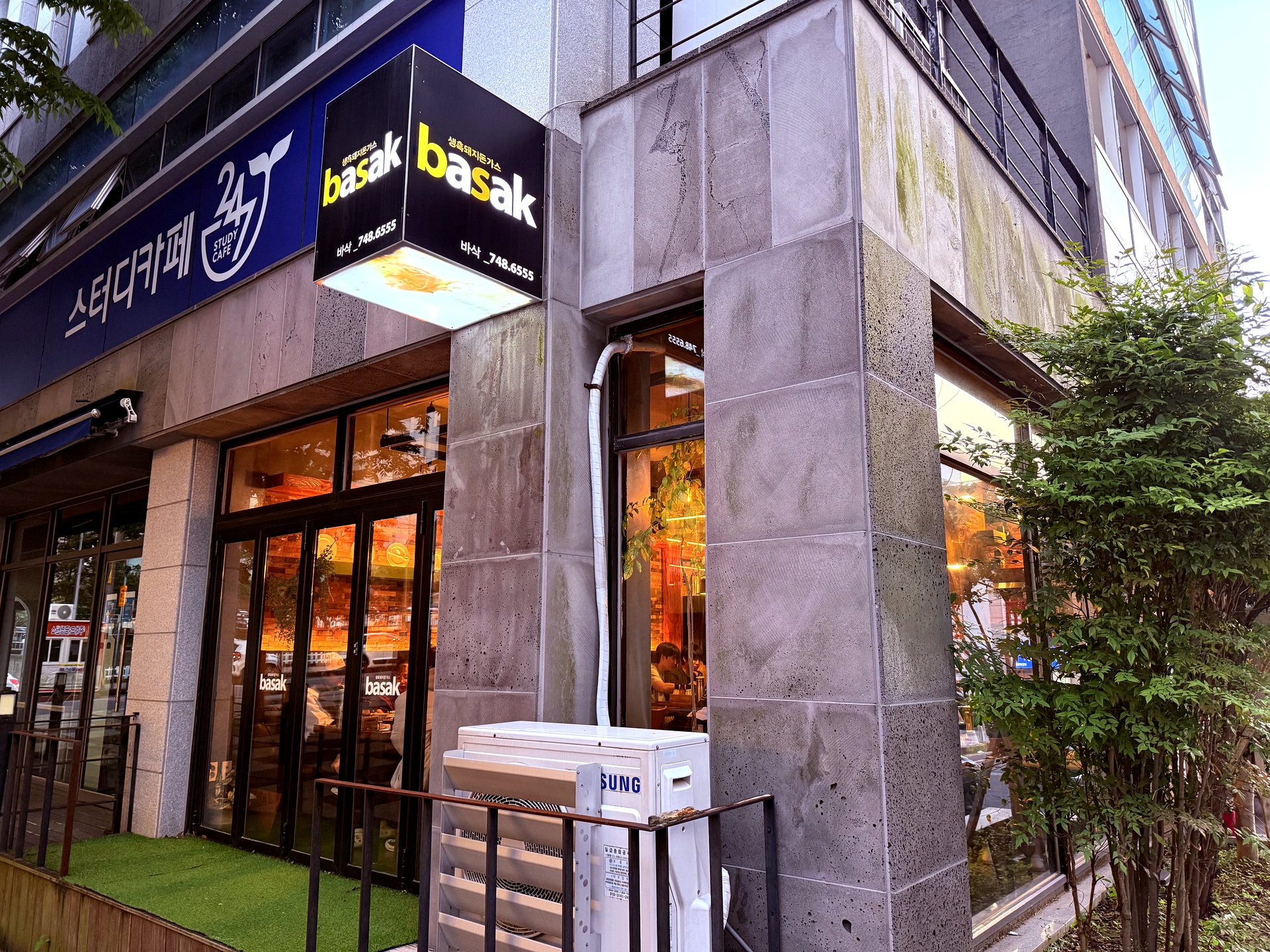
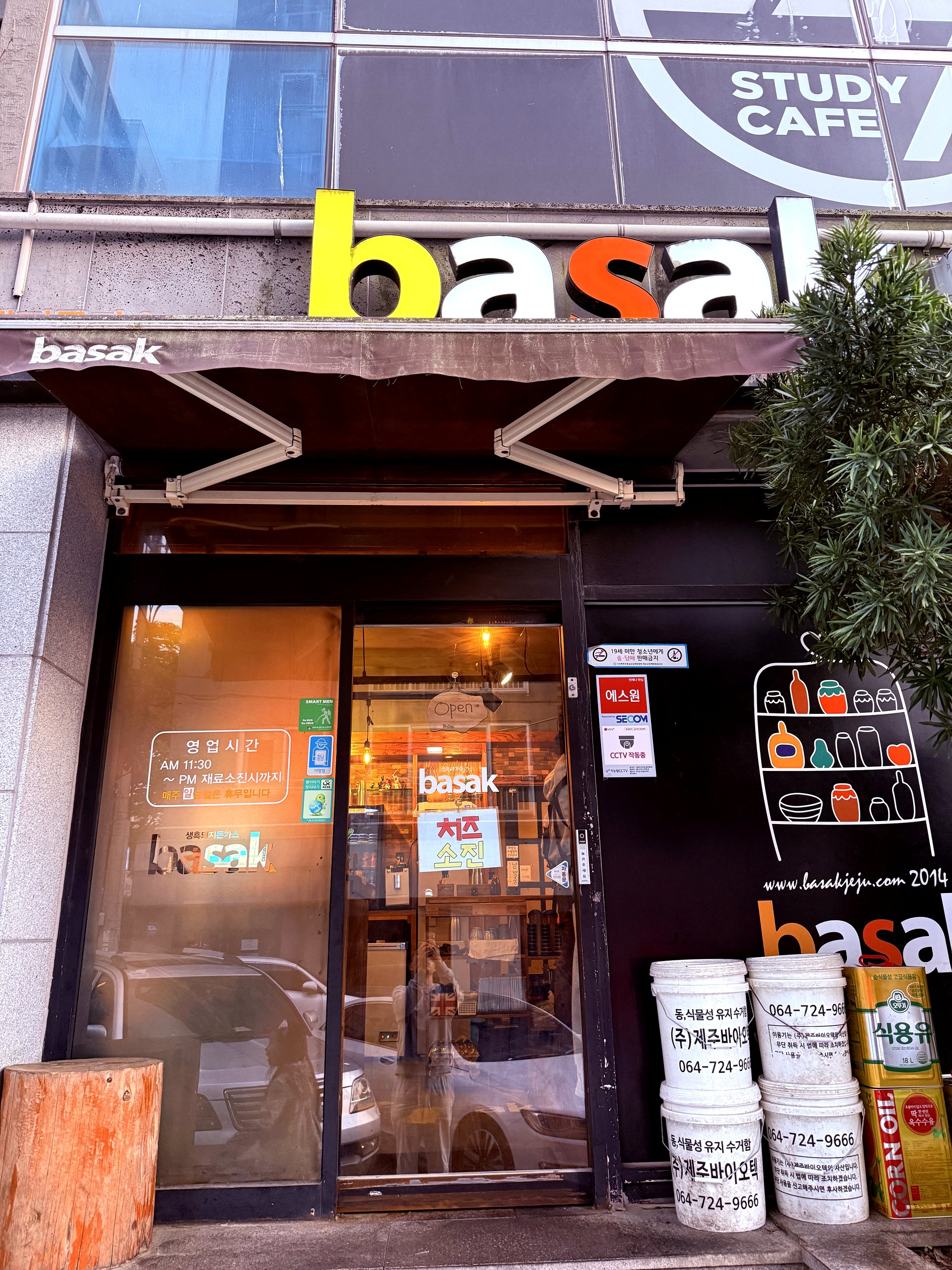
The location signals what kind of place this is — a side street, easy to miss, no Instagram aesthetic. Tourists walk past it every day. Locals walk into it every day.
What I Ordered
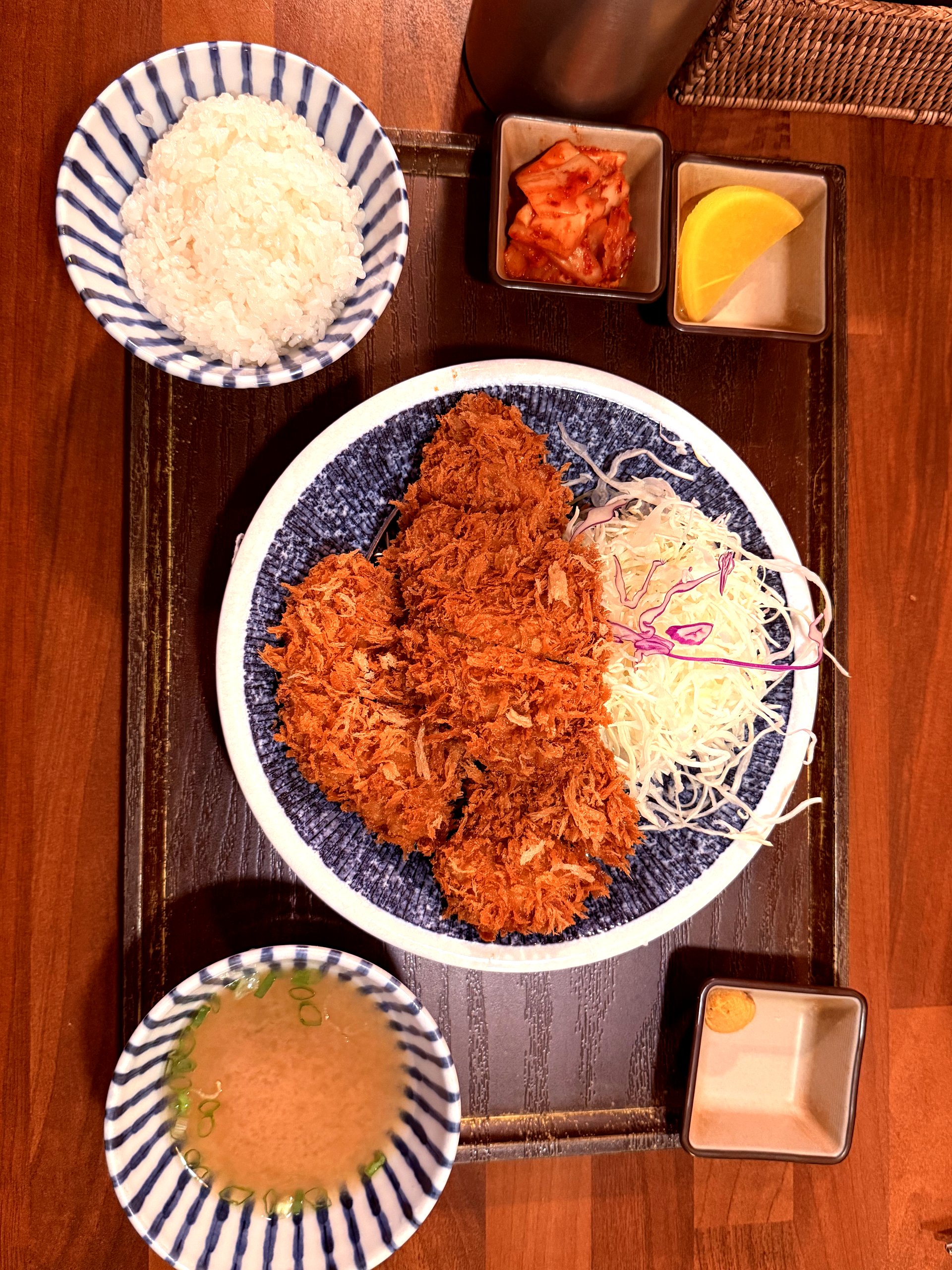
Anshim Donkkaseu (안심돈까스) — ₩13,000 ($8.8 USD)
Anshim means tenderloin — the most tender cut of pork. At Basak, it comes generously breaded but not overwhelmingly thick, fried to a deep golden, draining clean (no oil pooling on the plate). Cut into it and the breadcrumbs crack; the pork inside stays a clean pink with no dryness.
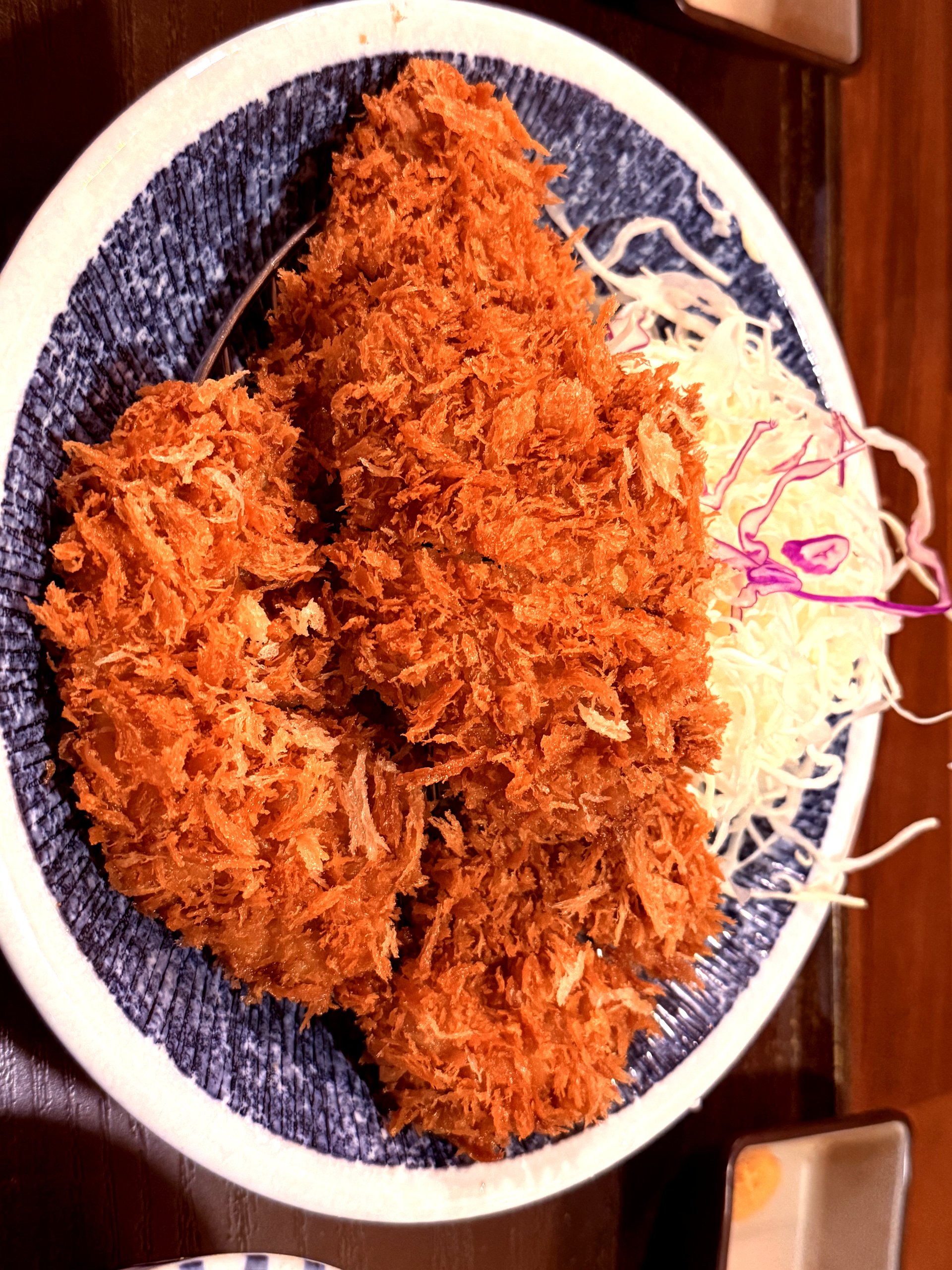
The set comes with the standard accompaniments: shredded cabbage with a light dressing, sliced lemon, a small bowl of miso soup, kimchi, rice. Nothing surprising — and the lack of surprise is the point. Every component is fresh and properly seasoned.
Memil Soba (메밀소바) — ₩11,000 ($7.5 USD)
The cold buckwheat noodles arrive in deep dark broth with grated radish, cucumber sliver, red cabbage shred, nori, a slice of lemon — and a tangle of crispy shrimp tempura riding on top.
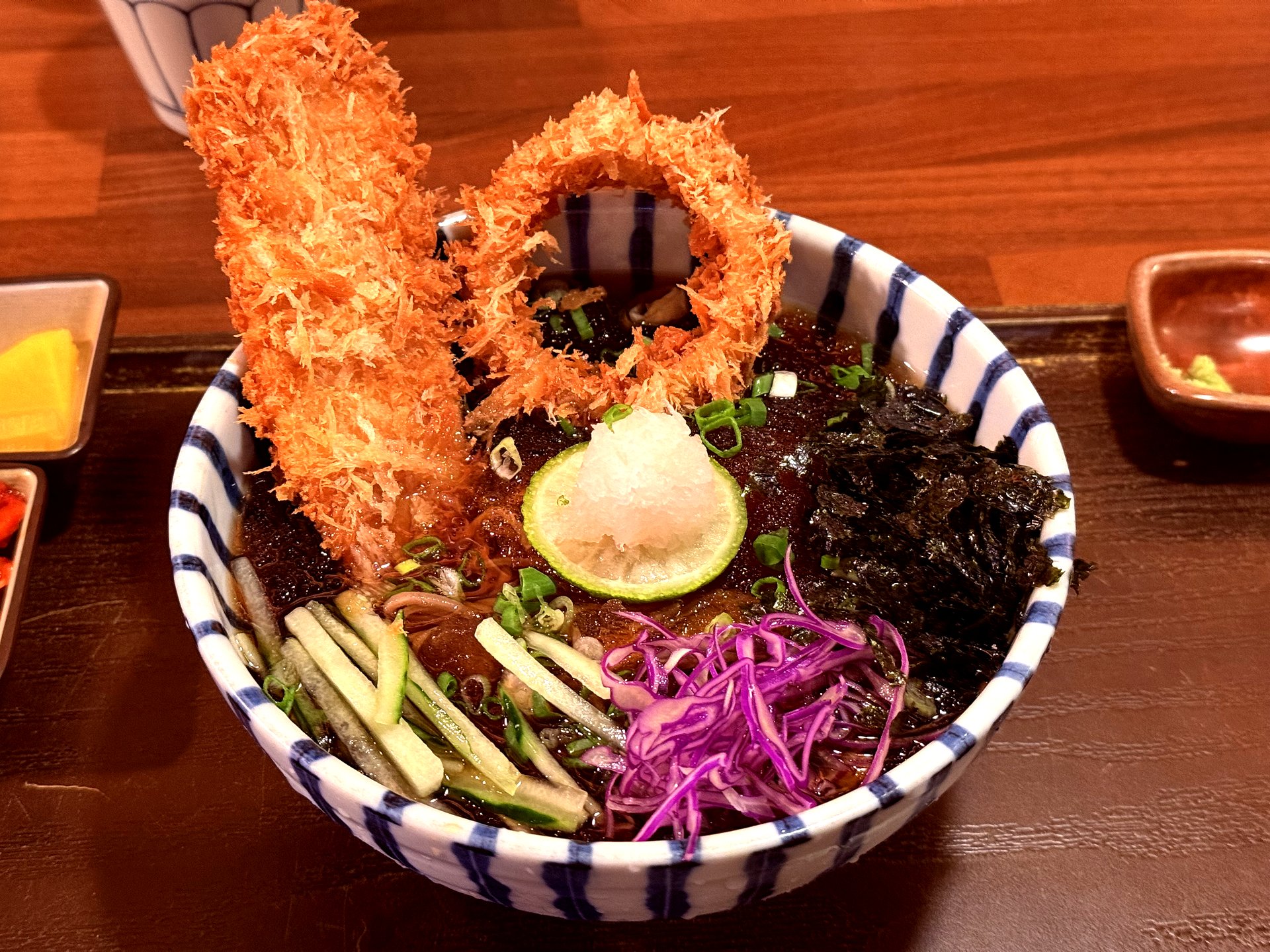
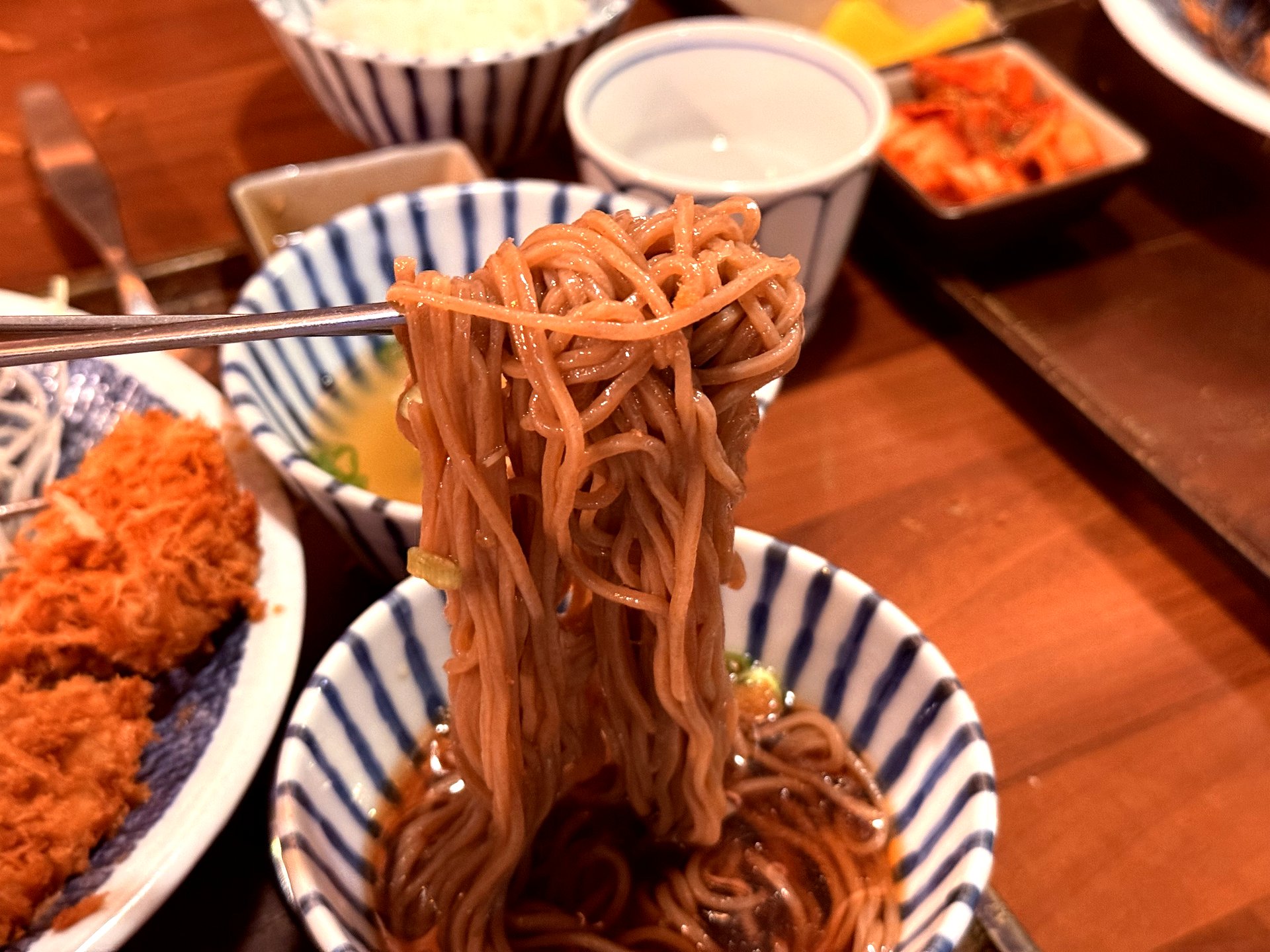
The broth has the depth you only get from a kitchen that takes stock seriously. Clean, savory, faintly sweet, properly cold. The buckwheat noodles have that slightly nutty character. Even the shrimp tempura — easy to phone in — stays crisp on top of the broth long enough to enjoy.
💡 The Mustard Trick — A Local Pro Move
Here is the move locals use that you will not see in any guidebook: put a small dab of yellow mustard on the donkkaseu sauce, mix slightly, then dip. The brown donkkaseu sauce is naturally on the sweet side.
Mustard cuts that sweetness and adds a sharp bite that balances the richness of the fried pork. One bite and you understand why Korean tonkatsu places always set out mustard alongside the sauce.
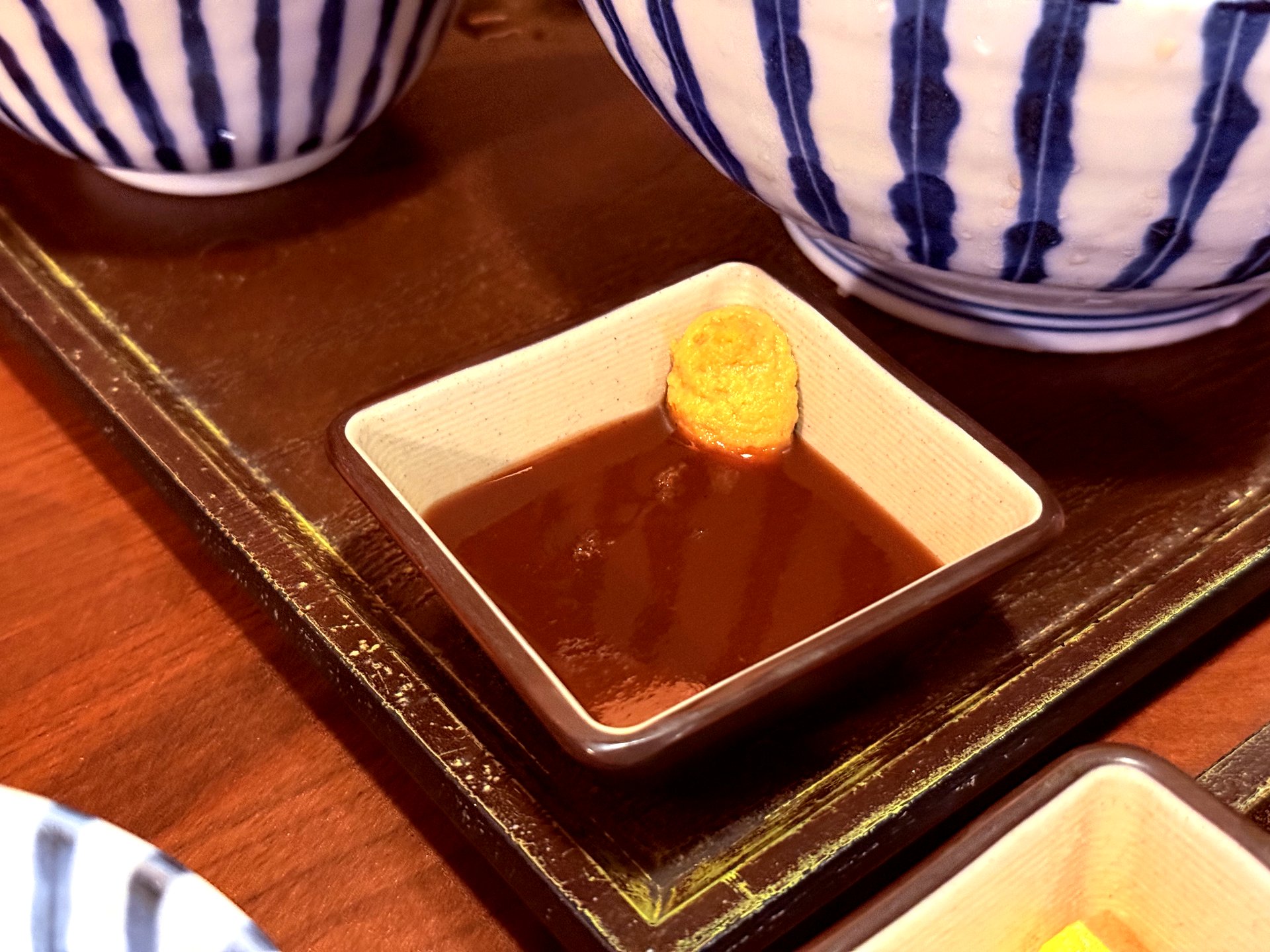
If your sauce dish does not have mustard, ask the staff. Most tables have a mustard dispenser nearby.
What Foreign Visitors Should Know
- This is a real local spot — not a tourist place. Expect a wait, especially around lunch (12:00–13:30) and weekends. Plan accordingly.
- No reservations. Walk-in only. If there is a wait, write your name on the list at the entrance.
- Foreign cards work. Standard POS. No need for cash.
- Limited English on the menu, but the popular items are easy: 안심돈까스 (anshim donkkaseu — tenderloin), 치즈돈까스 (cheese donkkaseu — often sold out), 메밀소바 (memil soba — cold buckwheat noodles).
- The cheese donkkaseu is a cult favorite and frequently runs out. If it is a priority for you, arrive early or call ahead to confirm.
- Parking at the nearby public lot (paid). The street has limited parking.
- Try the mustard move (above). It is what separates a tourist tasting their first donkkaseu from someone who eats this food every week.
My Honest Take
Taste: 5/5. Price: 4.5/5.
Basak does the basics with discipline. Fresh oil, properly drained, pork cooked to the right point, sauce that knows what it is, soba broth with real depth. There is nothing flashy here, and that is exactly the point — when a kitchen does the fundamentals this well, it does not need anything else.
The 4.5/5 on price is calibration: ₩13,000 ($8.8 USD) for a tenderloin set is mid-tier for Korea but reasonable for the quality. ₩11,000 ($7.5 USD) for soba is fair. Total per person around ₩12,000 ($8.1 USD)–14,000 with a single dish.
If you are visiting Jeju and want to eat the way locals actually eat — meaning food that is good every single time, not just photogenic — Basak Donkkaseu belongs on the list.
📍 Find It
Basak Donkkaseu on Google Maps →
Jeju City (제주시), Gwawon-buk-gil 4, Deokyang Building. About 5 minutes by car from central Jeju, near the main commercial area. Parking at the nearby public lot (paid).
All photos by author. Last visited 2026. Restaurant details may change — verify before visiting.
Go. If you are flying to Jeju, get a taxi from the airport, show the driver “바삭돈까스” on your phone, and order the anshim donkkaseu set. Don’t overthink it. Don’t share. Don’t pretend you came to Jeju for the views — you came for the cutlet, and you should commit.
P.S. Second visit is when you start ordering an extra side of rice from the start. That’s when you know.
| 🍽️ Food | 5.0 | |
| 💰 Value | 4.5 | |
| 🌏 Foreigner-friendly | 3.0 | |
| 📍 Access | 3.0 |
| Best for | Donkkaseu purists, Jeju lunch breaks, anyone who reads onomatopoeia as a menu strategy |
| Skip if | You don’t drive in Jeju and hate taxis, you came expecting Western pork chops |
| Order this | Anshim donkkaseu set + extra rice |
| Visited | April 2026 · 1st visit |
Been here? Tell me what you ordered — drop a comment below.
More from Foodieseoul
- Best Smash Burger in Mullae-dong (Yankees Burger)
- Best Jeju Seafood Near the Airport — Dodu Haenyeo
- Coffee Near Jeju Airport — Cafe Jinjeongseong
- Best Jeju Haejangguk — Eunhuine (해장국)
Planning a Jeju food trip? This is one stop in our bigger Jeju Local Food Guide — what (and where) to eat in Jeju, with all our Jeju picks, honest prices, and a map.