⏱ 9 min read · 📍 Foodieseoul · 🇰🇷 By a Korean local for travelers
- Founded by a first-generation haenyeo grandmother — uncompromising on Jeju ingredients.
- Order the dol-wureok jorim (돌우럭 조림) set for two — slow-stewed rockfish over daikon.
- Worth the 45-min drive from the airport for the most authentic hyangtosik in Jungmun.
You’re in Jeju, you’ve eaten enough black pork at touristy spots, and now you want the food a Korean grandmother would actually cook for you.
So why is the answer a stubborn old haenyeo’s recipe for stewed rockfish that most foreign guidebooks have never even heard of? Someone please explain. (The middle-aged Korean couples at the next table eating in respectful silence, two of them in matching golf hats, also have no answer.
They have the answer. They are eating it.)
I’ll admit it — I’m a snob about Jeju traditional food. Specifically, I notice when “Jeju cuisine” is just mainland Korean food on a different plate, when “haenyeo restaurant” means a mural of a haenyeo on the wall and zero actual diving grandmothers in the kitchen, and when resort-area restaurants in Jungmun charge double for the same dish you can get for half elsewhere.
Most “Jeju traditional food” places near the resorts fail at least two of those.
What I check at any Jeju traditional food spot:
- Whether the founder’s story is real — actual diving haenyeo, not just decoration
- Whether the side dishes (banchan) are local Jeju ingredients, not central-kitchen mainland banchan
- Whether the price reflects the food, not the resort-area zip code
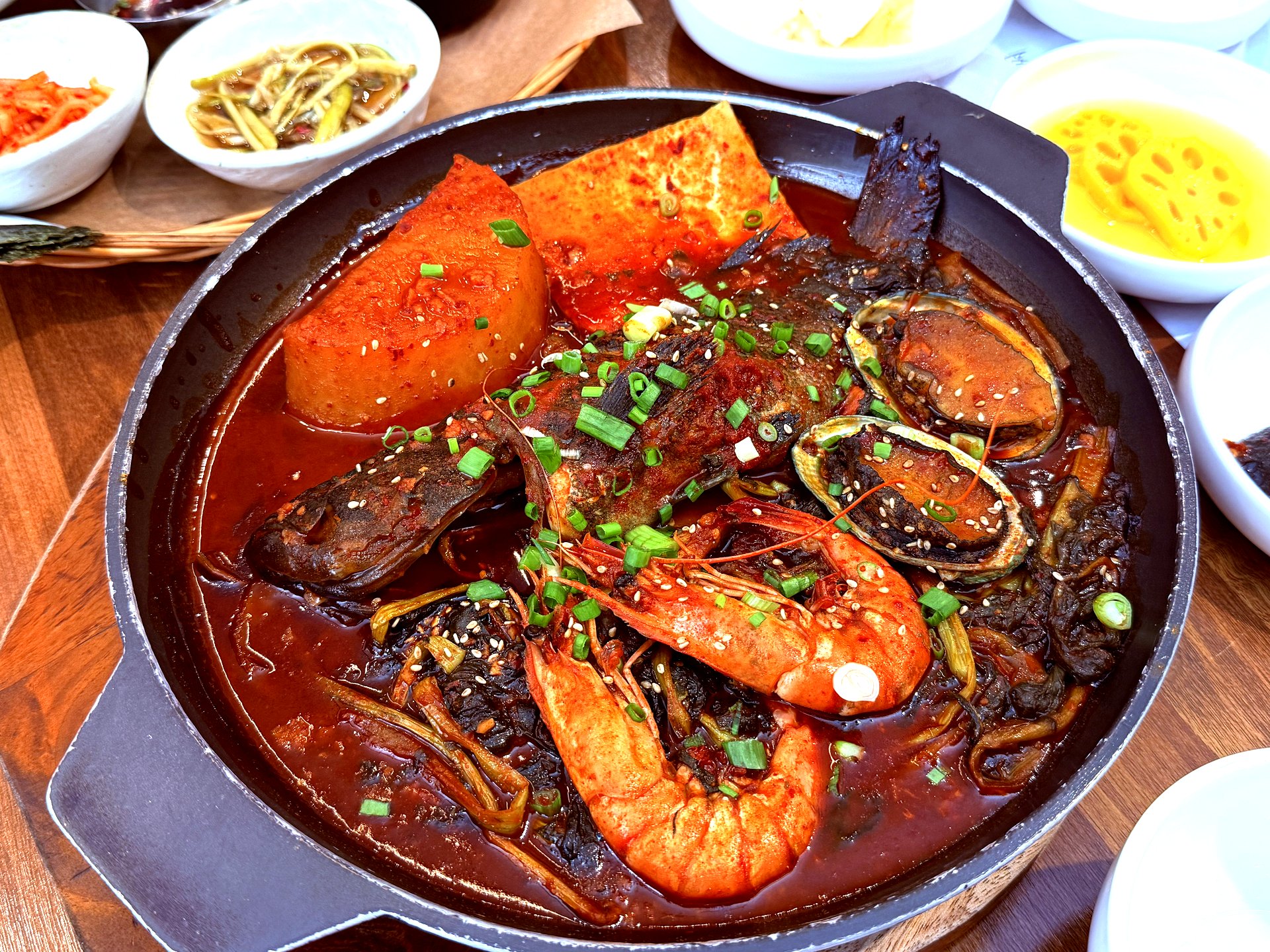
Gojipdol Wureok (고집돌우럭) passes all three. The name itself says everything: 고집 (gojip) means “stubborn” — that legendary Korean grandmother stubbornness that refuses to compromise on ingredients. 돌우럭 (dol-wureok) is rockfish caught from Jeju’s volcanic stone (돌, dol) reefs. So the name is literally “Stubborn Rockfish.” Founded by a first-generation haenyeo grandmother who built the menu around her own standards.
| Korean name | 고집돌우럭 중문점 (Gojipdol Wureok Jungmun) |
| Neighborhood | Jungmun-dong, Seogwipo — Jeju south coast resort area |
| From the airport | ~45-minute drive (~40 km) via Pyeonghwa-ro / Highway 1135 |
| Price range | ₩₩₩ — ₩25,000–45,000 per person (~$17–$31 USD) |
| Signature | Dol-wureok jorim (돌우럭 조림) — stubborn-grandmother stewed rockfish set |
| English menu | Limited — picture menu and visual cues. Staff helps with pointed orders. |
| Foreign cards | Visa/Mastercard accepted |
| Hours | Lunch and dinner — check Naver Map for current hours. Lunch peak (12:00–13:30) fills up fast. |
| Map | Google Maps · Naver Map |
My grandmother’s generation cooked rockfish stew the same way as Gojipdol’s founder — light soy, sesame oil, daikon underneath the fish, and the broth carries everything. That generation didn’t care about presentation; the food was just supposed to be correct.
What’s interesting about Gojipdol is that they kept the recipe correct while the building itself became a Jungmun landmark. The two things — grandmother-correctness and resort-area visibility — almost never coexist in Korean food. Here, somehow, they do.
The Spot — Big White Building, Big Personality
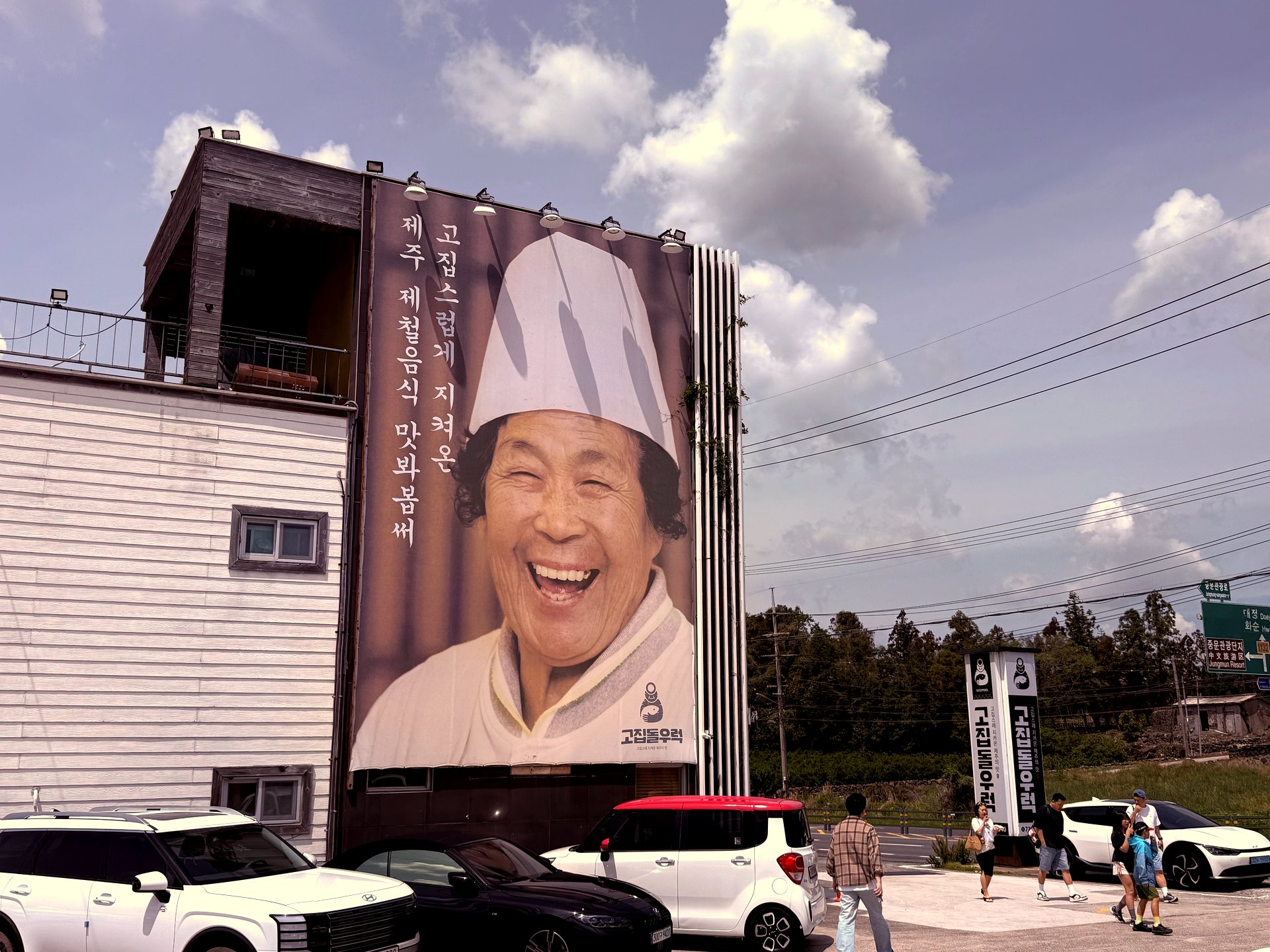
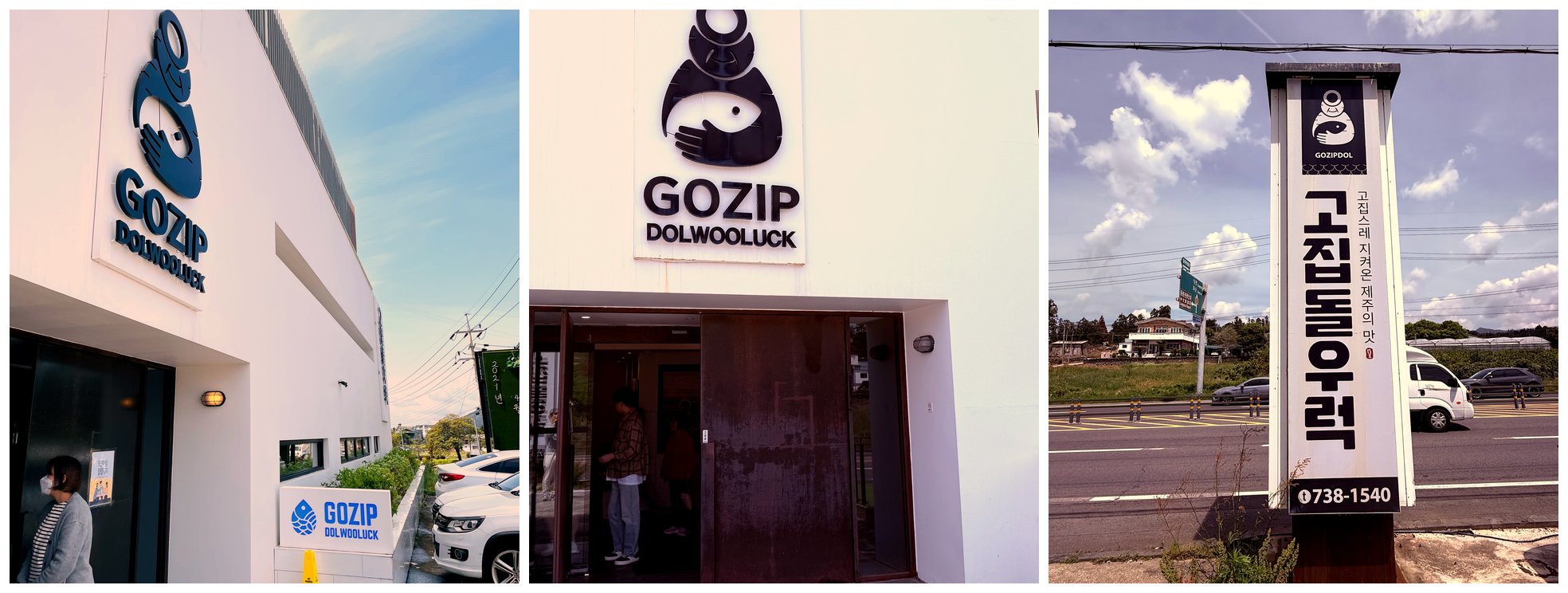
You will see it from the road. The exterior wall carries an enormous mural of the founding chef-grandmother in her white kitchen cap, smiling. It is one of the most recognizable restaurant buildings in the Jungmun area.
The Founder Story — Stubborn About Ingredients
Inside, the restaurant tells its own origin story through small printed cards on the table.
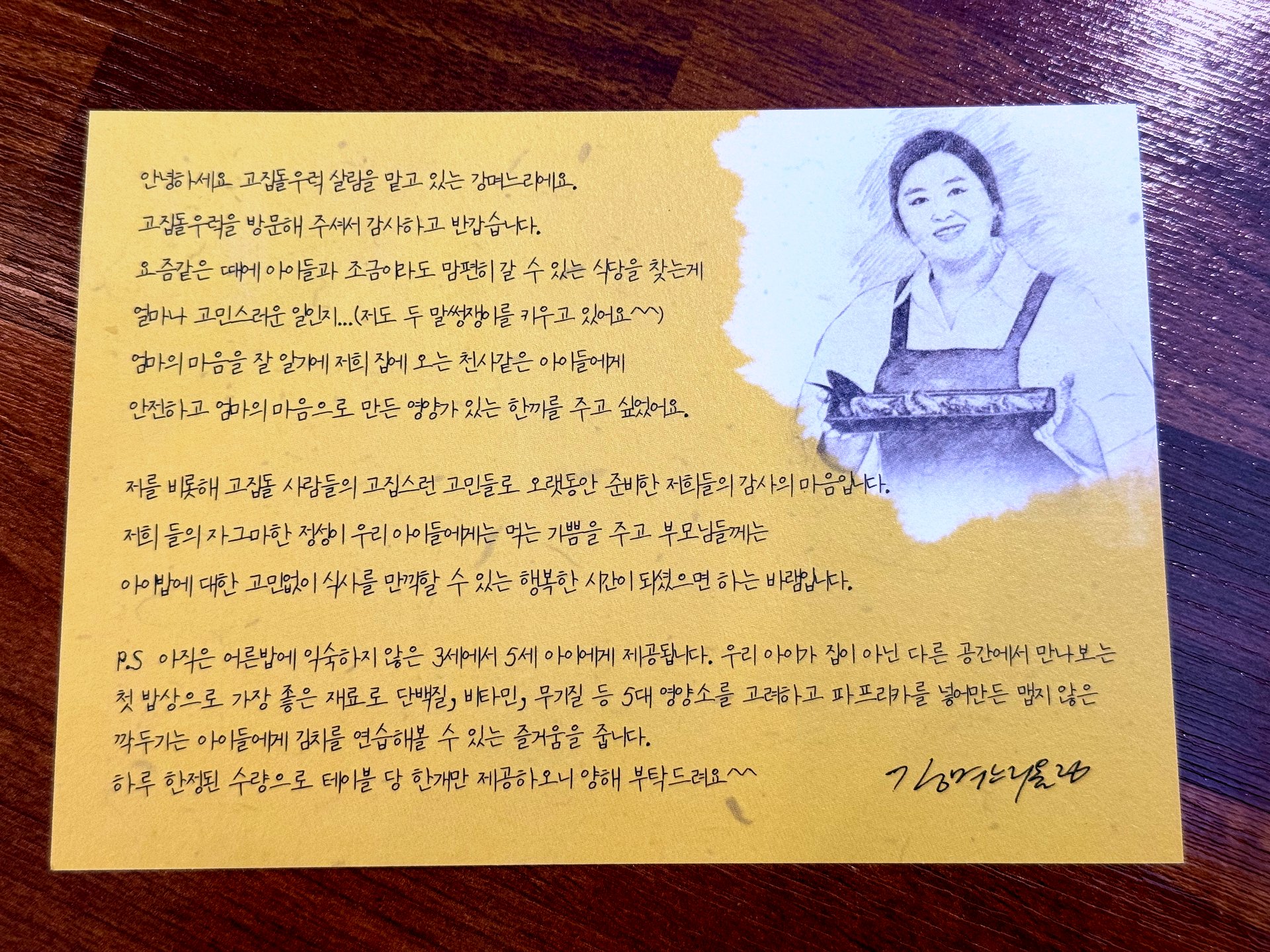
The handwritten note from owner Kang Myeong-ja explains the philosophy: she sources ingredients herself, refuses shortcuts, and built the kid’s menu specifically because her own children grew up eating here. The placemat takes that further with a Jeju-dialect line under a haenyeo illustration:
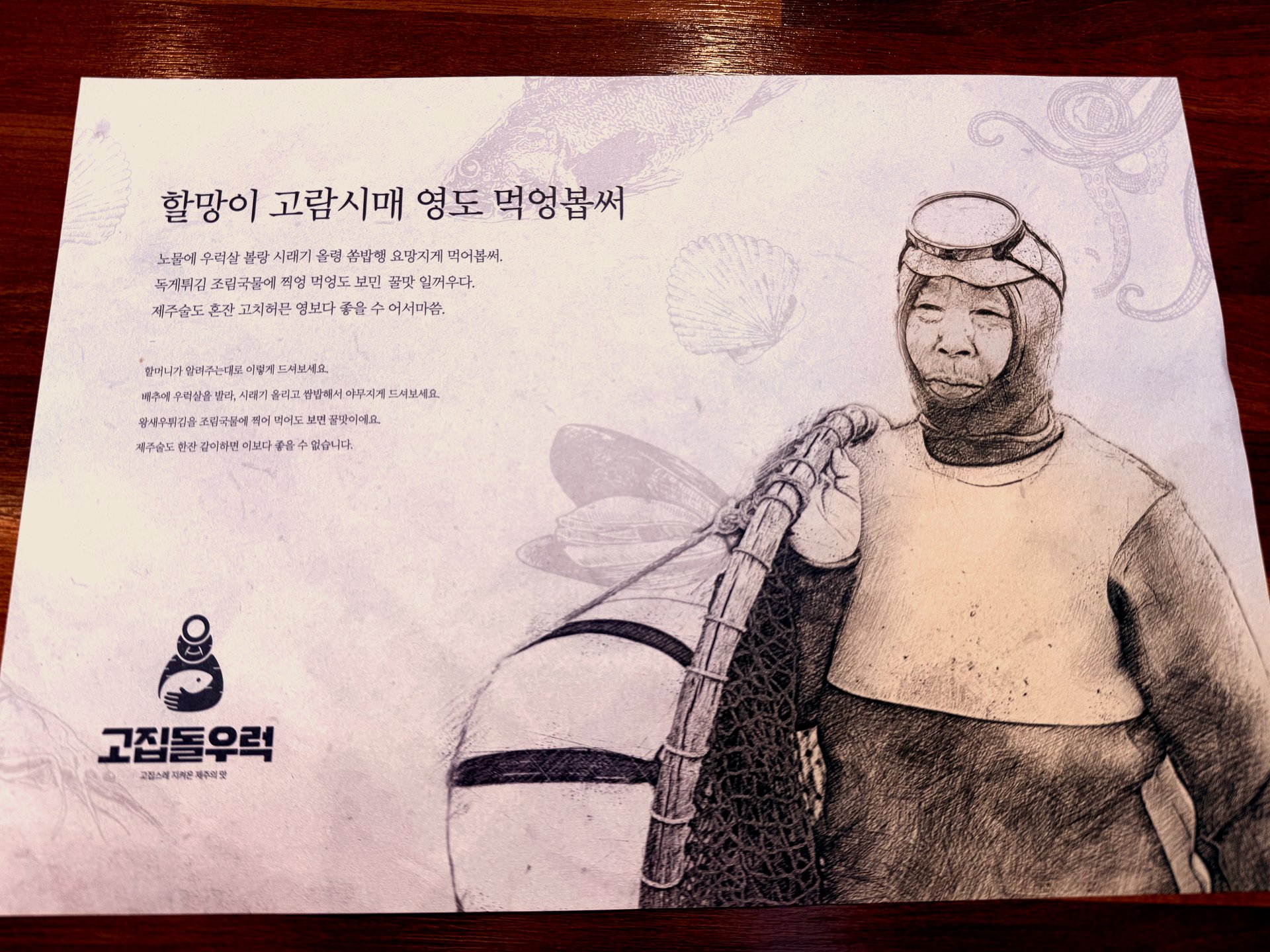
(“할망이 고람시매 영도 먹엉봅써” — Jeju dialect, roughly: “Grandma’s saying — eat it like this.”) It is the kind of restaurant that earns its name — the menu reads like a love letter to ingredients you can only get fresh on the island.
The Menu — Sets, Not Single Dishes
There is no à la carte. Everything is built around 4-person hansangcharim set meals (한상차림 — “table-set meal,” where multiple dishes arrive at once). Same menu for the whole table.
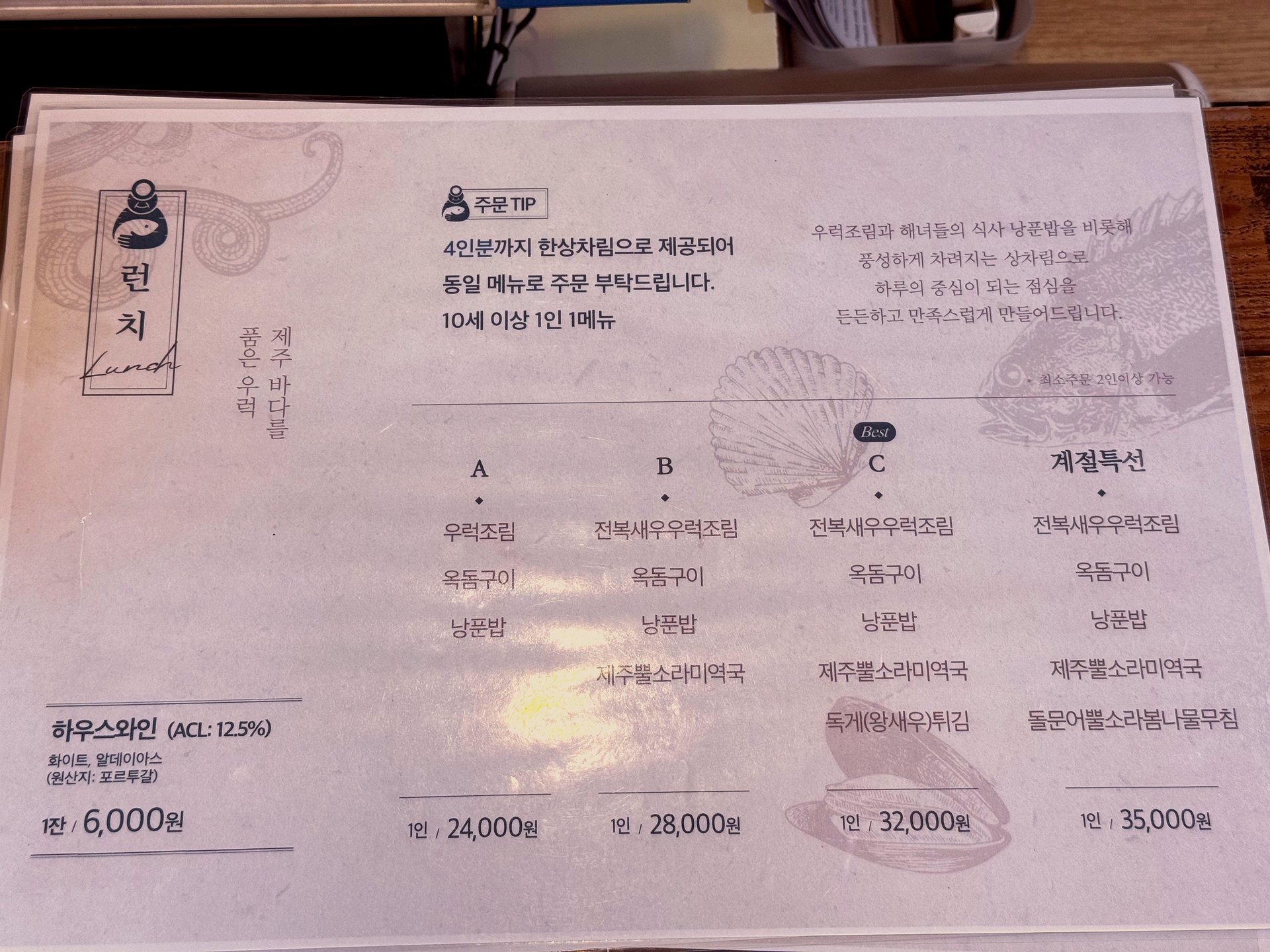
- A세트 ₩24,000 ($16 USD) / person — Wureok Jorim (rockfish braise), Okdom Gui (grilled tilefish), Nangpunbap (shared rice).
- B세트 ₩28,000 ($19 USD) / person — Adds abalone + shrimp to the rockfish braise, plus Jeju horn-snail seaweed soup. The pick.
- C세트 ₩32,000 ($22 USD) / person — B set + king-shrimp tempura. Best-seller per the menu.
- Seasonal Special ₩35,000 ($24 USD) / person — B set + stone-tilefish horn-snail spring-vegetable salad.
I’d order B set unless someone really wants the king shrimp. It already covers the three Jeju proteins you came for: rockfish, abalone, shrimp.
The Full Table — What ₩28,000 ($19 USD)/person Gets You
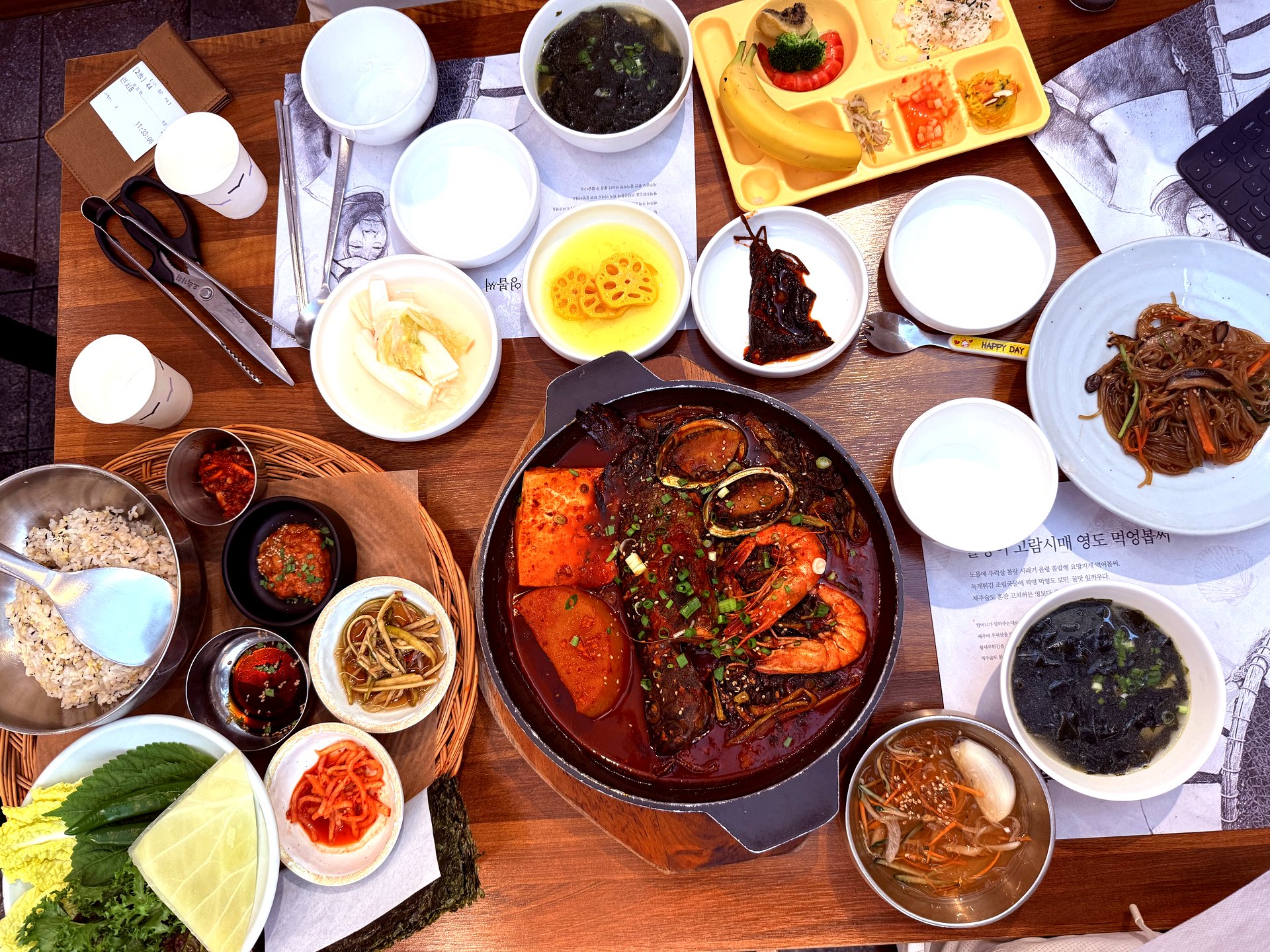
The bowl in the center is the signature: 전복우럭새우조림 (Jeonbok-Wureok-Saewoo Jorim) — abalone, rockfish, shrimp braised together in a deep red sauce with siraegi (dried radish leaf), 무 (radish), and tofu. To the right is the 낭푼밥 (nangpunbap) — Jeju’s traditional shared rice bowl that everyone eats from.
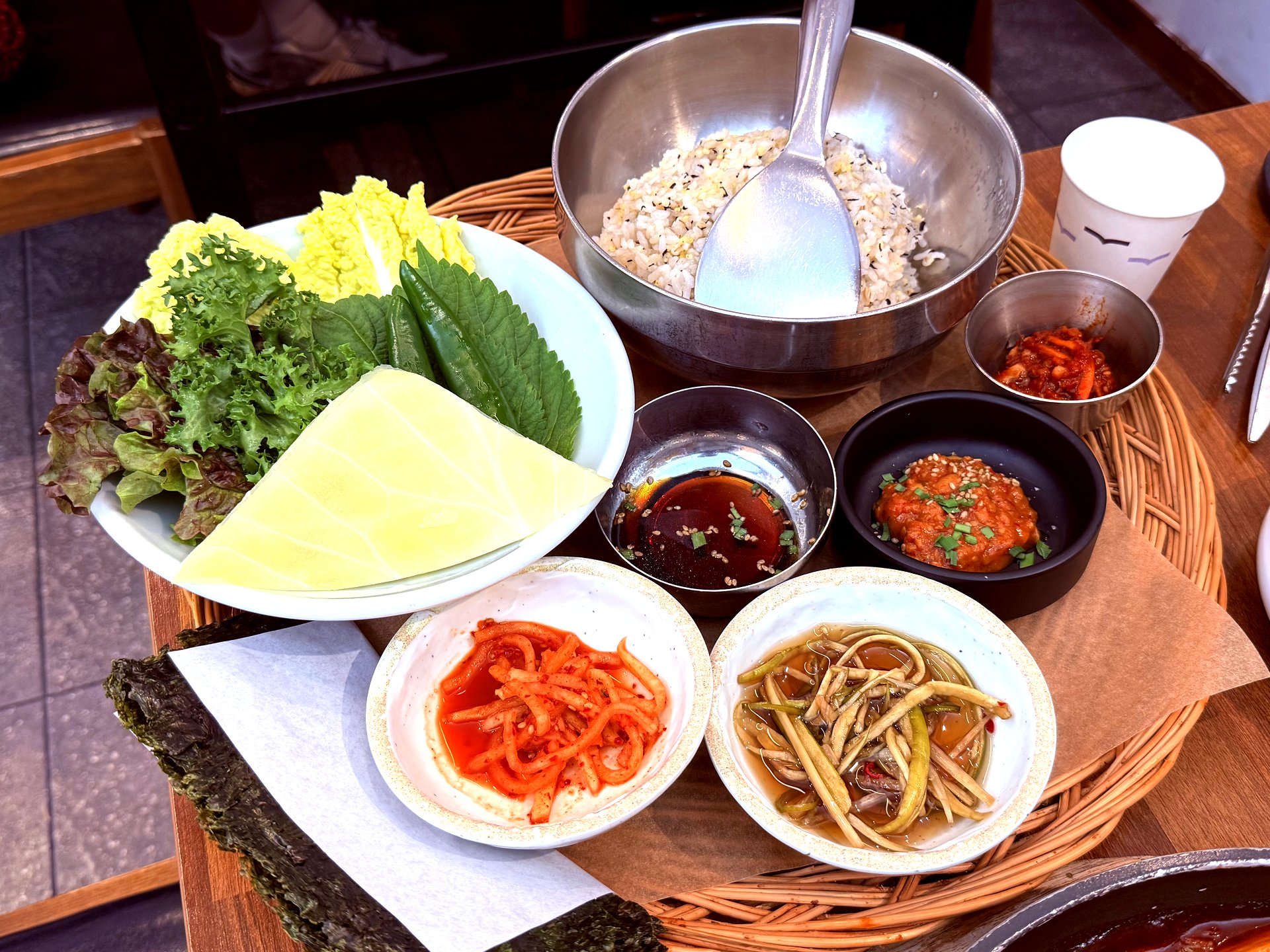
The lettuce/perilla/cabbage spread comes with three sauces: ssamjang, gochu-jeolim (pickled chili), and a small bowl of jeotgal-style relish. Use them. Roll a leaf, add a piece of rockfish, scoop a bit of rice, top with whichever sauce you like — that’s how a Jeju local would eat this.
Inside the Signature Dish — The Bites
This is what you came for. The braise is served in a wide pan and you fish out one ingredient at a time.
The rockfish + siraegi bite
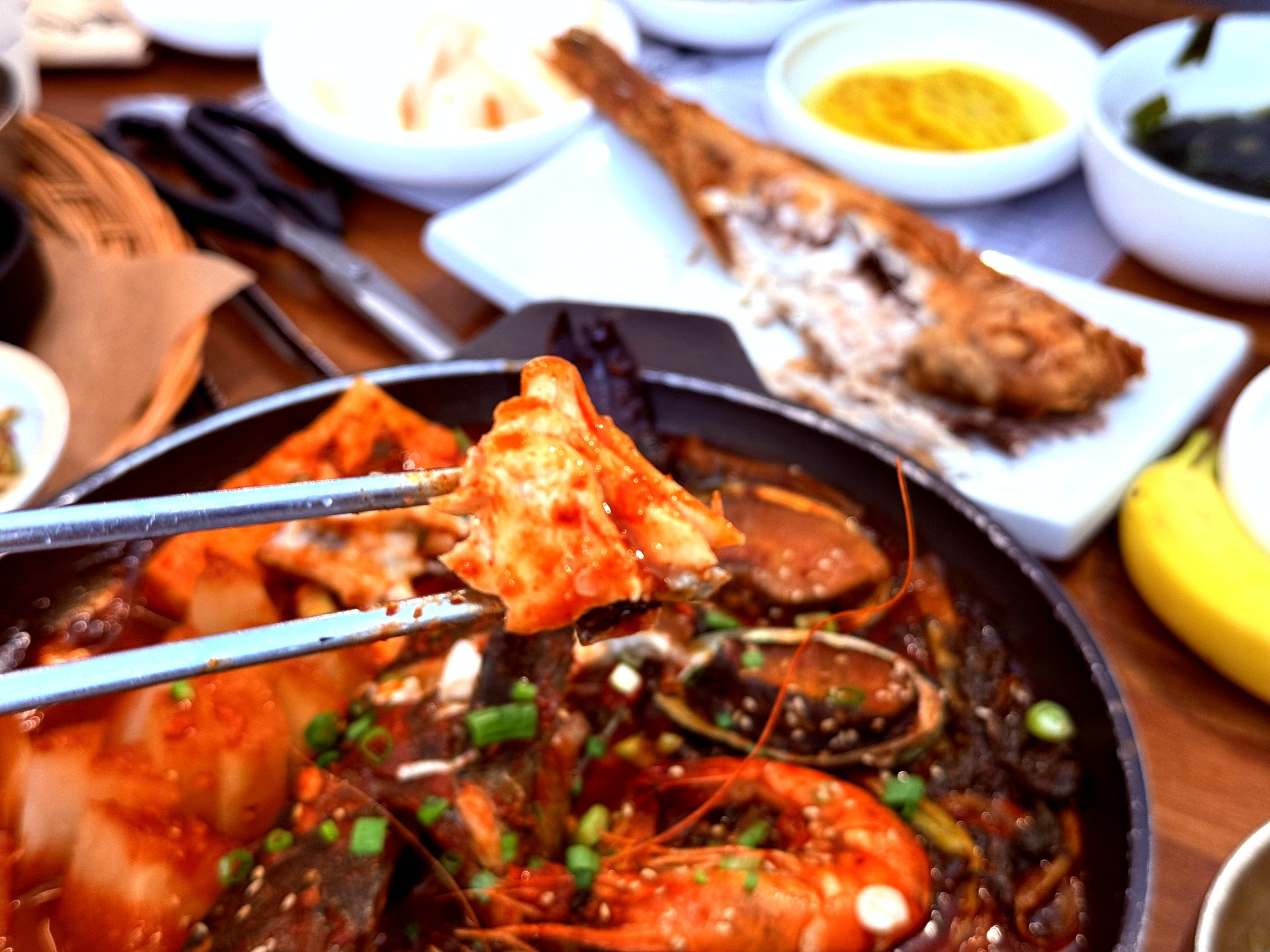
Pull a thick piece of wureok (rockfish) from the pan. Wrap it with a strand of the spicy-braised siraegi (dried radish leaves) underneath. Add a heaping spoon of rice. Take it all in one bite.
That mouthful is the whole point of the meal — the slow-cooked sweetness of the radish-leaf greens, the firm flake of Jeju rockfish, and the sauce that has been reducing under the seafood for an hour.
It tastes, no exaggeration, like Jeju’s blue water condensed onto a spoon.
The abalone
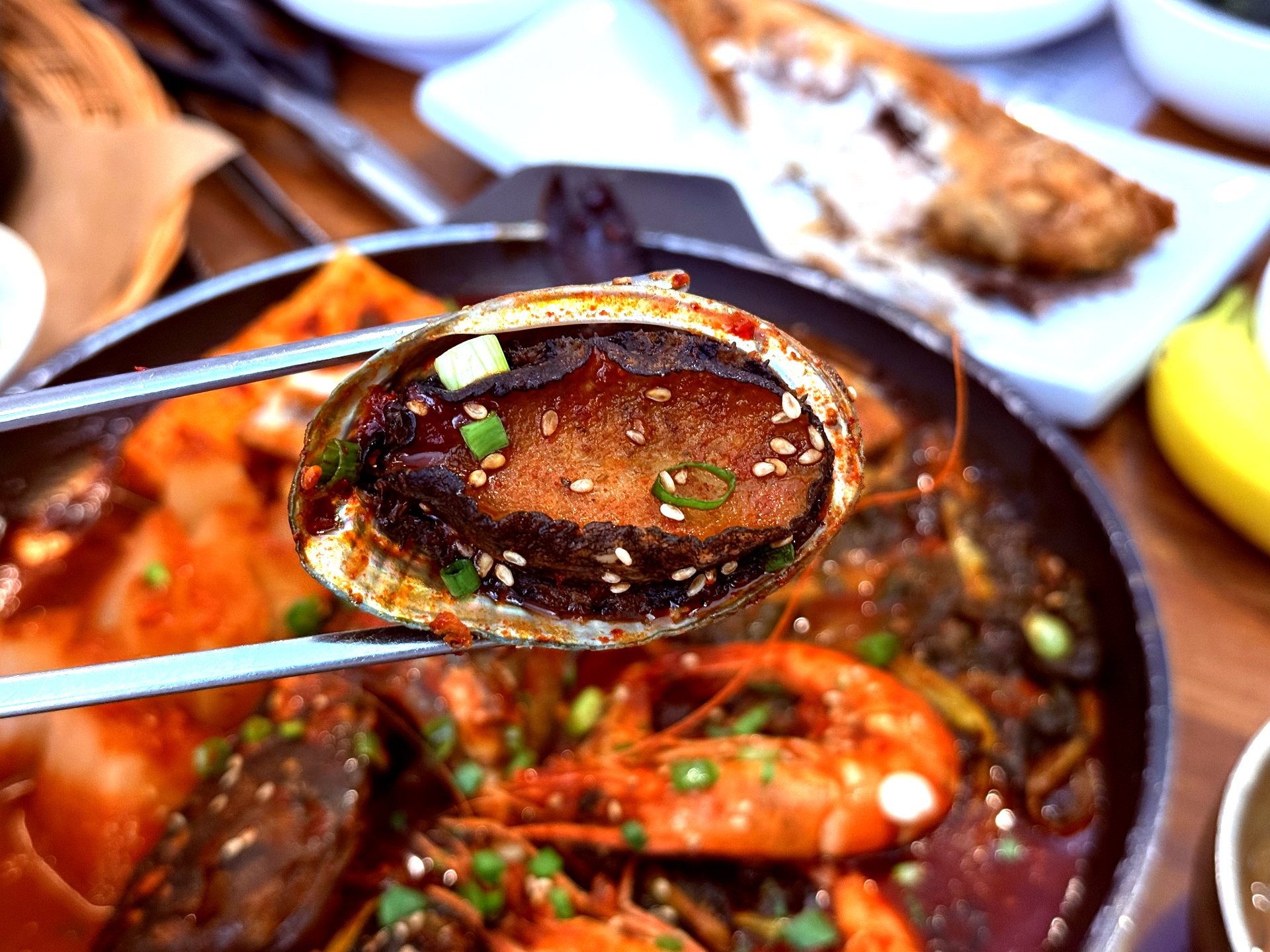
Whole abalone, briefly braised — still tender, with the nori-like dark trim around the edge intact. The sauce coats it without overpowering.
The shrimp
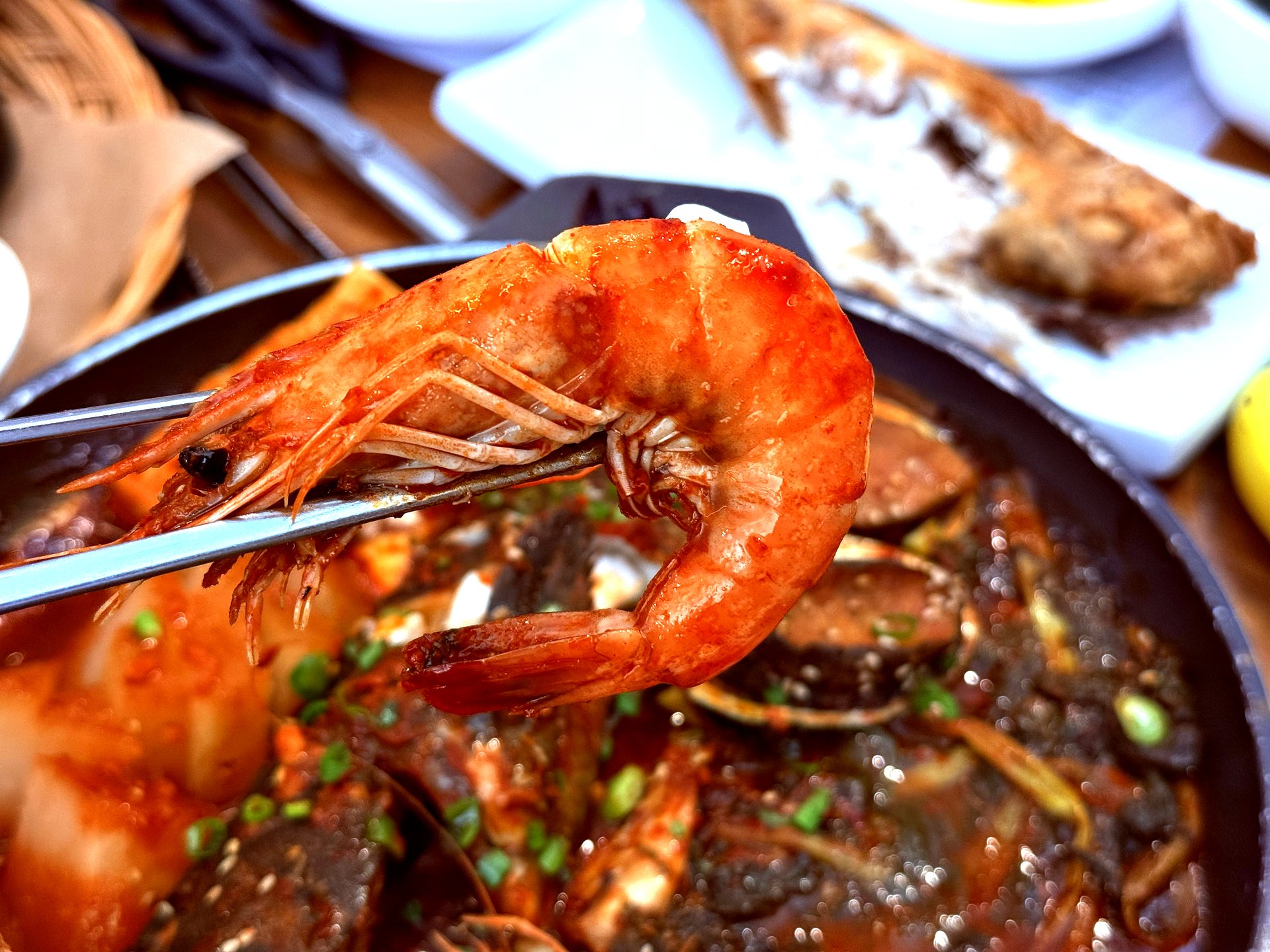
Big head-on shrimp, peeled or left intact (your call). The braise sweetens the shellfish naturally — a far cry from the ammonia-y shrimp you sometimes get in Korean stews.
The siraegi — the kick
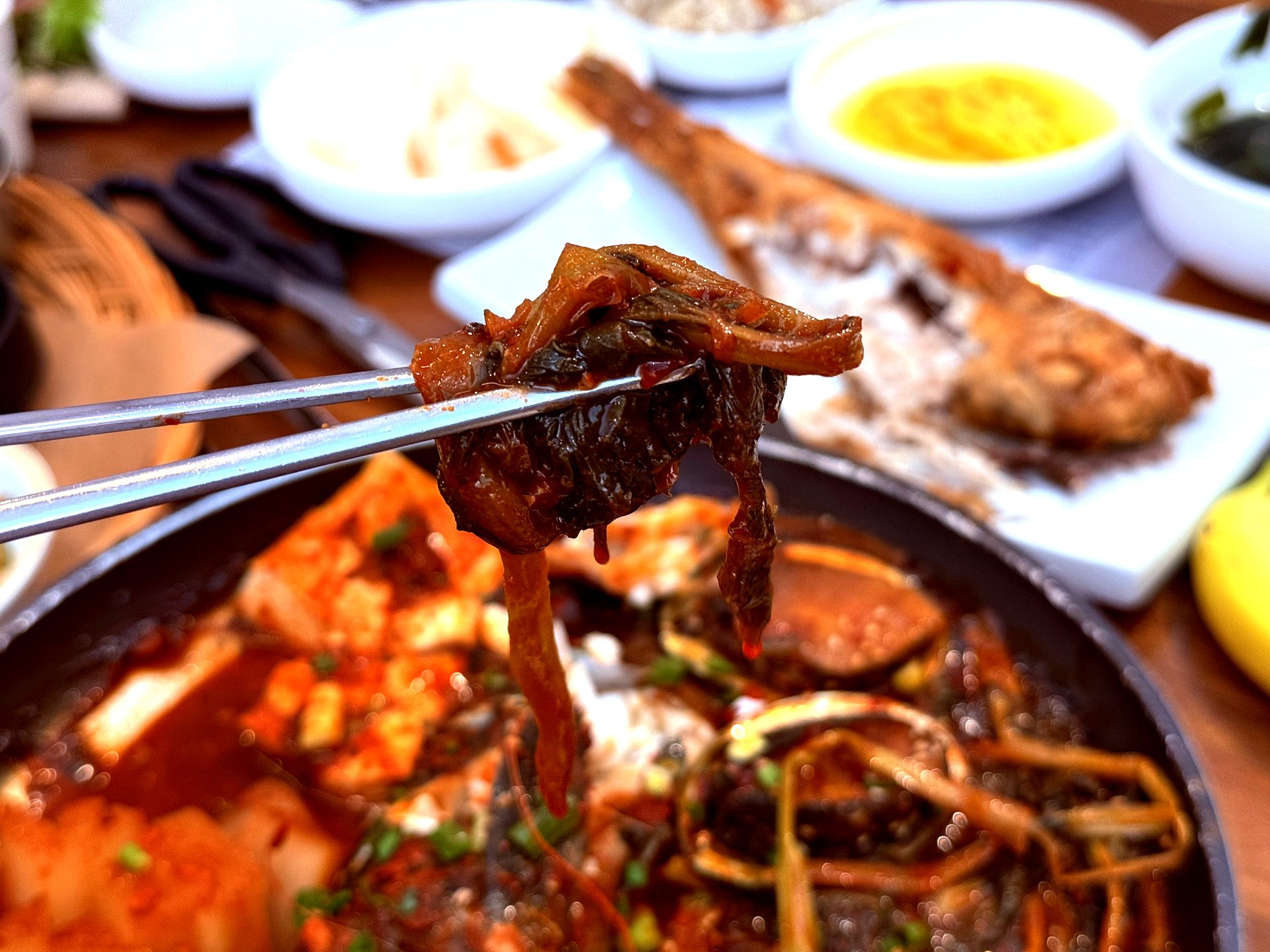
Don’t sleep on the siraegi (dried radish leaves). Once they have soaked in the sauce, each strand carries enough flavor to season three bites of rice. It is the lowest-status ingredient on the table and quietly the most addictive.
Okdomgui — The Whole-Fried Difference (옥돔구이)
Most Jeju restaurants serve okdom gui (grilled tilefish) butterflied — split open and grilled flat. Gojipdol does it differently: whole, deep-fried, no batter coating. The fish dries first, then hits hot oil intact.
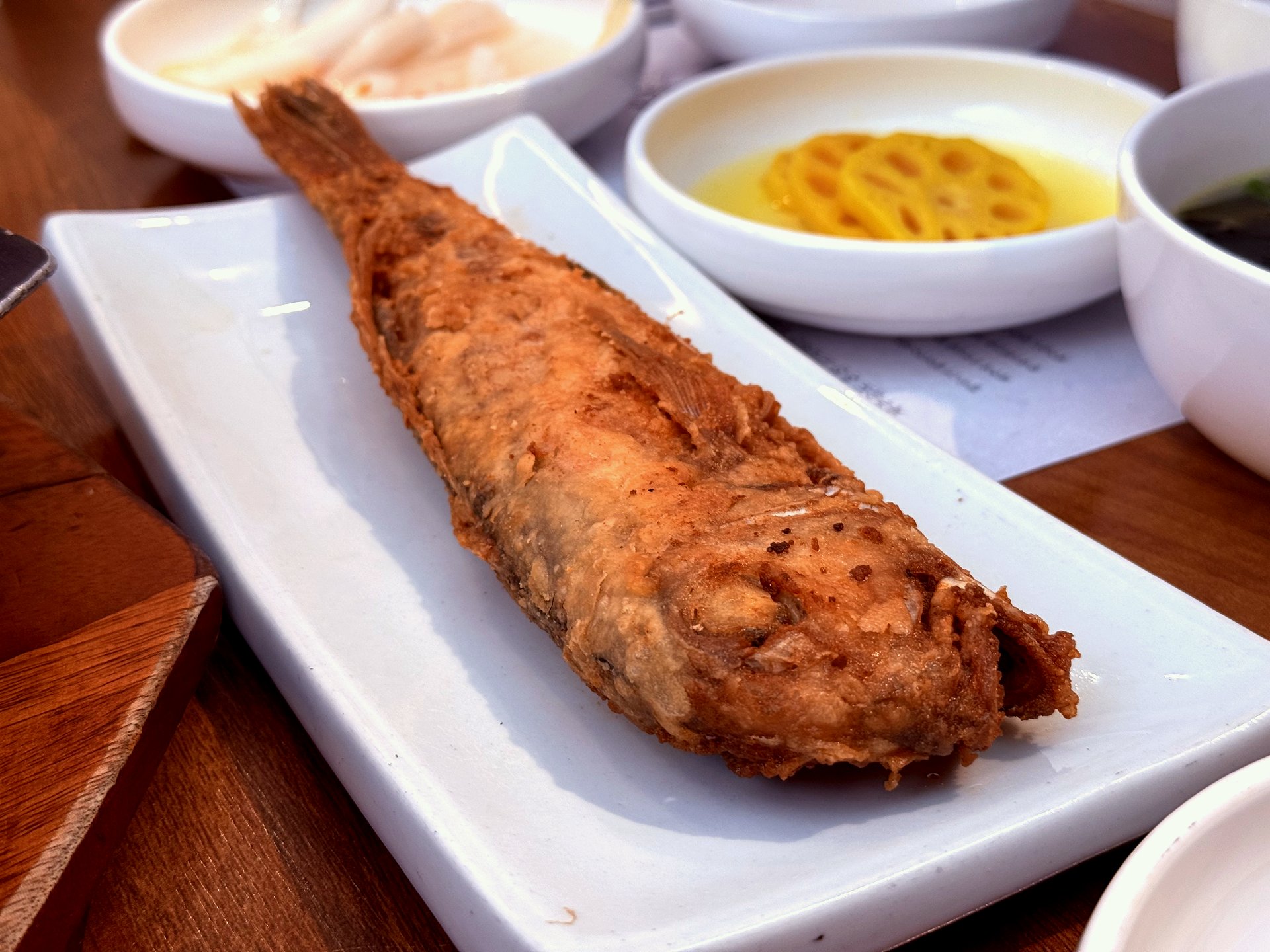
The result is a crisp skin, flaky white flesh that holds together as you peel meat off the bones, and a deeper savor than you get from the typical butterflied version. If you have only had Jeju okdom one way before, this will rewire your idea of the dish.
Miyeokguk — Don’t Skip the Warm Seaweed Soup (미역국)
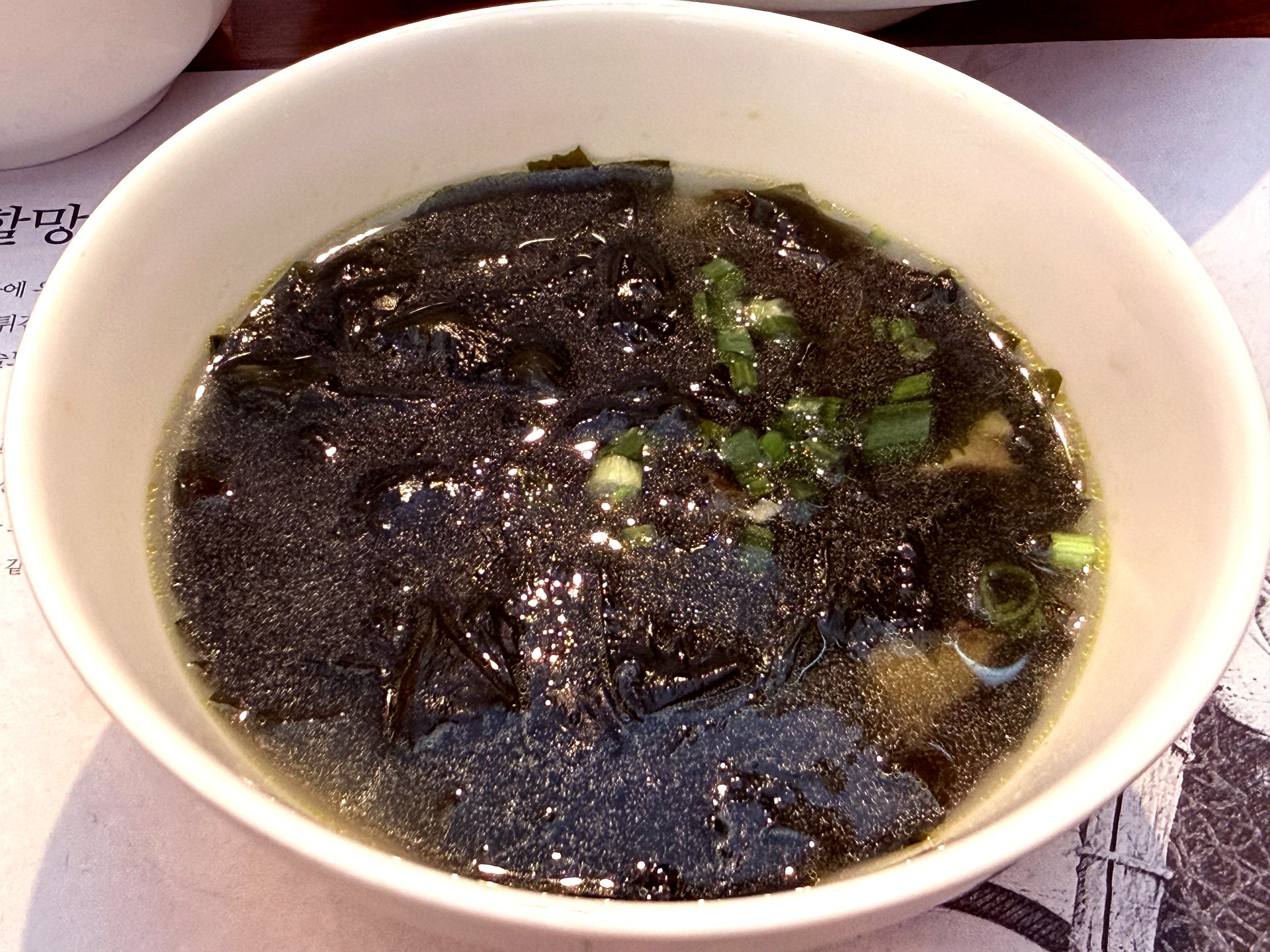
Served warm. A clean, savory seaweed broth — light, soothing, the kind of bowl Korean grandmothers ladle out without ceremony. After you have eaten through the spicy braise and the fried fish, this is the bowl that resets your palate. Korean meals build cooling broths into the structure for a reason — drink it.
Mulhoe Seasonal Special (물회)
If you visit in summer, look for the seasonal mulhoe (cold raw fish soup) — Jeju’s iconic warm-weather dish.
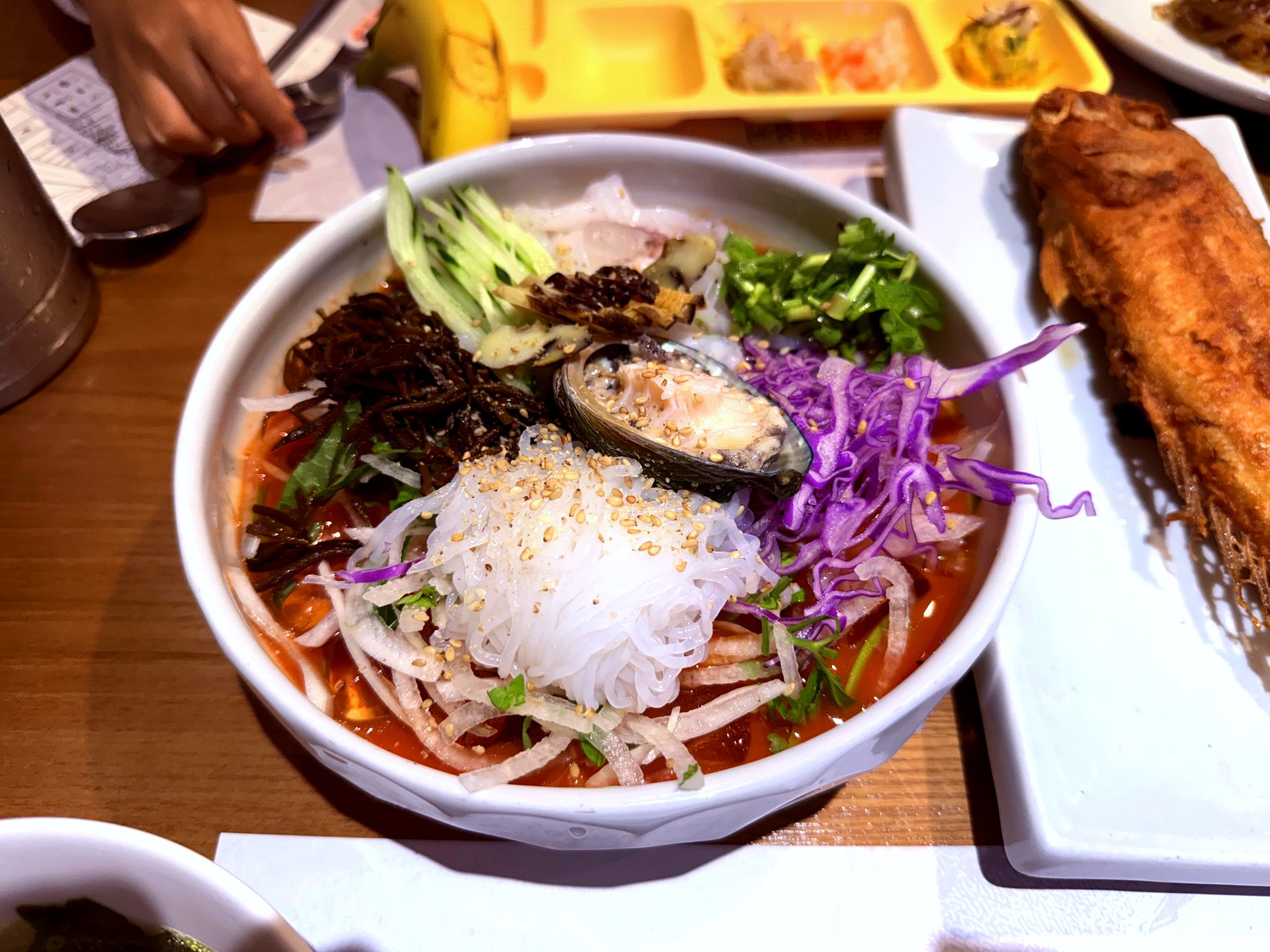
Gojipdol’s version layers abalone, octopus, raw vegetables, dried fern bracken, sesame, somen noodles, and red-cabbage slaw over a tangy-spicy ice-cold broth. It’s an entire crunch-and-sweet-and-spicy ecosystem in one bowl. Unlike the regular set menu, this is a single-bowl special — perfect when the weather is hot and you want something sharp and refreshing.
A Tiny Detail That Tells You What Kind of Restaurant This Is
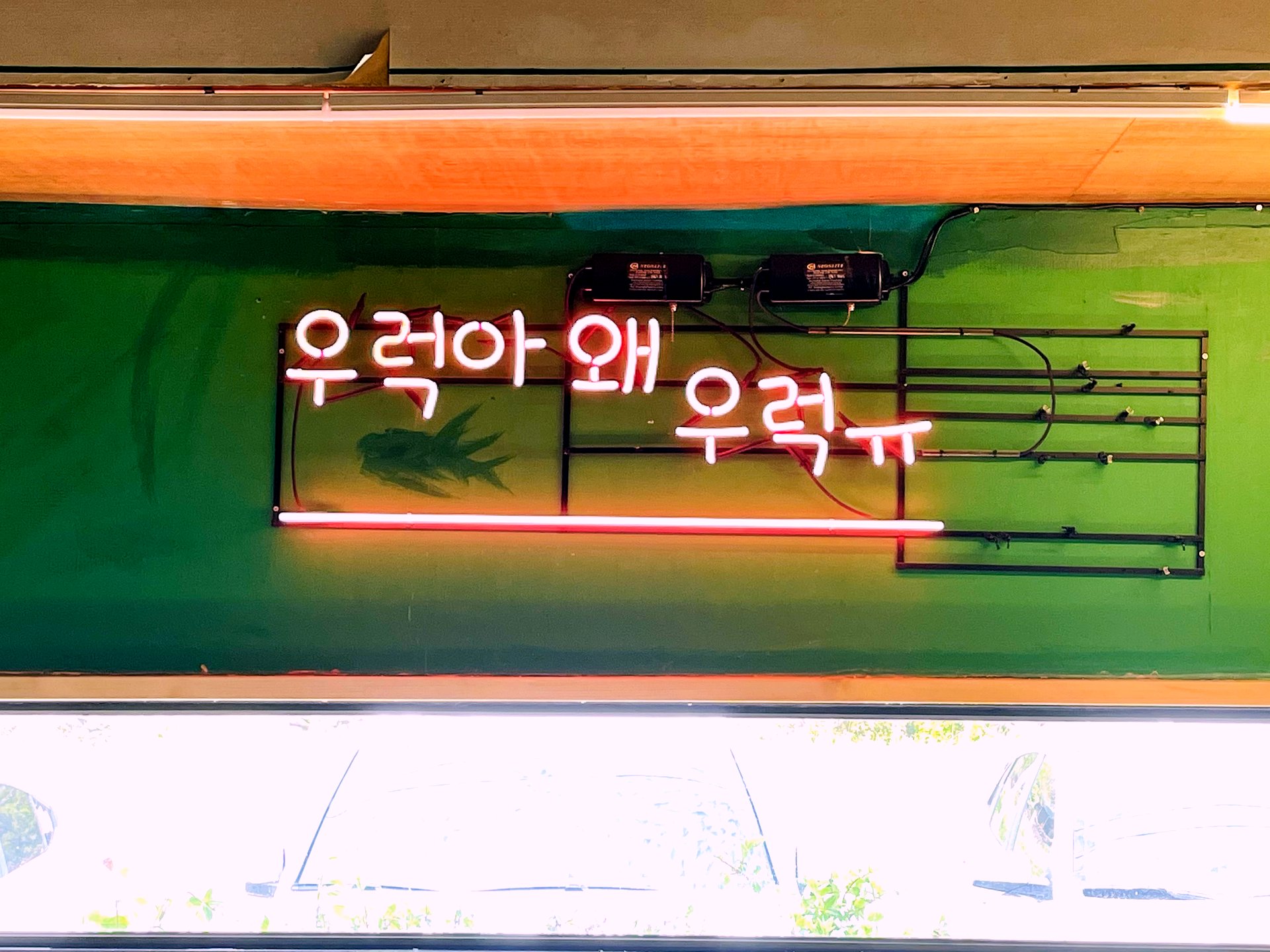
The wall has a playful neon sign reading “우럭아 왜우럭유” — a wordplay that translates roughly to “Rockfish, why are you angry?” (a pun on 우럭 = rockfish and 우럭유 ≈ “you’re upset”). The kind of detail you notice because the rest of the room has been cared for with the same level of attention.
Family-Friendly — The Free Kids Set
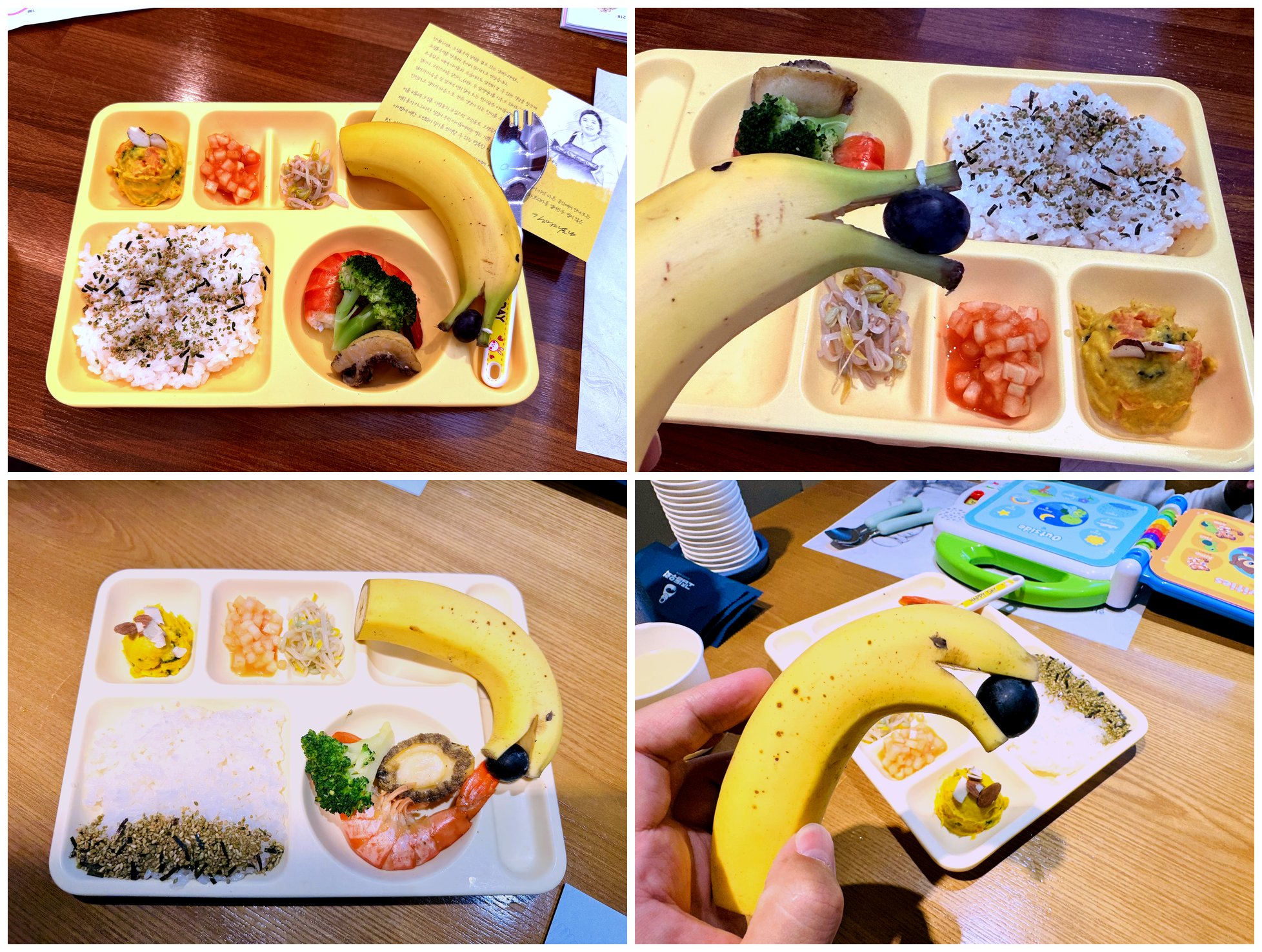
This is unusual and worth flagging if you are traveling with small kids: a free children’s meal for diners aged 24 to 48 months (2 to 4 years old).
The note from the owner explains it directly — “my own kids grew up eating here, so I made one for yours.” The tray varies by visit but always has rice, vegetables, fruit, and a banana — balanced and exactly portioned for small mouths.
You don’t usually see this kind of accommodation at Jeju traditional restaurants.
The Verdict
Gojipdol Wureok Jungmun is the rare place where the marketing matches the food.
The “stubborn about ingredients” branding turns out to mean something — the rockfish is firm, the abalone hasn’t been over-braised, the okdom is intact, and the siraegi tastes of the slow patience that braised it.
It is also one of the more child-welcoming Jeju traditional restaurants, which matters for travelers with families.
If you are putting together a Jeju food day, this slots naturally next to Eunhuine Haejangguk, Dodu Haenyeo’s House, Basak Donkkaseu, and Cafe Jinjeongseong Jongjeom.
| 🍽️ Food | 5.0 | |
| 💰 Value | 4.0 | |
| 🌏 Foreigner-friendly | 3.5 | |
| 📍 Access | 4.0 |
| Best for | Authentic Jeju traditional food lovers, golf trip middle-day lunch, anyone tired of resort food |
| Skip if | You don’t eat fish, you wanted Jungmun’s tourist-circuit dining, you have a tight no-driving Jeju itinerary |
| Order this | Dol-wureok jorim set (돌우럭 조림) for two + seasonal jeon |
| Visited | 2026 – multiple visits |
Go. Drive to Jungmun. Order the dol-wureok jorim set for two and let the side dishes do their work. Don’t share the rockfish — split the rice and banchan instead. Don’t ask for it spicy on your first visit; the original is the point. Trust the grandmother on the wall.
P.S. Second visit is when you also order the seasonal jeon (전, Korean savory pancake) and admit you should have ordered it the first time too.
Been to Gojipdol? Tell me what you ordered — drop a comment below.
More from Foodieseoul
- Best Jeju Haejangguk — Eunhuine (해장국)
- Best Jeju Seafood Near the Airport — Dodu Haenyeo
- Best Donkkaseu in Jeju — Basak (바삭돈까스)
- Coffee Near Jeju Airport — Cafe Jinjeongseong
- Best Smash Burger in Mullae (Yankees Burger)
Planning a Jeju food trip? This is one stop in our bigger Jeju Local Food Guide — what (and where) to eat in Jeju, with all our Jeju picks, honest prices, and a map.