⏱ 8 min read · 📍 Foodieseoul · 🇰🇷 By a Korean local for travelers
- Korea’s iconic hangover-soup brand, born in Jeju in the early 2000s — strongest at home.
- Order the soegogi haejangguk (소고기 해장국) — beef-bone broth, no add-ons your first time.
- The morning after Jeju makgeolli — Korean breakfast culture in one bowl.
You spent last night drinking Jeju makgeolli on the beach with new friends, and now your head feels like the Pacific Ocean is doing laps inside it.
So why is the answer a beef-bone soup so iconic that Koreans from the mainland fly to Jeju to eat it for breakfast? Someone please explain.
(The construction worker at the next table finishing his bowl in three minutes flat also has no answer. He has a soup-stained polo shirt and zero hangover.)
I’ll admit it — I’m a snob about haejangguk. Specifically, I notice when the broth tastes like it came out of a packet, when the meat is overcooked into rubber, and when a Jeju brand opens a Gangnam branch and starts charging Seoul prices for what locals get for half.
Most “haejangguk franchises” on the mainland fail at least two of those.
What I check at any haejangguk spot in Korea:
- Broth depth — actually-simmered beef bones, not packet stock
- Meat texture — fall-apart tender, not chewy
- Banchan — whether the side dishes tell you the kitchen still cares
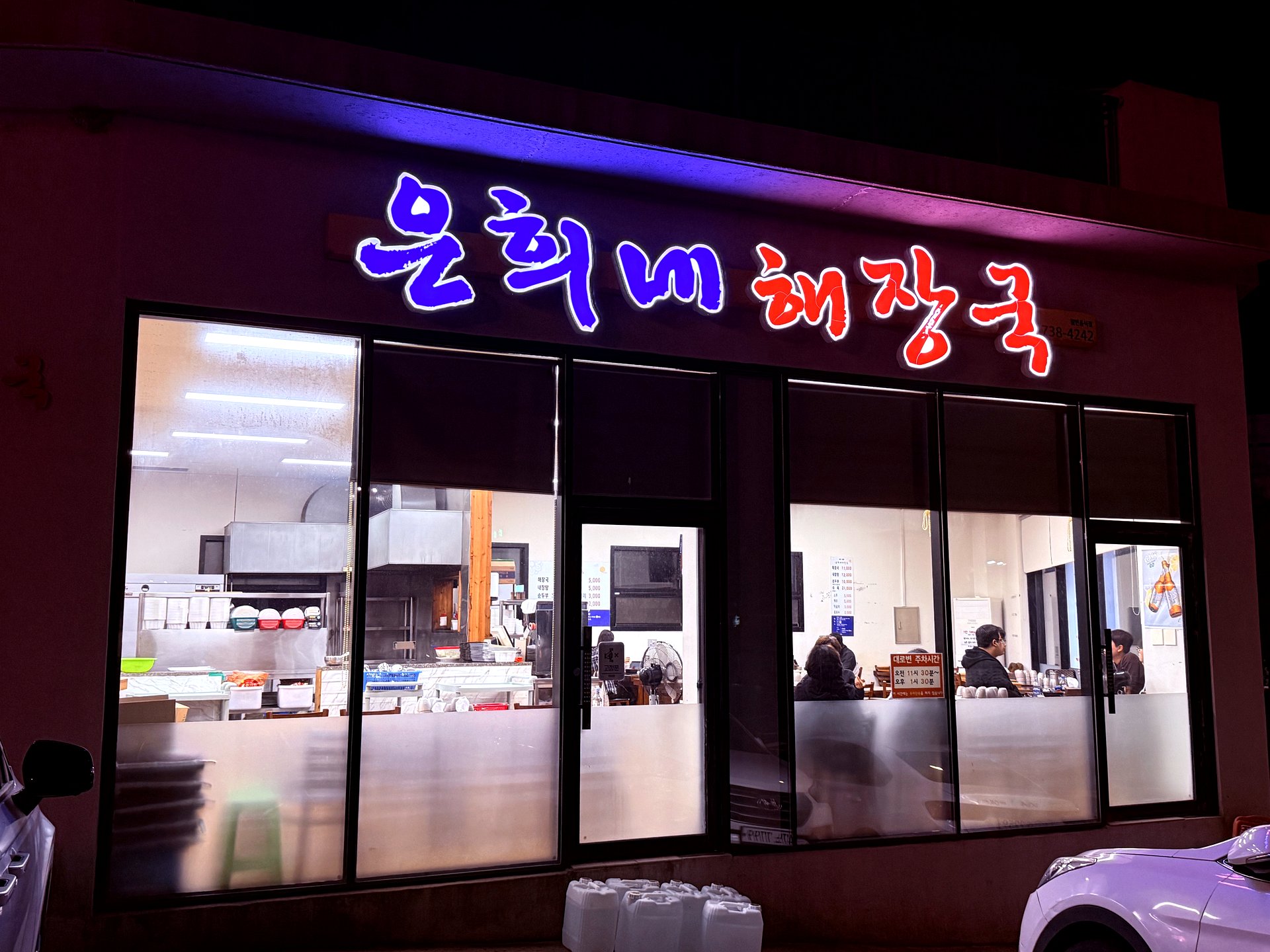
Eunhuine Haejangguk (은희네해장국) passes all three. The name is just Eunhui-ne (“Eun-hui’s place” — founder Kang Eun-hee 강은희), haejangguk (해장국) literally meaning “soup that releases hangovers.” So: “Eun-hui’s hangover soup.” It is, on Jeju’s south coast, exactly that.
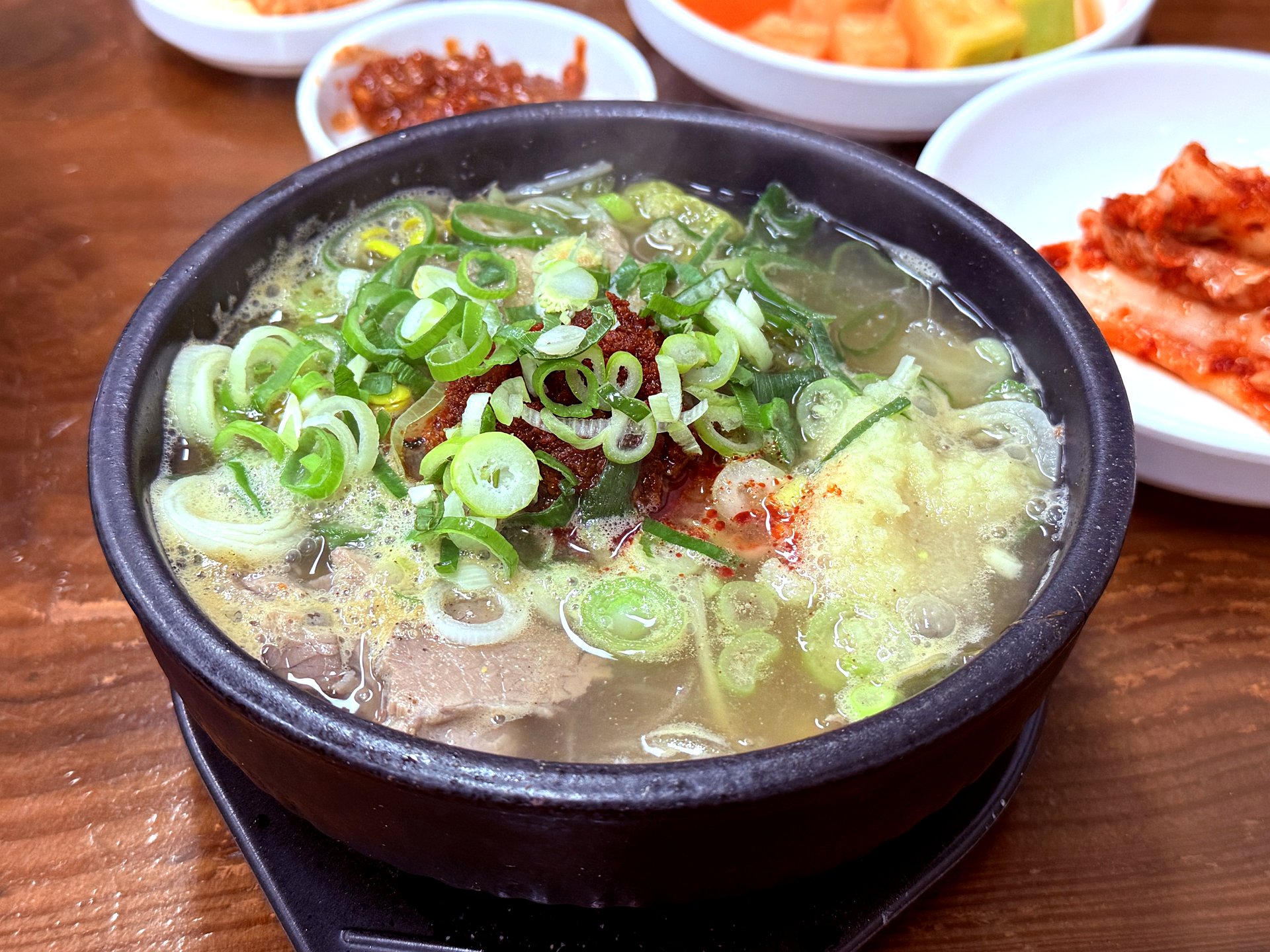
| Korean name | 은희네해장국 중문점 (Eunhuine Haejangguk Jungmun) |
| Neighborhood | Jungmun-dong, Seogwipo — Jeju south coast |
| From the airport | ~30-minute drive (~25 km) via Pyeonghwa-ro / Highway 1135 |
| Price range | ₩₩ — ₩9,000–13,000 per bowl (~$6–$9 USD) |
| Signature | Soegogi Haejangguk (소고기 해장국) — beef-bone hangover soup, the original |
| English menu | Limited — Korean menu, but staff handles “soegogi haejangguk” or “beef soup” easily |
| Foreign cards | Visa/Mastercard accepted |
| Hours | Breakfast and lunch hours — typical haejangguk service. Check Naver Map for current operating hours. |
| Map | Google Maps · Naver Map |
My dad’s generation drank soju at company dinners until 2 AM and then ordered haejangguk delivered to the office at 8 AM to start the day. (This was also called “work.”) The whole point of haejangguk is not just hangover relief — it is permission to keep going. Eunhuine has been doing this in Jeju since the early 2000s, and the Jungmun branch is where you taste why founder Kang Eun-hee’s recipe stopped being a local secret and became a national obsession.
A Quick History — Why Jeju Haejangguk Is Different
“Haejangguk” (해장국) literally translates to “soup that releases hangovers” — it is Korea’s category of morning-after broths, eaten as much for breakfast as for actual hangovers. Different regions of Korea developed their own versions: Seoul is famous for seonji-haejangguk (선지해장국, ox-blood) and ugeoji-haejangguk (우거지, with napa cabbage); Jeonju has its own light, bean-sprout-heavy version; Busan leans toward pork-spine (gamjatang-style).
Jeju‘s version is its own thing: a clear-but-rich beef-bone broth (사골) simmered for hours, finished with bean sprouts (콩나물), thin slices of beef, green onions, a generous shake of red chili powder, and — depending on the place and your preference — seonji (coagulated ox blood, a traditional component).
It is lighter on the tongue than Seoul’s heavy seonji-haejangguk and louder on umami than Jeonju’s. The bean sprouts here are doing real work — they crunch through every spoonful and make the bowl feel like both soup and salad.
Eunhuine became the brand most identified with this Jeju style.
The original location opened in Ildo 2-dong (일도이동) in Jeju City, and word-of-mouth turned it into the standard reference for “Jeju-style haejangguk.” This Jungmun branch is one of several Jeju outposts and serves the same recipe — the difference is location: it sits inside the Jungmun resort area in Seogwipo, which makes it an easy stop if you are doing the south-coast tourist circuit.
How It Works — The Self-Service Banchan Corner
One thing worth knowing before you sit down: Eunhuine runs a self-service banchan corner. Walk in, place your order at the counter, and after the soup is on its way you are expected to grab your own banchan from this station — kimchi, kkakdugi, the squid jeotgal, plus a basket of raw eggs that you crack into the soup yourself.
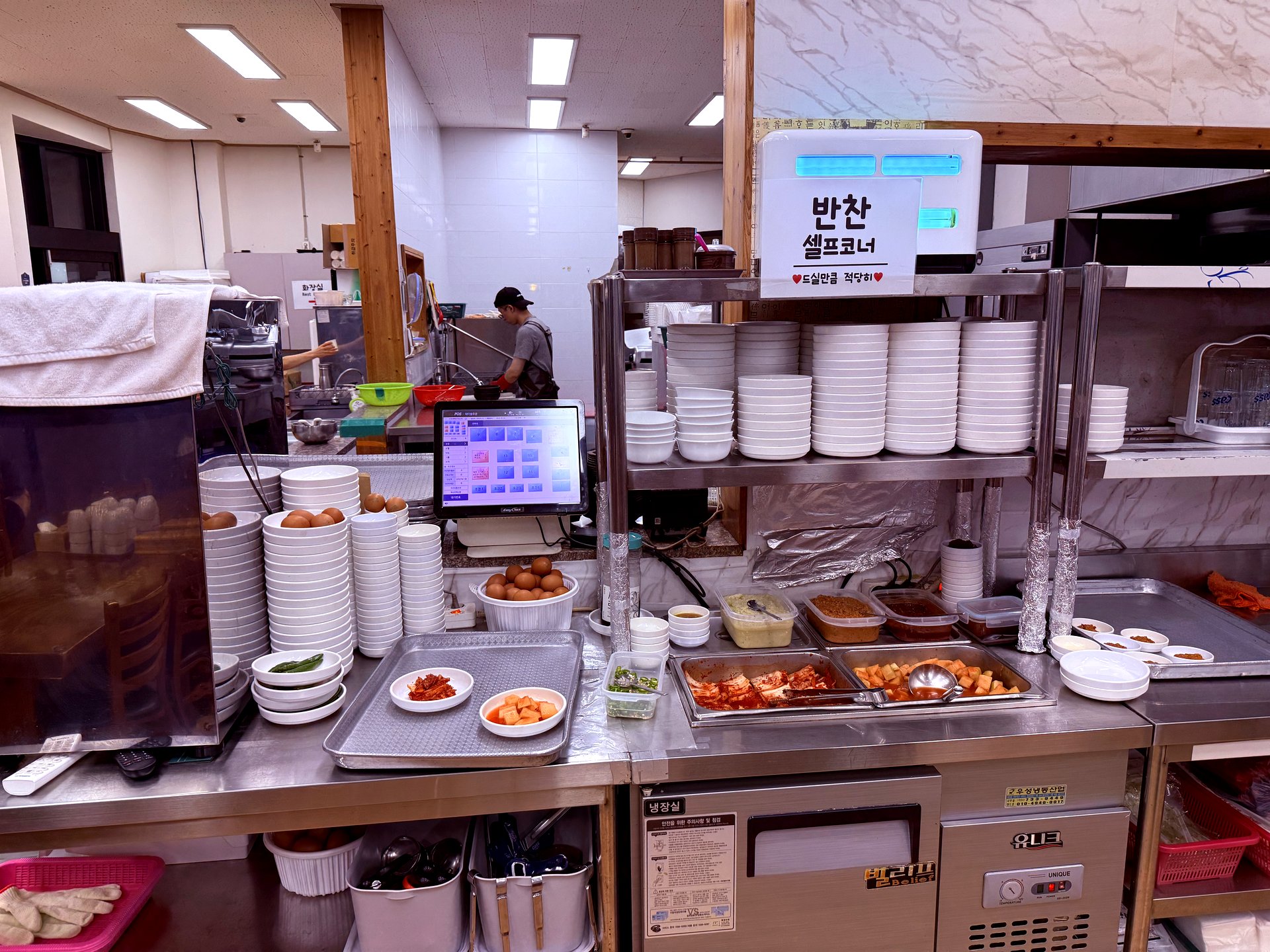
This is normal Korean haejangguk-shop culture but worth flagging if it is your first visit — staff will not bring banchan to your table.
The Haejangguk — Highlight #1 (₩11,000 ($7.5 USD))
Here is the bowl. Stone bowl, deep clear-but-fat broth, crowned with green onion, bean sprouts, thin-sliced Korean beef, and a shake of red chili powder.
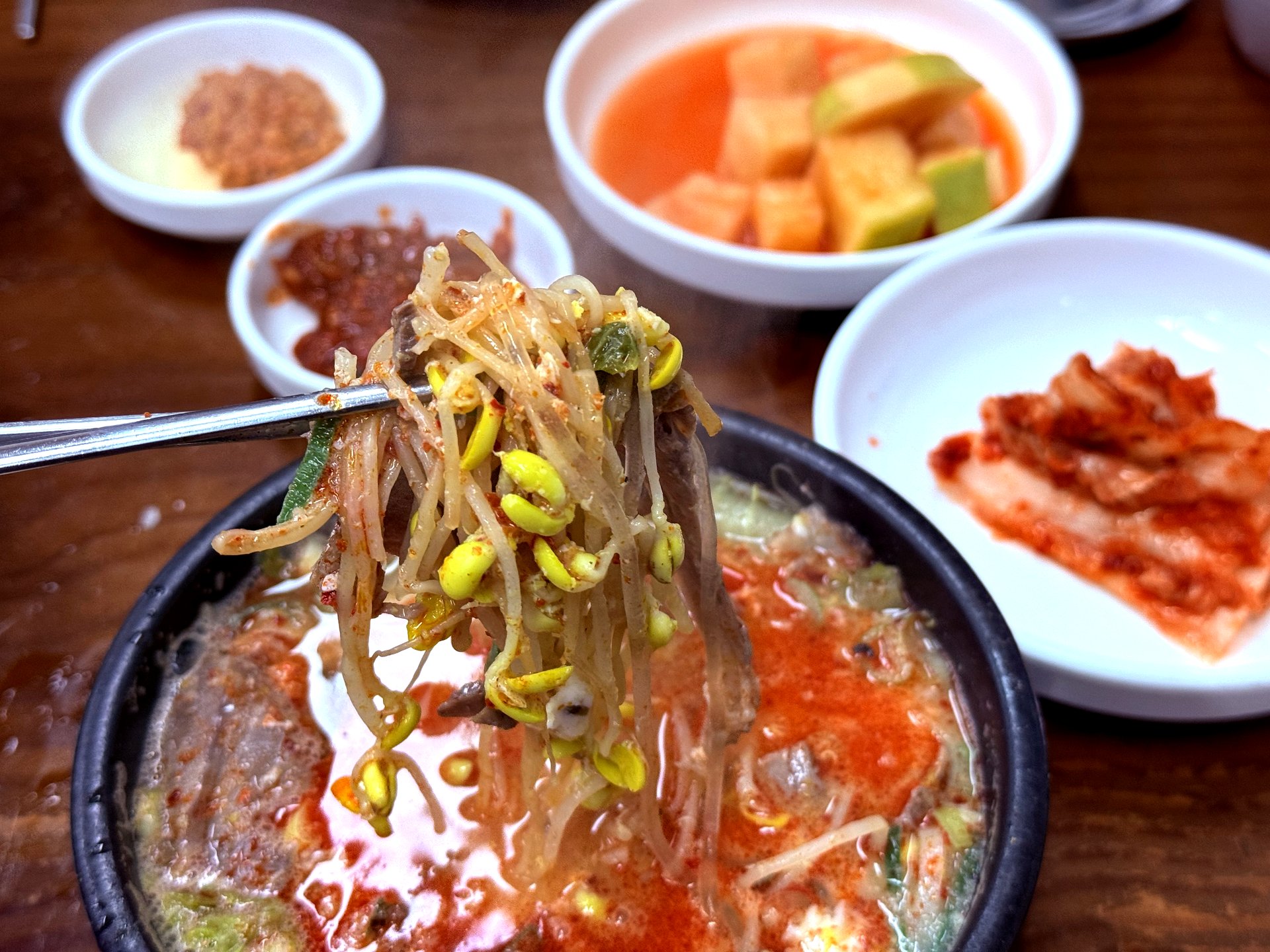
What I keep coming back for is the simplicity. There is nothing fancy — beef, sprouts, broth, scallion. No miracle ingredient. But the broth has been simmering long enough that it has that low, deep, almost-jammy richness on the tongue, and the chili powder cuts through with sharp brightness. The bean sprouts add structure. The thin beef pieces dissolve.
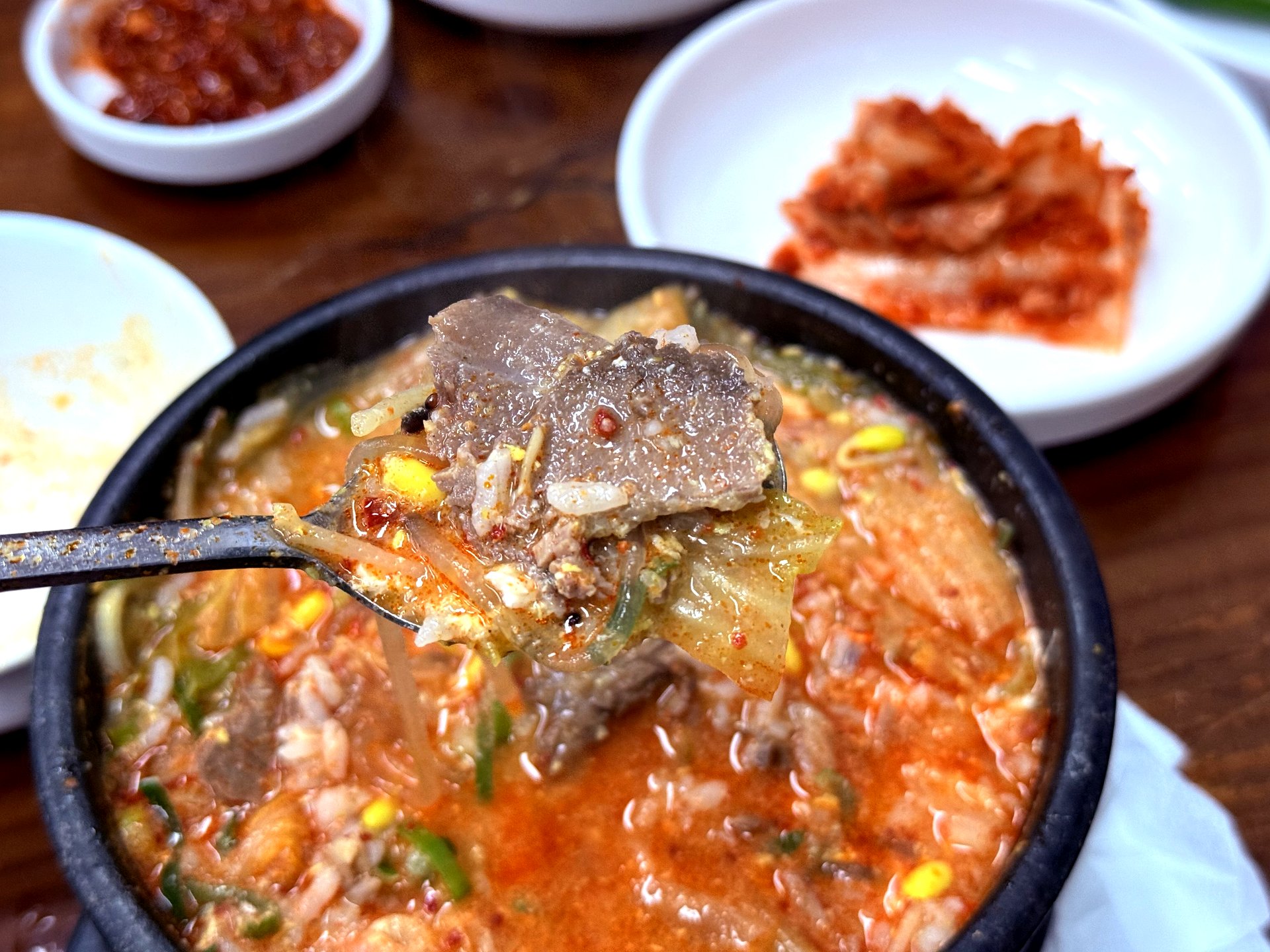
A heads-up for first-timers: the default version usually comes with seonji (선지) — coagulated ox blood, dark and gelatinous-looking. It is a traditional Korean ingredient and many people love it; just as many do not.
If you are in the do not camp, just say “seonji-eul-ppae-jusyeoyo” (선지를 빼주세요 — “without seonji please”) when you order. The kitchen will absolutely accommodate. No guilt.
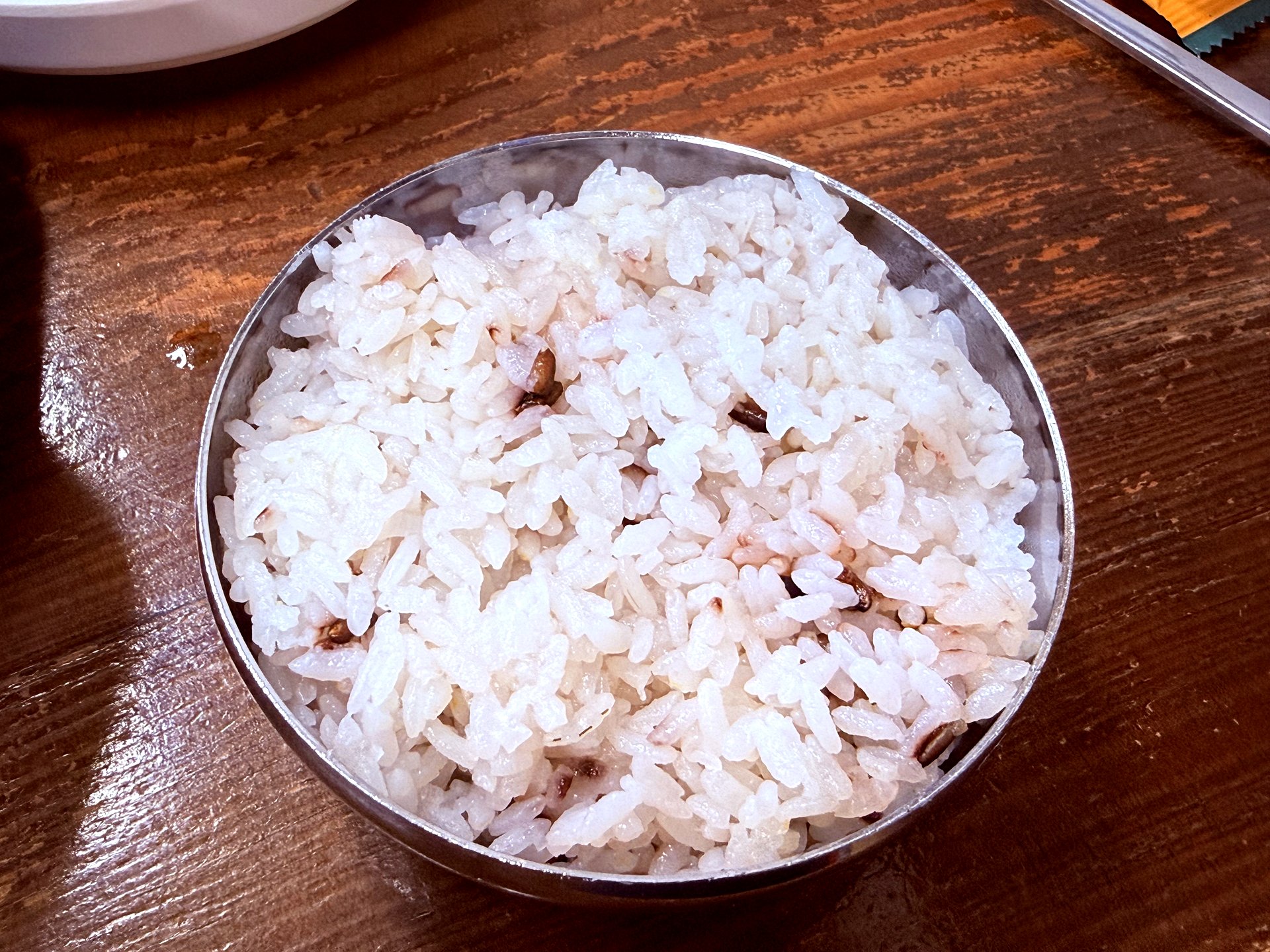
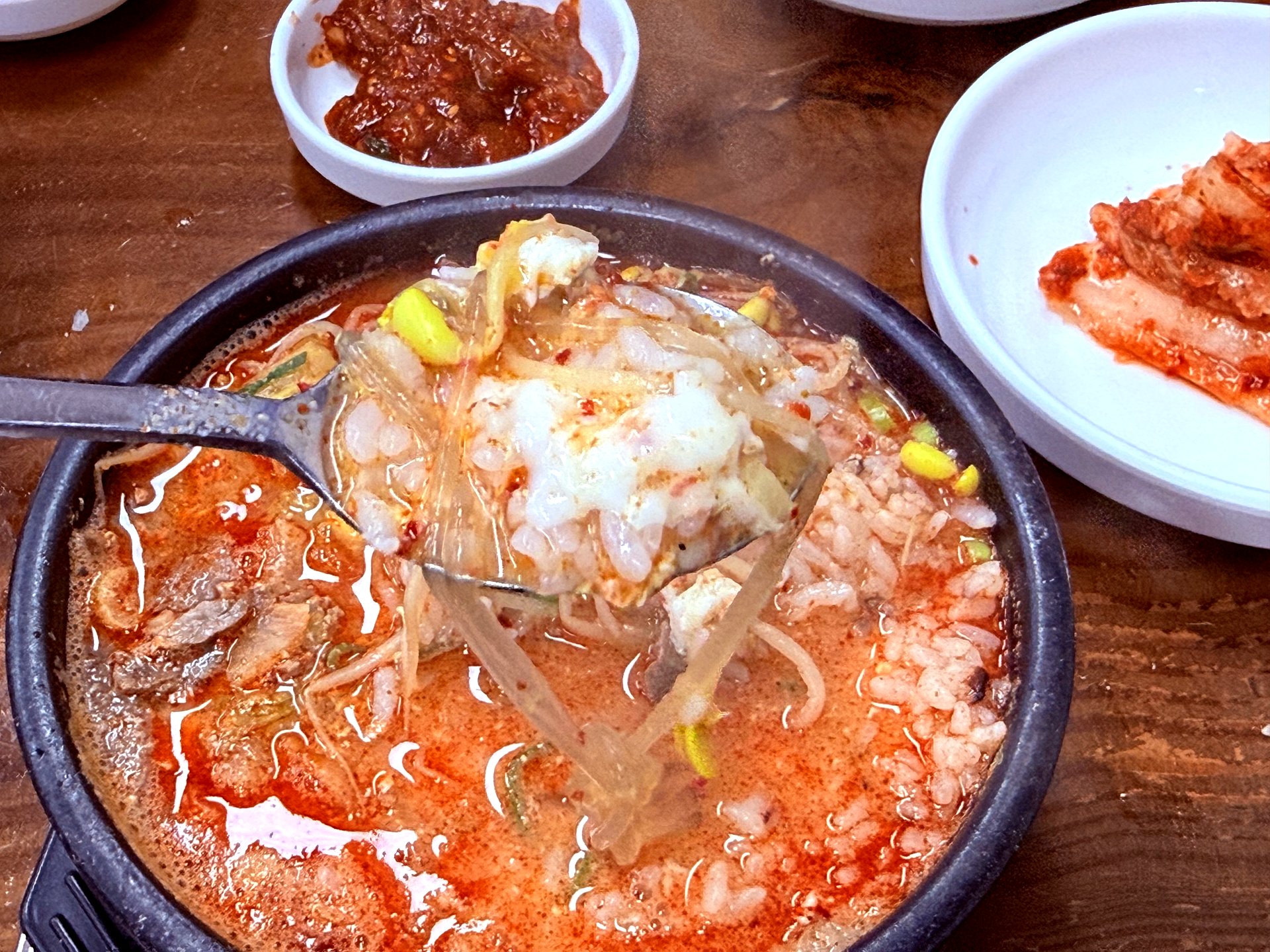
The way locals eat this: dump rice into the soup. 밥말이 (rice-in-soup) is the move. The bean sprouts thicken with the rice, the broth coats every grain.
The Banchan — Two That Earn the Trip
The full banchan lineup is small but every dish earns its plate.
Kkakdugi (깍두기)
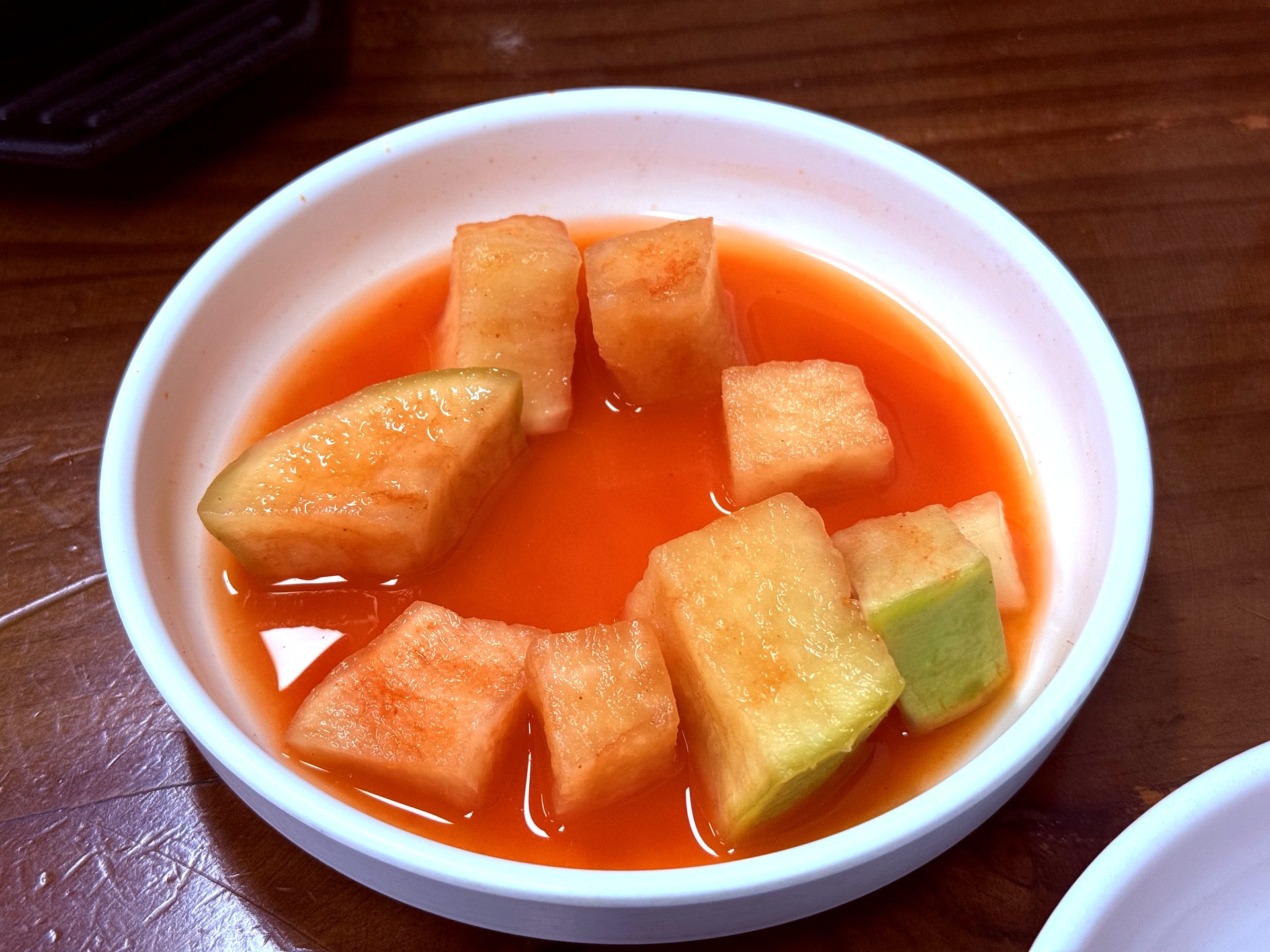
This looks like ordinary cubed radish kimchi at a glance — seumseum (slightly mild, lightly seasoned). But take a bite: there is a subtle bitter finish layered with a slow-burn umami heat that builds after you swallow. Most kkakdugi out there is one-note crunchy-sour. This one has architecture. It pairs especially well with the haejangguk broth.
Ojingeo Jeotgal (오징어젓갈) — The Standout
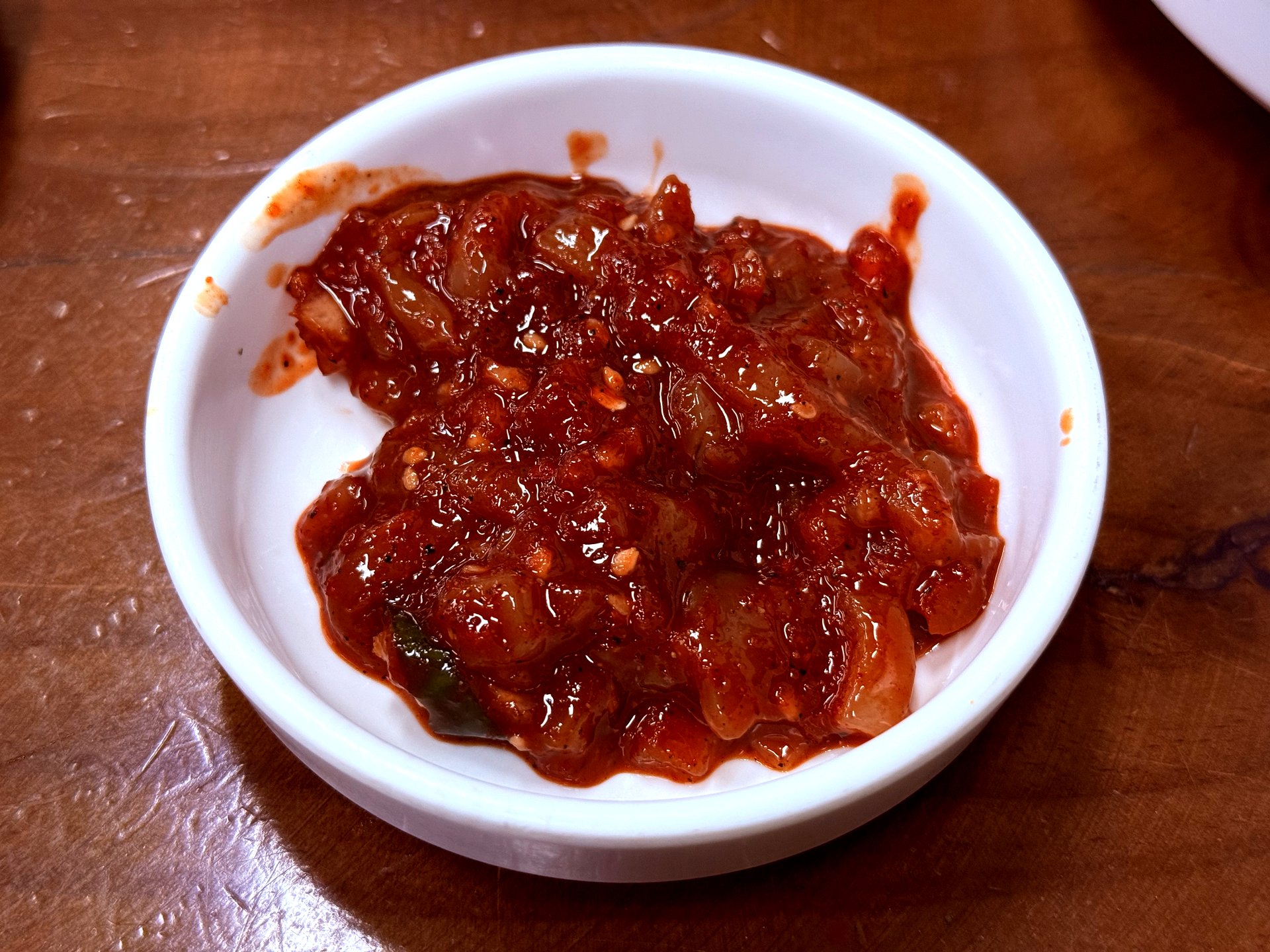
This is the one you cannot find anywhere else.
Fermented squid in a sweet-spicy red sauce, but the recipe is theirs and the result is uncommon: chunks of squid that are tender (not rubbery, which is the typical jeotgal failure), a sauce that is balanced rather than aggressively salty or aggressively sweet, and a depth of flavor that suggests this has been fermenting at exactly the right temperature for exactly the right number of days.
One spoonful per bowl of rice and you will understand why I am writing a paragraph about it.
The Sundubu Jjigae — Highlight #2 (₩10,000 ($6.8 USD))
OK now the surprise. You are at a haejangguk shop. You expect the haejangguk to be the headliner. But Eunhuine’s sundubu is, no exaggeration, one of the better sundubu jjigae I have eaten — and that is at a shop that supposedly specializes in something else entirely.
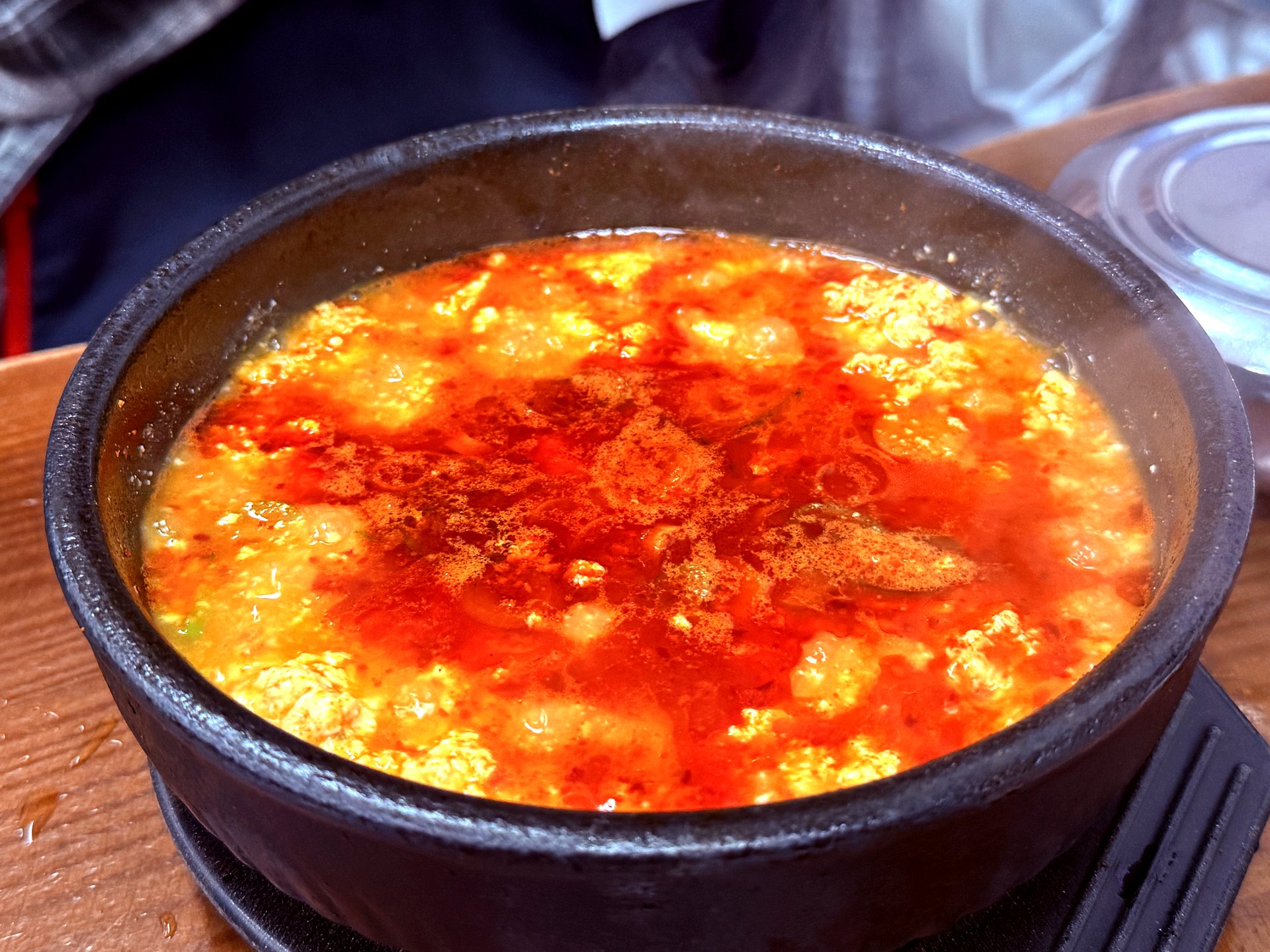
The base is a deeply sesame-oil forward broth — fragrant, glossy, slightly nutty. The soft tofu (순두부) inside is genuinely silky, almost custard-like, breaking apart in clouds rather than shards. They give you a raw egg on the side.
You crack it on top, watch the yolk sink in, and wait a beat as it half-cooks in the heat of the broth.
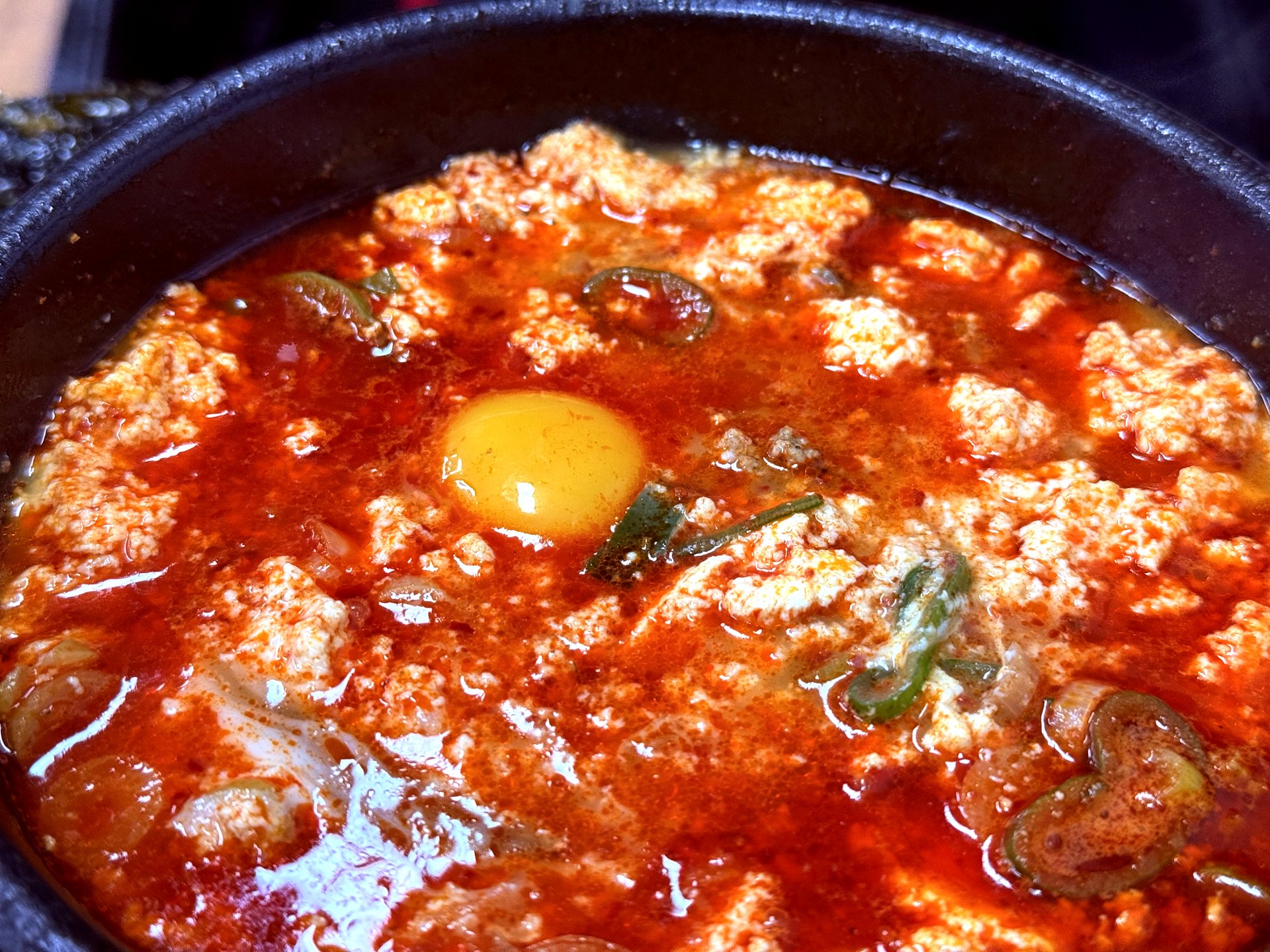
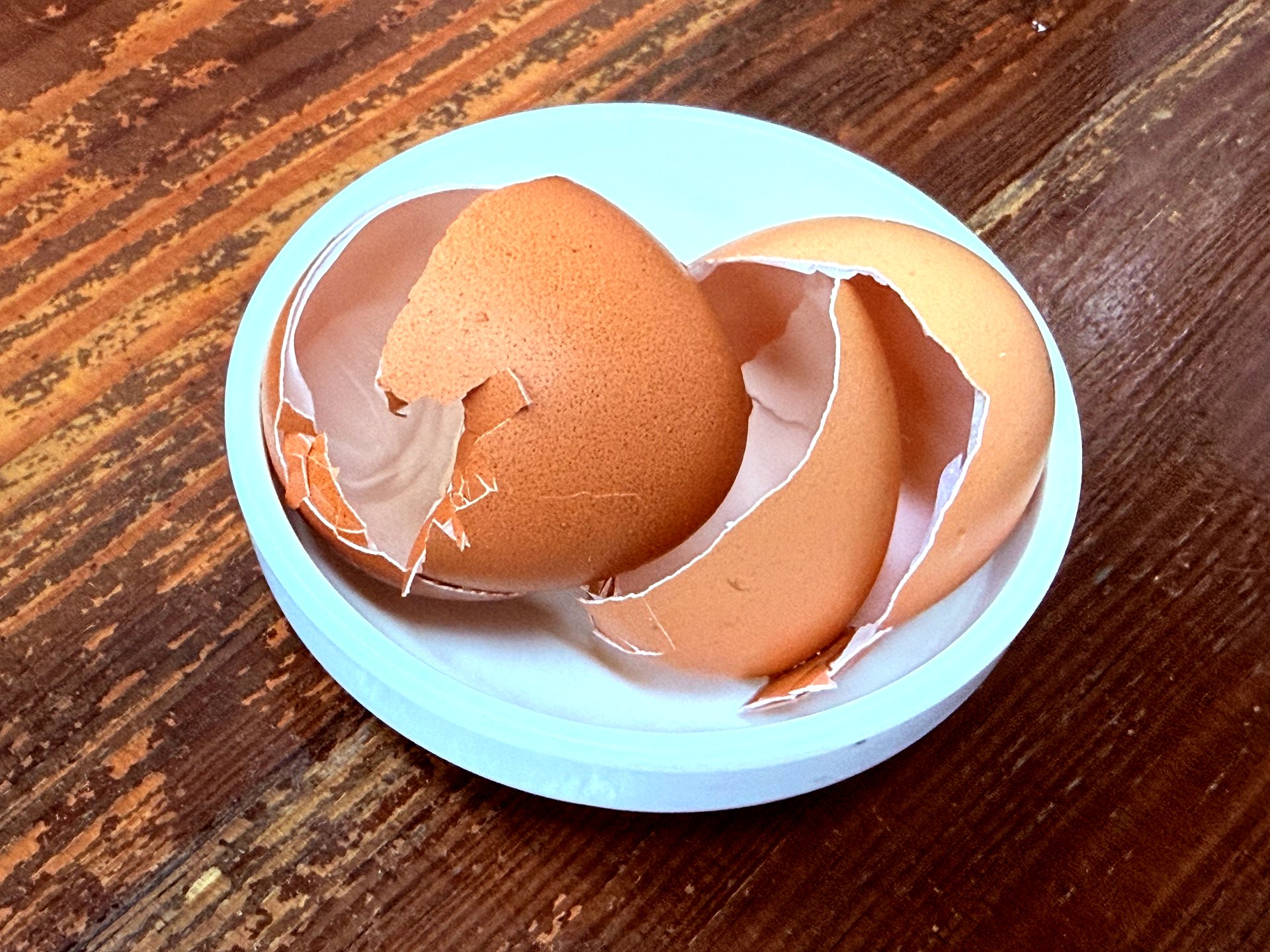
(That photo above? Just to confirm — yes, you crack the egg yourself, here is the evidence, please return to your table and stir.)
The combination of sesame-oil broth + silky sundubu + half-set egg yolk is genuinely one of the great Korean comfort-food bites. If you walk in thinking the sundubu is a side option, you walk out reordering.
Quick Notes for Visitors
- Cards? Yes, accepted.
- Self-service banchan? Yes — grab from the counter at the back, including raw eggs you crack yourself.
- Without seonji? Just say seonji-eul-ppae-jusyeoyo (선지를 빼주세요). Kitchen will adjust.
- Foreign-friendly? Menu is Korean only; staff speak basic Korean. Showing photos on your phone usually works.
- Best time: Breakfast through lunch. Like most haejangguk shops, vibe is most authentic in the morning.
- Pair with: Basak Donkkaseu, Dodu Haenyeo’s House, and Cafe Jinjeongseong Jongjeom for a full Jeju food day.
The Verdict
Eunhuine has expanded enough that you can find it in Seoul now, and it is good there too — but eating it on the island where the recipe was born, looking up at the Jungmun resort area outside the windows, is the version of this bowl I would choose every time.
The haejangguk is the headline; the sundubu is the surprise; the kkakdugi and squid jeotgal are reasons to keep ordering rice.
Go. If you are anywhere in Jungmun or Seogwipo, drive to Eunhuine. Order the soegogi haejangguk — the original beef-bone version, no add-ons your first time. Don’t share. Don’t add anything to the broth before tasting it as-is. The first spoonful should land before any thoughts about Korean breakfast culture do.
P.S. Second visit is when you also ask for extra ssamjang for the rice. (You will. Trust me.)
| 🍽️ Food | 5.0 | |
| 💰 Value | 4.0 | |
| 🌏 Foreigner-friendly | 3.5 | |
| 📍 Access | 3.5 |
| Best for | Jeju mornings, post-makgeolli recovery, anyone who claims to understand Korean breakfast |
| Skip if | You only eat polished restaurants, you can’t handle morning soup, you have a tight Jeju itinerary that skips the south coast |
| Order this | Soegogi haejangguk (소고기 해장국) + extra ssamjang |
| Visited | April 2026 · 1st visit |
Been here? Tell me what you ordered — drop a comment below.
More from Foodieseoul
- Best Smash Burger in Mullae-dong (Yankees Burger)
- Best Donkkaseu in Jeju — Basak (바삭돈까스)
- Best Jeju Seafood Near the Airport — Dodu Haenyeo
- Coffee Near Jeju Airport — Cafe Jinjeongseong
Planning a Jeju food trip? This is one stop in our bigger Jeju Local Food Guide — what (and where) to eat in Jeju, with all our Jeju picks, honest prices, and a map.